Hello, fellow baking enthusiasts!
The Ultimate Classic Coconut Layer Cake: A Tropical Delight
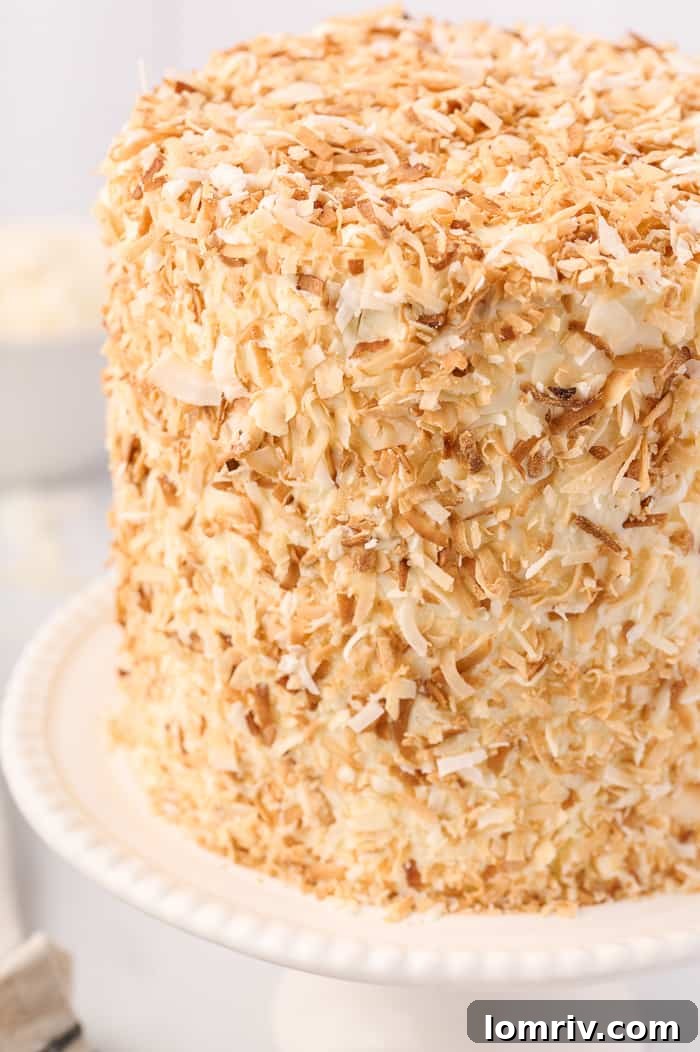
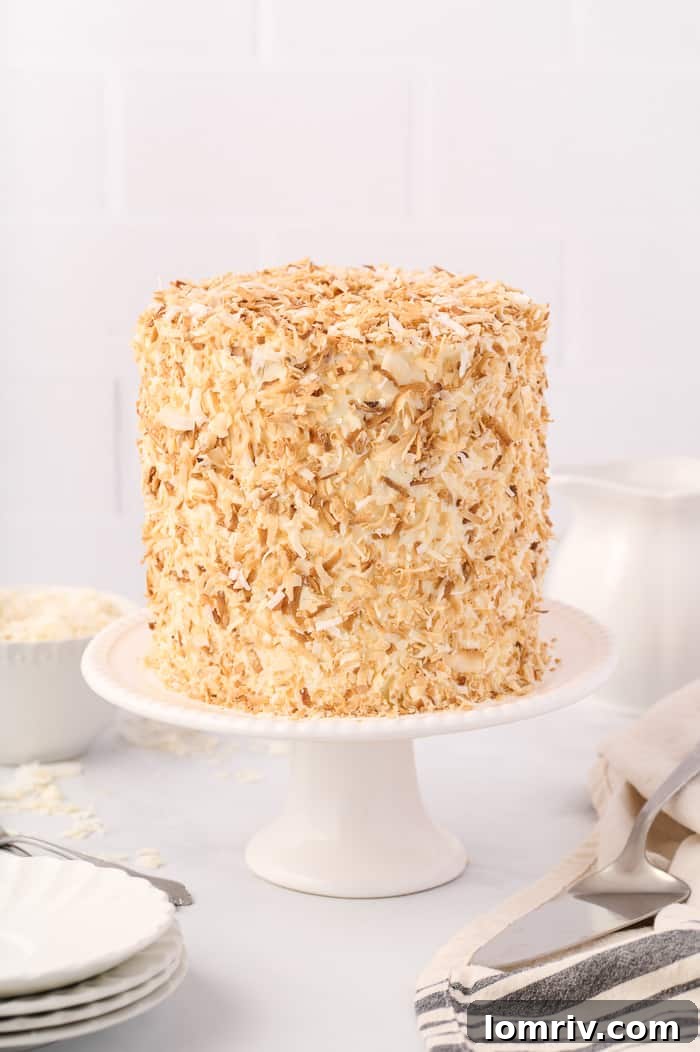
There’s a special kind of magic in a truly classic dessert, and this Coconut Layer Cake embodies it perfectly. Infused with a symphony of coconut flavors, this cake promises an experience that is both tender and incredibly aromatic. Imagine a delicate crumb, enriched with rich coconut cream, fragrant coconut extract, and a generous sprinkle of sweet coconut flakes, all encased in a cloud of silky smooth coconut Swiss meringue buttercream. It’s a tropical dream brought to life in every single bite.
As a devoted coconut lover, it was quite a revelation to discover that a dedicated classic coconut layer cake recipe was missing from this blog! For those who have followed my baking journey, you know my passion for coconut runs deep. I try to incorporate its unique flavor into almost everything I bake. If you’re new here, welcome to a world where coconut reigns supreme!
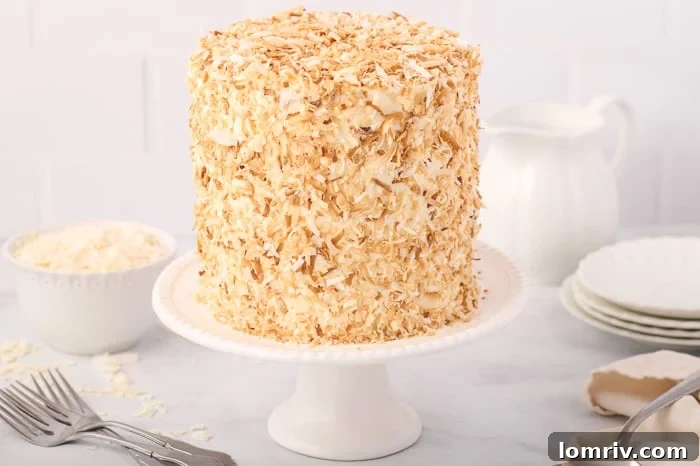
While I thoroughly enjoy putting creative twists on beloved recipes, creating innovative flavor combinations that surprise and delight, I’ve come to appreciate the timeless appeal of the classics. There’s something inherently comforting and deeply satisfying about a recipe that stands the test of time, revered for its pure and unadulterated flavor. This particular Coconut Layer Cake recipe is precisely that—a celebration of pure, unadulterated coconut, crafted to become a treasured staple in your baking repertoire. If you are a true devotee of coconut, prepare to fall in love.
Before we dive into the delightful details of this masterpiece, allow me to share a few other coconut-infused creations that might tempt your taste buds. My Coconut Lemon Layer Cake is an absolute marvel, perfect for ushering in spring or celebrating Easter with its bright, zesty notes. For a delightful summer pairing, the Coconut Blueberry Layer Cake offers a harmonious blend of sweet and tart, a combination so cherished that I’ve even adapted it into cupcake form for easy enjoyment. Cheesecake lovers, don’t miss my decadent Coconut Cheesecake, generously crowned with toasted coconut for an extra layer of flavor and texture. And for those craving an exotic escape, my Coconut Passionfruit Layer Cake delivers a vibrant burst of tropical zing. Each of these recipes showcases the versatility and irresistible charm of coconut. Be sure to explore them all!
Unlocking Unrivaled Coconut Flavor: The Secret to This Classic Cake
Now, let’s return our focus to the star of today’s show: this pure and quintessential coconut cake. This recipe isn’t just a cake with a hint of coconut; it’s a dedication to the ingredient, maximizing its delightful profile through multiple layers of flavor. We achieve this profound coconut essence using not one, not two, but **three distinct sources of coconut**:
- Coconut Cream: Provides richness, moisture, and a deep, milky coconut foundation for the cake batter. It’s crucial for that tender crumb.
- Coconut Extract: Boosts the aromatic intensity, ensuring that the unmistakable flavor of coconut shines through in every bite.
- Coconut Flakes: Adds textural interest and bursts of natural coconut flavor within the cake itself.
The result is a cake that truly celebrates coconut. If coconut isn’t your favorite flavor, then perhaps this isn’t the cake for you. But if, like me, you adore the tropical, sweet, and comforting taste of coconut, then this cake is an absolute must-try.
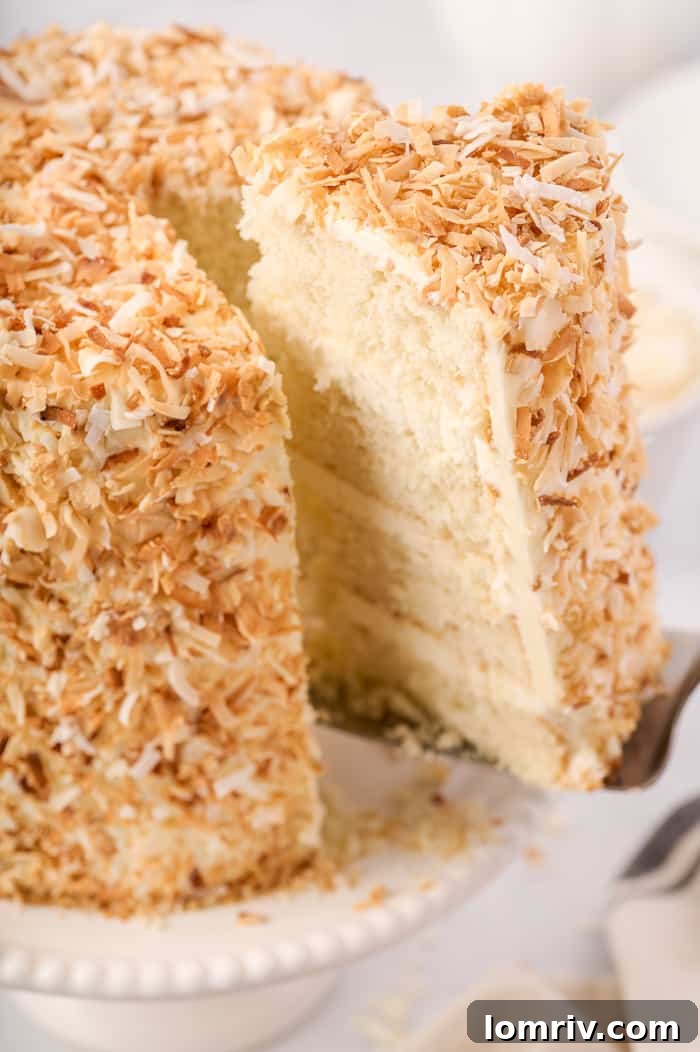
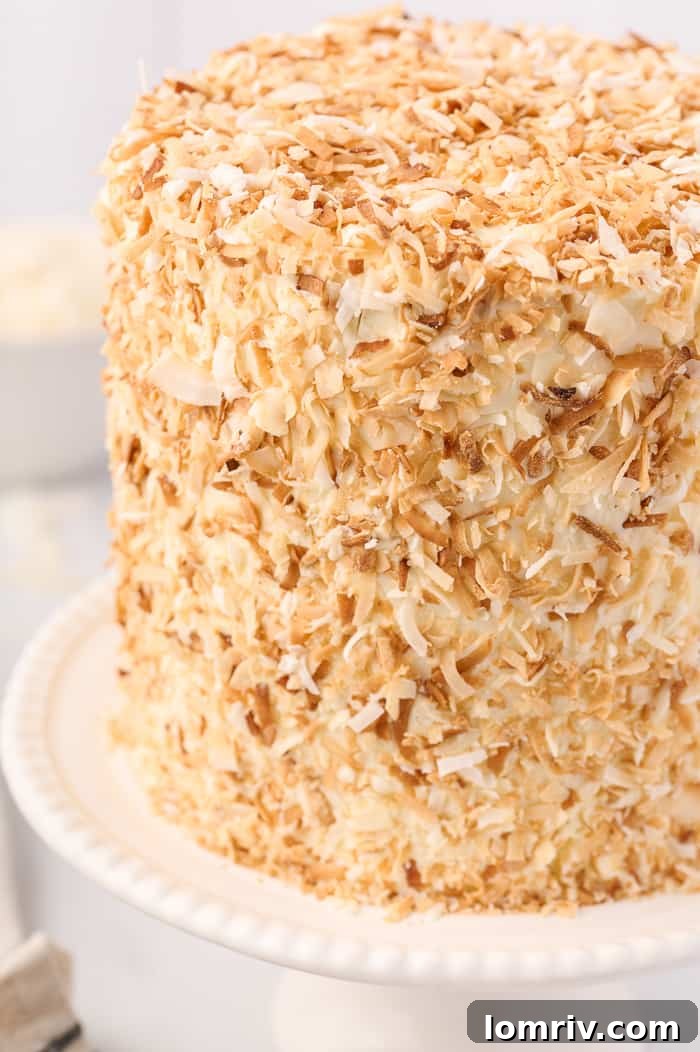
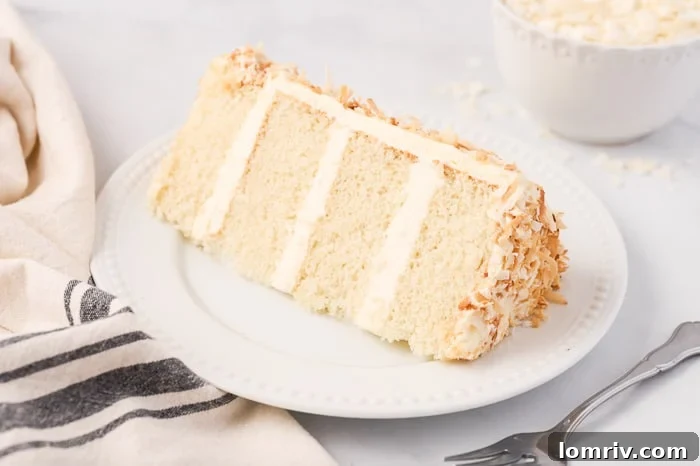
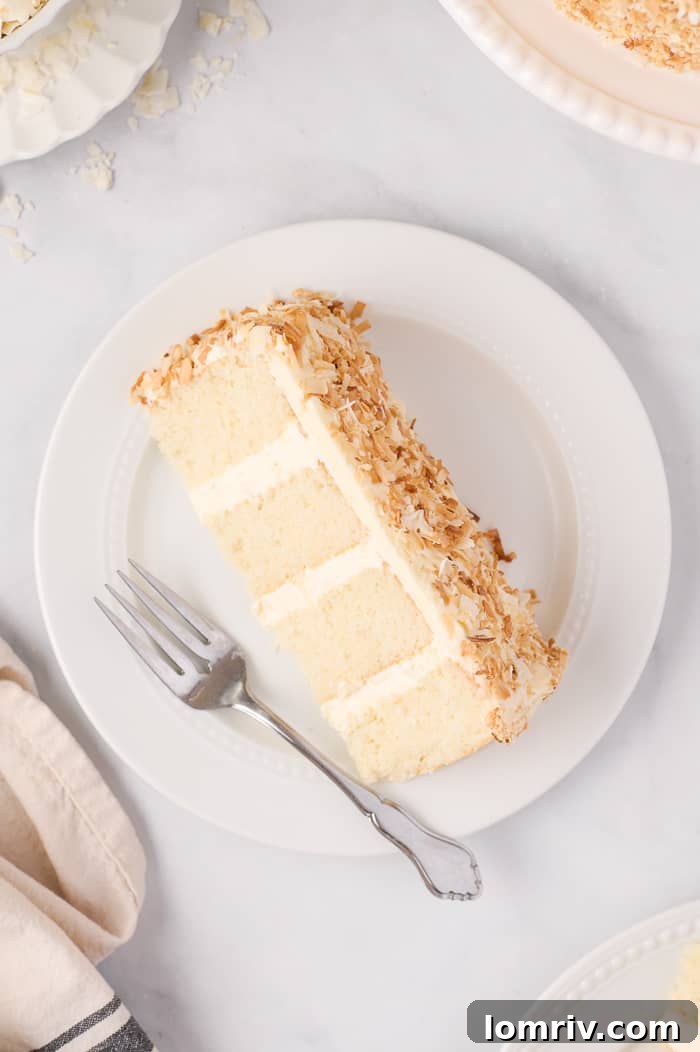
Complementing this intensely flavorful cake is a dreamy, silky Swiss Meringue Buttercream, meticulously infused with even more coconut goodness. The light, less-sweet nature of Swiss meringue perfectly balances the rich cake, allowing the coconut to remain the star. To crown this tropical delight, we adorn it with beautifully toasted coconut flakes, adding a pleasing crunch and an inviting visual appeal. It’s more than just a cake; it’s a showstopper, ideal for any spring or summer gathering or whenever you simply crave a taste of paradise. It will undoubtedly leave a lasting impression on anyone lucky enough to try a slice.
To ensure your baking success, we’ll walk through the entire process, complete with step-by-step images. If you’re an experienced baker who prefers to jump straight to the full recipe, simply scroll to the end of this post where you’ll find the comprehensive recipe card.
Essential Ingredients for Your Coconut Layer Cake
Every exceptional cake begins with quality ingredients. Before you start, take a moment to gather everything you’ll need. This ensures a smooth and enjoyable baking process, minimizing interruptions. Here’s what you’ll need for the incredibly moist and flavorful coconut cake layers:
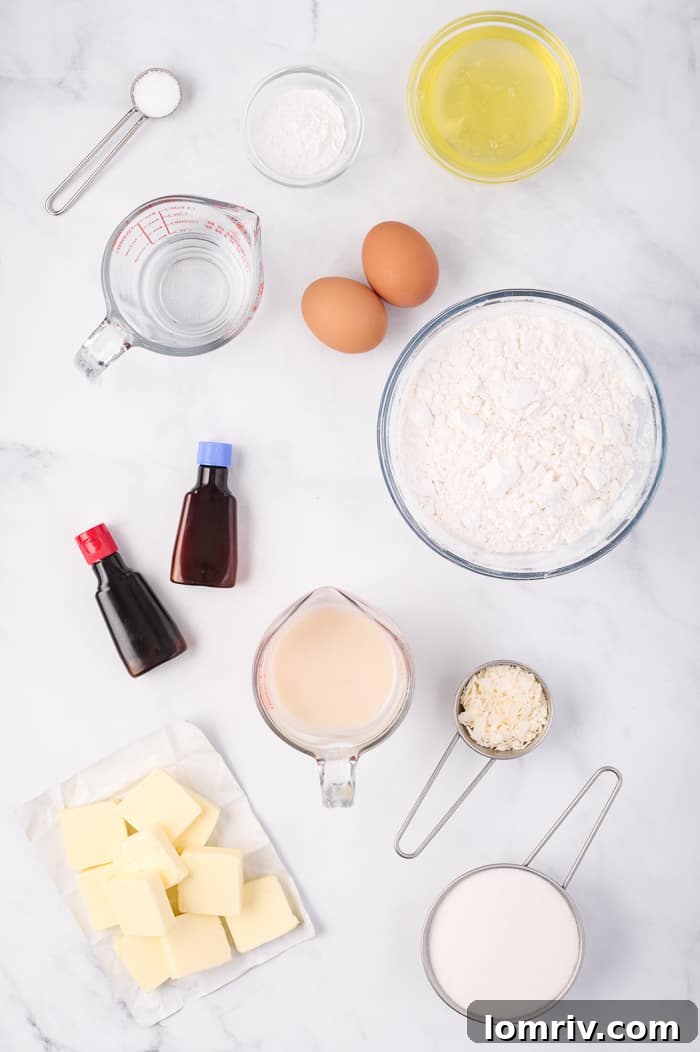
- Large Eggs & Egg Whites: Ensure they are at room temperature for better emulsification and cake structure.
- Cream of Coconut or Coconut Cream: This is crucial for rich flavor and moisture. Absolutely NOT coconut milk! Mix it well before measuring.
- Pure Vanilla Extract: A classic enhancer that complements coconut beautifully.
- Coconut Extract: The secret weapon for boosting that intense coconut aroma and flavor.
- Cake Flour: Sifted for a finer, more tender crumb.
- Granulated Sugar: Sweetens the cake and helps with moisture retention.
- Baking Powder: The primary leavening agent for a light and airy texture.
- Kosher Salt: Balances the sweetness and enhances all the flavors.
- Unsalted Butter: Softened and cut into pieces, essential for the reverse creaming method.
- Unsweetened Coconut Flakes: Folded into the batter for texture and flavor.
- Toasted Coconut Flakes: For garnish and added crunch.
How to Master Your Homemade Coconut Layer Cake: Step-by-Step Guide
Let’s embark on this delicious journey together!
Crafting the Moist Coconut Cake Layers
Step 1: Combine Wet Ingredients. In a medium-sized bowl, gently whisk together your room temperature eggs and egg whites. Then, incorporate the coconut cream (remember, not coconut milk!), water, vanilla extract, and coconut extract. Whisk until thoroughly combined and set this mixture aside. This ensures all the liquid flavors are evenly distributed.
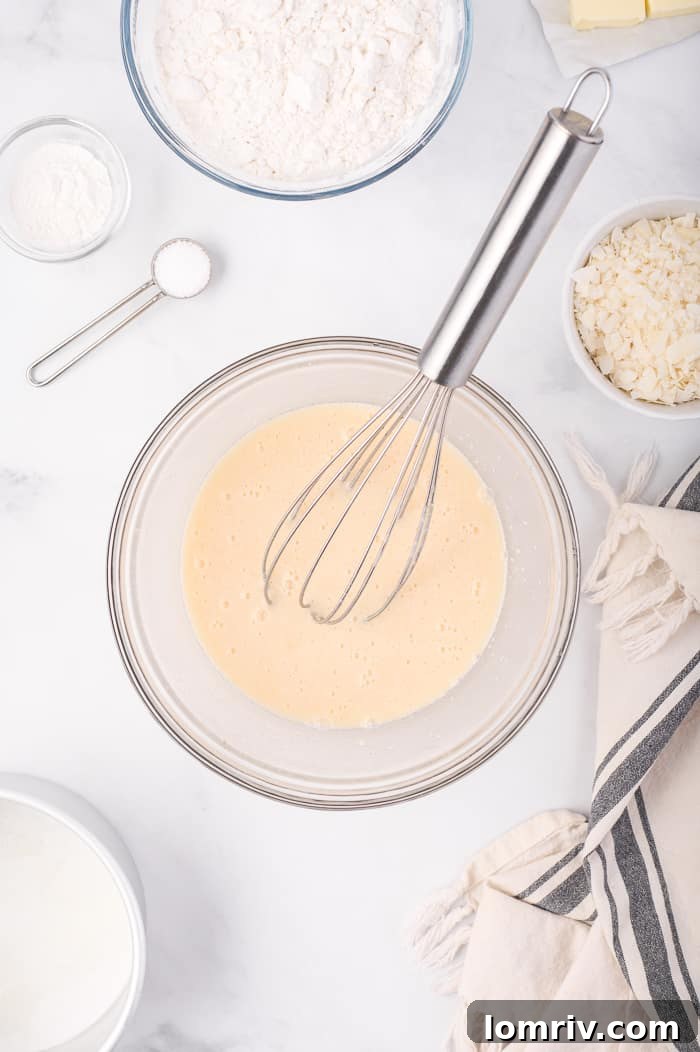
Step 2: Prepare Dry Ingredients and Butter. In a separate, larger bowl, whisk together the sifted cake flour, granulated sugar, baking powder, and kosher salt. With your electric mixer on low speed, begin adding the softened unsalted butter, one cube at a time, into the dry ingredients. Continue mixing until the butter is fully incorporated and the mixture resembles coarse crumbs, with pea-sized pieces of butter throughout. This technique, known as the reverse creaming method, is key to achieving an incredibly soft and tender cake crumb. From this point forward, be mindful not to over-mix the batter.
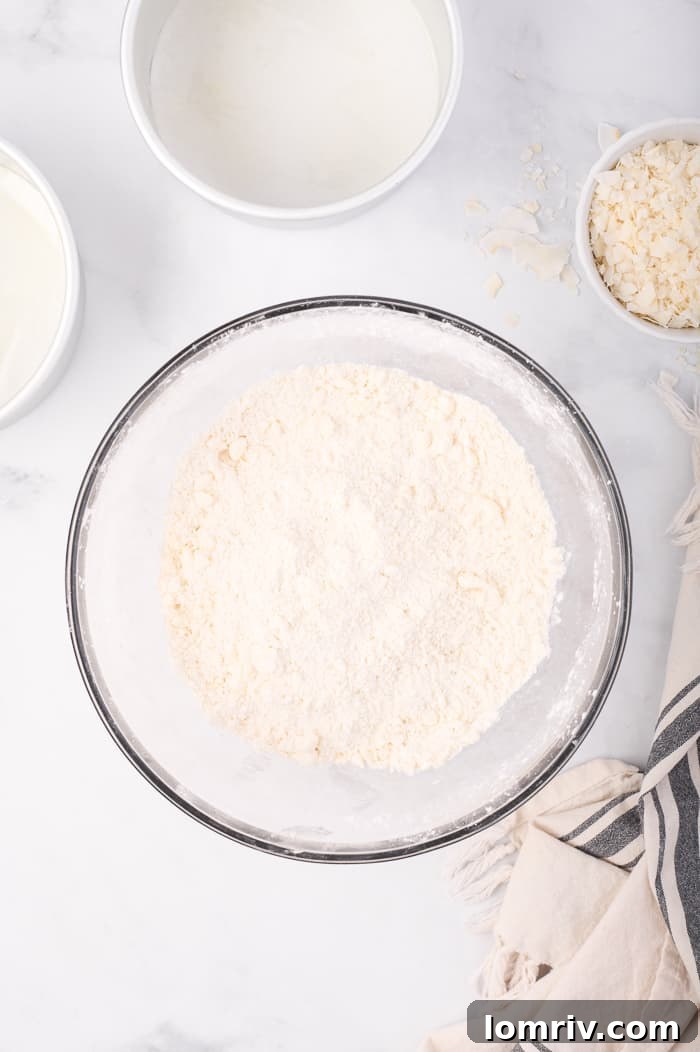
Step 3: Incorporate Wet into Dry. Gradually add half of your wet ingredient mixture to the dry ingredients. Increase your mixer speed to medium-high and beat for about one minute until the batter appears light and fluffy. Reduce the speed to low and add the remaining wet ingredients, mixing just until combined, which typically takes about 30 seconds. Finish by stirring the batter once by hand with a rubber spatula to ensure everything is fully incorporated without overdeveloping the gluten. Overmixing at this stage can lead to a dense cake.
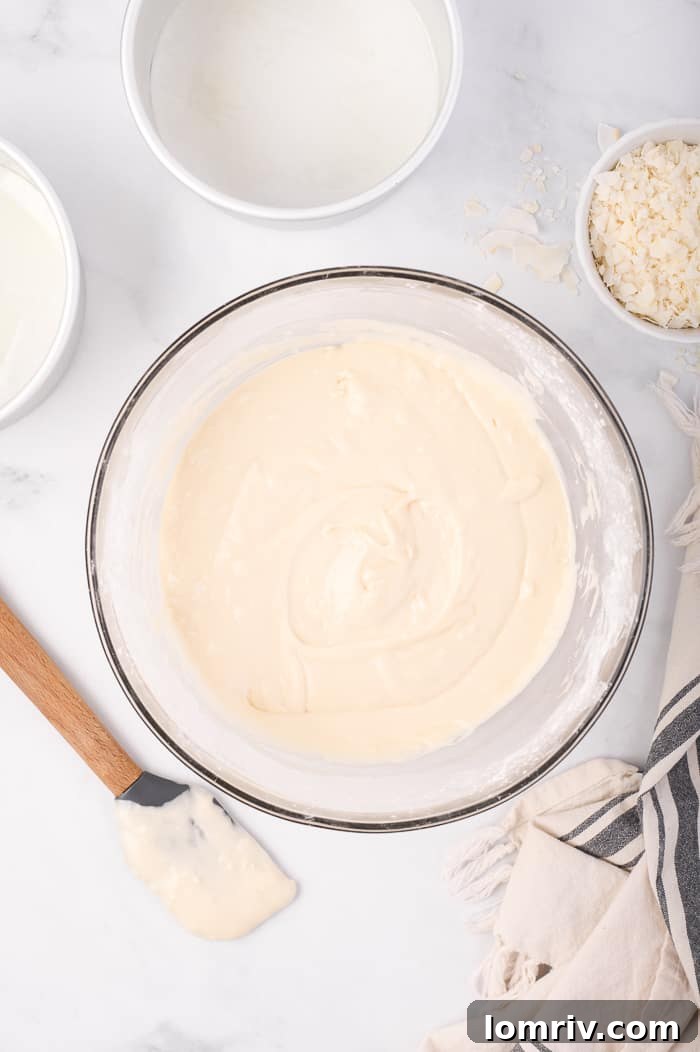
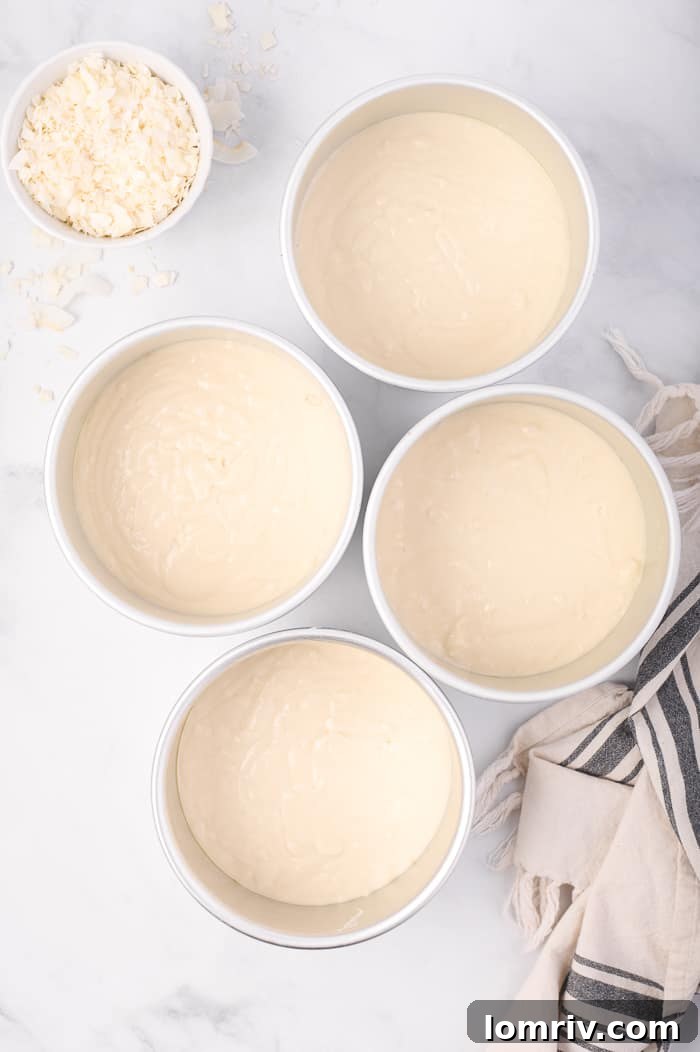
Step 4: Bake the Cake Layers. Divide the batter evenly among your prepared cake pans. Bake in a preheated oven until a toothpick inserted into the center of a cake comes out clean. This usually takes 20-25 minutes, but start checking for doneness around 16 minutes, especially if you’re using larger pans. Avoid overbaking, as this can dry out your cake. Rotate the pans halfway through baking to ensure even cooking.
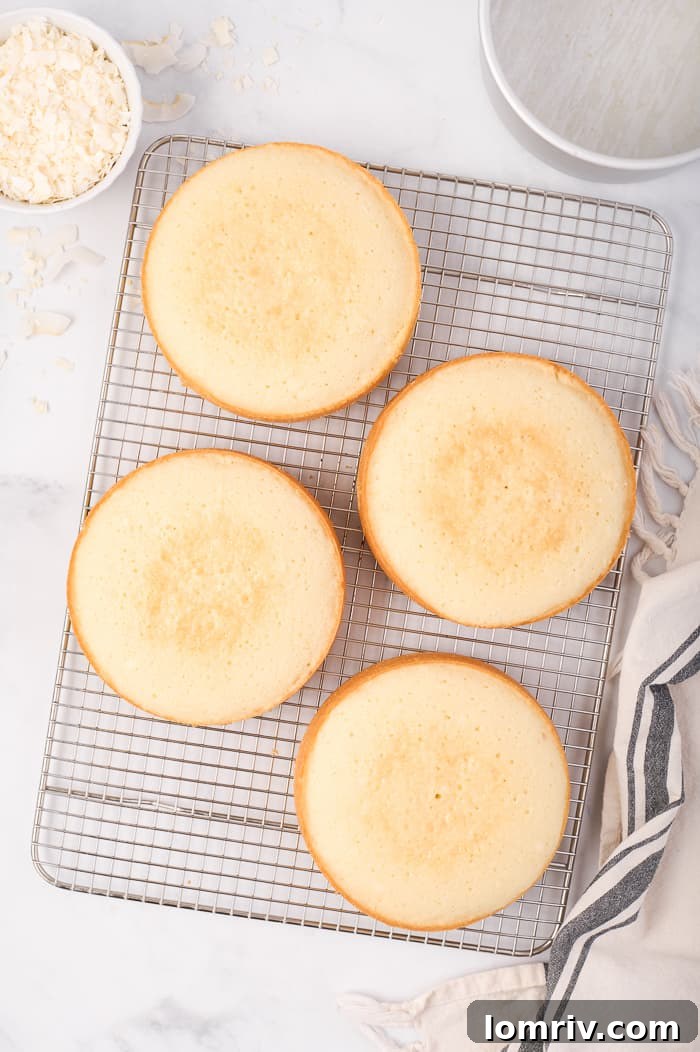
Step 5: Cool the Cakes. Allow the baked cake layers to cool in their pans for about 10 minutes before carefully inverting them onto a wire rack to cool completely. Ensure the cakes are fully cooled before frosting to prevent your buttercream from melting.
Preparing the Silky Coconut Swiss Meringue Buttercream
While your cake layers are cooling, you can begin preparing the exquisite Swiss meringue buttercream. This frosting is renowned for its smooth texture and rich, buttery flavor, and its less-sweet profile makes it a perfect complement to our flavorful coconut cake.
Step 1: Measure and Prepare. As with any baking, precise measurements are key, especially with Swiss meringue buttercream where timing and temperature are crucial. Gather all your ingredients for the frosting first.
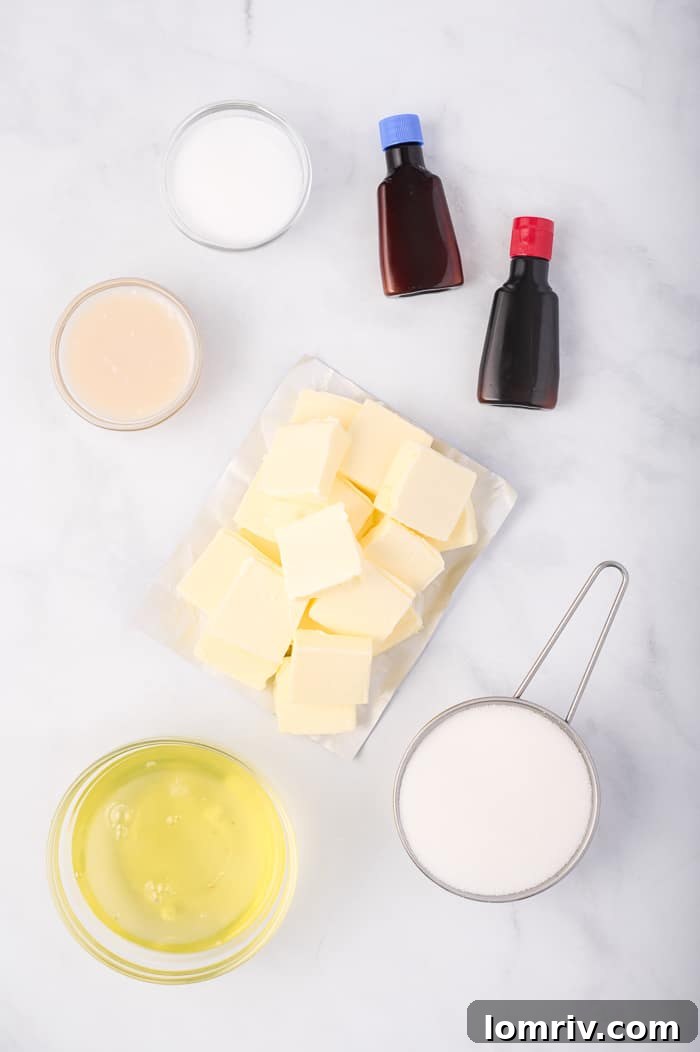
Step 2: Create the Meringue Base. In a heatproof mixing bowl (preferably the bowl of your stand mixer), combine the egg whites, granulated sugar, and a pinch of salt. Place this bowl over a saucepan of simmering water, ensuring the bottom of the bowl does not touch the water. Whisk constantly until the sugar completely dissolves and the mixture is warm to the touch (around 160°F or 71°C). When rubbed between your fingers, it should feel perfectly smooth, with no grittiness from the sugar. This pasteurization step makes the meringue safe to eat and ensures a stable buttercream.
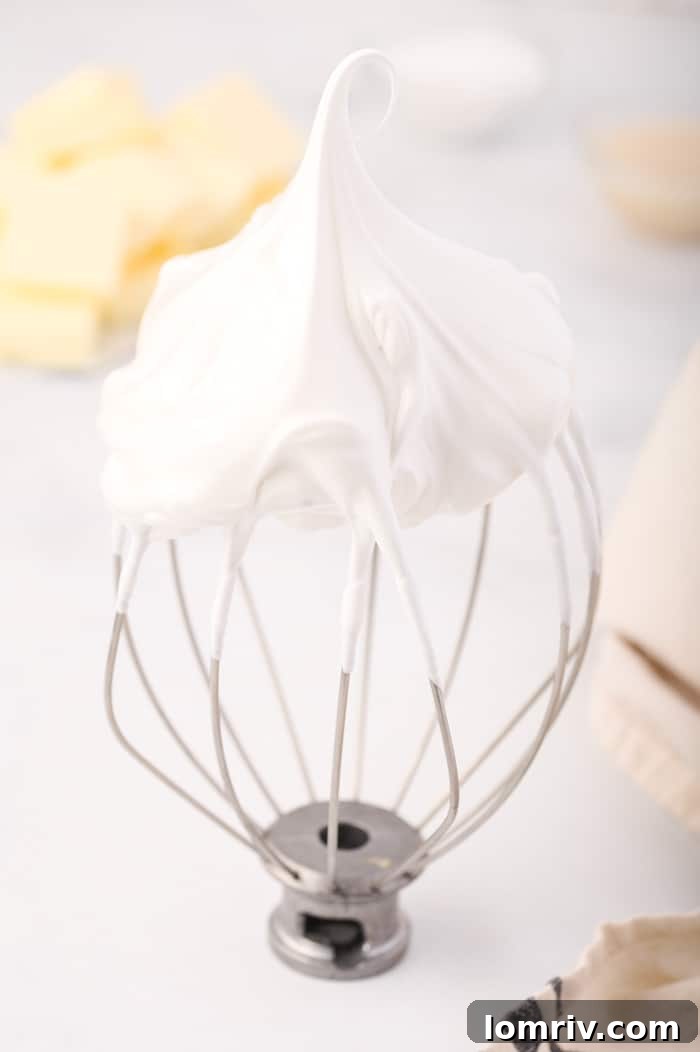
Step 3: Whip the Meringue. Carefully remove the bowl from the heat. Attach it to your electric mixer fitted with the whisk attachment. Begin beating on medium speed for about 5 minutes, then increase to medium-high speed. Continue whipping until stiff, glossy peaks form and the meringue has cooled completely. This typically takes about 6-10 minutes, depending on your mixer. The bottom of the bowl should feel cool to the touch. This step is vital for the stability of your buttercream.
Step 4: Add the Butter. Switch from the whisk attachment to the paddle attachment. With the mixer on medium speed, begin adding the softened butter, one cube at a time, beating well after each addition until it is fully incorporated. This is the stage where many bakers become nervous, as the mixture might initially look curdled or separated. Do not despair! As long as your meringue was cool and your butter was softened, it will come together. Be patient and continue beating at medium-high speed. The mixture will eventually transform into a smooth, silky, and luscious buttercream. This process can take anywhere from 5 to 10 minutes.
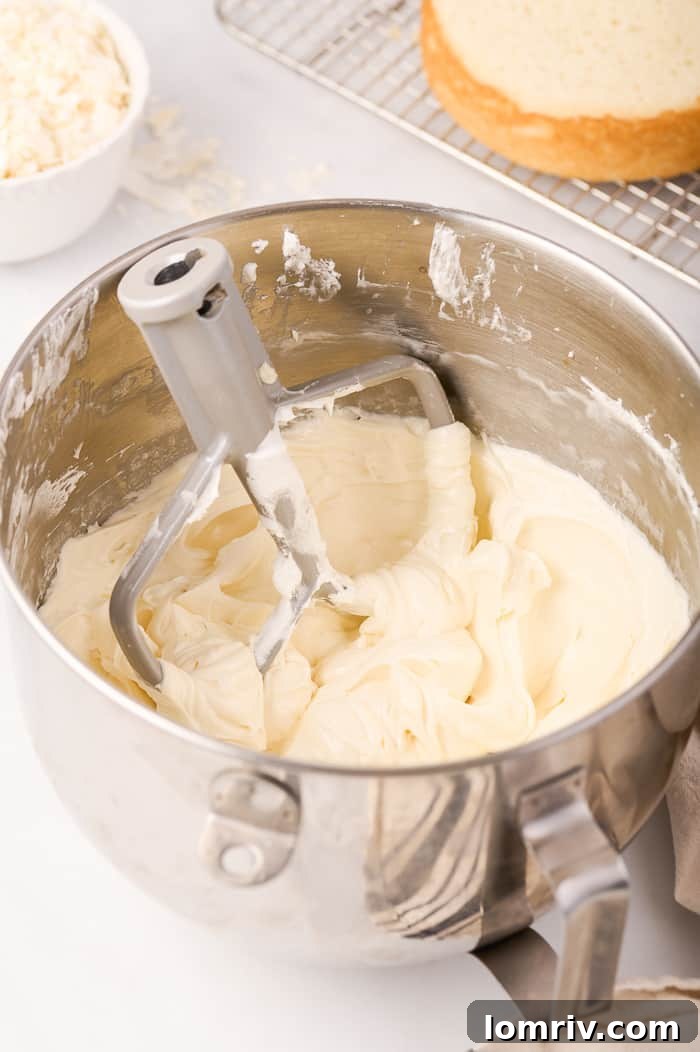
Step 5: Flavor the Buttercream. Once your buttercream is gloriously smooth and silky, add the cream of coconut, coconut extract, and vanilla extract. Beat for an additional minute or until all the flavorings are perfectly combined. And voilà, your exquisite coconut Swiss meringue buttercream is ready!
Assembling and Decorating Your Tropical Masterpiece
Now comes the exciting part – bringing all the components together to create your stunning Coconut Layer Cake!
Step 1: Prepare Cake Layers. Using a serrated knife, carefully level the tops of your cooled cake layers by removing any domes. This ensures your cake layers stack neatly and evenly.
Step 2: Layer and Frost. Place your first cake layer onto your chosen cake platter or stand. Spread an even layer of approximately 1 cup of the coconut Swiss meringue buttercream over the top. Repeat this process with the remaining cake layers, stacking them carefully. Once all layers are stacked, apply a thin crumb coat of frosting all around the cake. This traps any loose crumbs. Chill the cake for 15-20 minutes to set the crumb coat.
Step 3: Final Frosting and Decoration. Once the crumb coat is set, apply the remaining buttercream to the top and sides of the cake. Use an offset spatula or bench scraper to smooth the frosting as evenly as possible. Now, for the fun part: decoration! The easiest and most impactful decoration for this cake is toasted coconut flakes. Press them gently onto the sides of the cake and sprinkle them generously on top. You can also get creative with piped borders or other designs as desired. For a festive touch, especially around spring or Easter, consider adding edible flowers or pastel sprinkles.
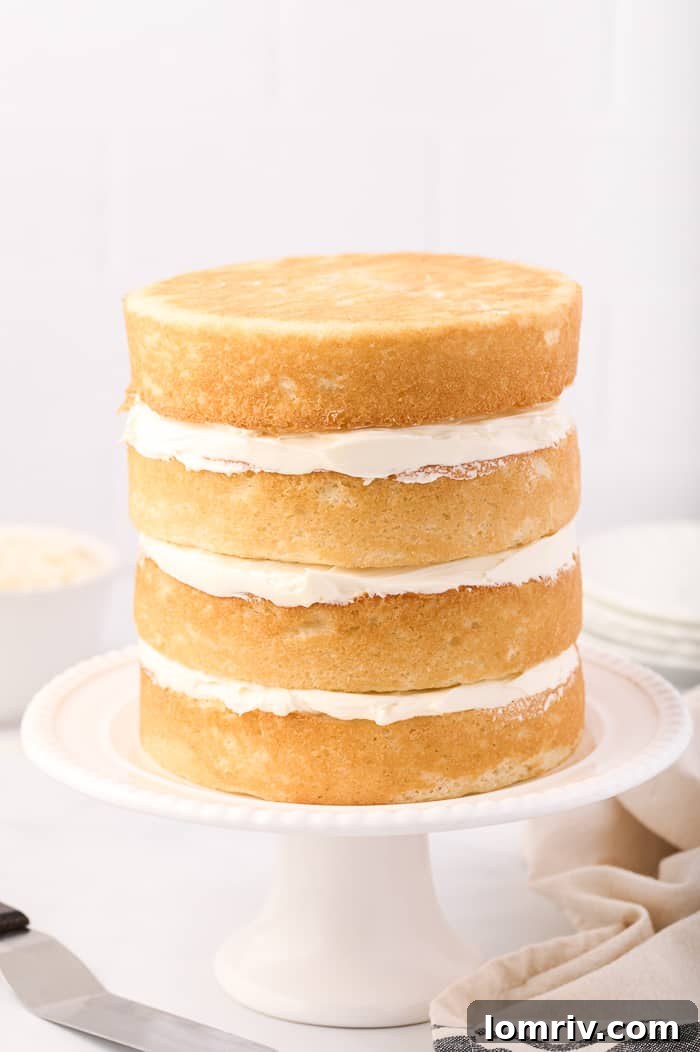
This beautifully decorated tropical coconut layer cake is now ready to impress and delight. Each slice offers a perfect balance of tender cake, rich coconut flavor, and light, airy buttercream.
How to Store Your Coconut Layer Cake
To keep your delicious coconut layer cake fresh and moist, store it in an airtight container in the refrigerator for up to 5 days. For the best flavor and texture, allow the cake to come to room temperature for about 30-60 minutes before serving.
More Irresistible Coconut Desserts
If you’ve fallen in love with this cake, you’ll surely enjoy exploring more of my coconut creations:
- Decadent Coconut Cheesecake
- Delightful Coconut Cupcakes (Blueberry Coconut Cupcakes)
- Refreshing Key Lime Parfait with Coconut
- Moist Coconut Loaf Cake
- Sweet & Tart Coconut Blueberry Layer Cake
I genuinely hope you take the opportunity to bake this tropical coconut layer cake the next time you’re craving that quintessential coconut experience. If you do try it, I’d absolutely love to see your creations! Share them with me by tagging #aclassictwist on Instagram. Happy baking, and enjoy every tropical bite!
Coconut Layer Cake Recipe
Coconut Layer Cake
A classic coconut layer cake bursting with rich coconut flavors! This soft and tender cake, infused with coconut cream, coconut extract, and coconut flakes, is exquisitely finished with a smooth and silky coconut Swiss meringue buttercream. Perfect for any celebration or a tropical escape at home.
1 hour
25 minutes
1 hour 25 minutes
Ingredients
For Coconut Cake:
- 2 large eggs, at room temperature
- 4 large egg whites, at room temperature (save the yolks for other recipes!)
- 3/4 cup cream of coconut or coconut cream (NOT COCONUT MILK), mix well before measuring
- 1/4 cup water
- 1 teaspoon pure vanilla extract
- 1 teaspoon coconut extract
- 2 1/4 cup cake flour, sifted
- 1 cup granulated sugar
- 1 tablespoon baking powder
- 1 teaspoon kosher salt
- 12 tablespoons (3/4 cup) unsalted butter, softened at room temperature, cut into pieces
- 1/4 cup unsweetened coconut flakes
For Swiss Meringue Coconut Frosting:
- 5 large egg whites
- 1 cup granulated sugar
- a pinch of salt
- 1 ½ cups (3 sticks) unsalted butter, softened to room temperature, and cut into pieces
- 2 tablespoons cream of coconut
- ½ teaspoon coconut extract
- ½ teaspoon vanilla extract
For Topping
- Toasted coconut flakes
Instructions
For Coconut Cake:
- Preheat oven to 350 degrees F (175°C). Grease 4 6-inch round cake pans or 3 8-inch round cake pans. Line the bottoms with parchment paper and grease the parchment as well.
- In a medium bowl, whisk together the egg and egg whites. Whisk in the coconut cream, water, vanilla, and coconut extracts into the egg mixture until well combined. Set aside.
- In a large bowl, combine the cake flour, sugar, baking powder, and salt. Using an electric mixer, mix on low for one minute. With the mixer still on low, add in the softened butter, one piece at a time, and mix until only pea-sized butter pieces remain, about 1 minute. Do not over-mix. This is the reverse creaming method, which yields a tender cake.
- Add in half of the wet ingredients from step 2. Increase speed to medium-high and beat until light and fluffy, about 1 minute. Reduce speed to low and add in the remaining wet ingredients. Mix on low until just combined, about 30 seconds. Stir the batter once by hand with a rubber spatula to ensure everything is incorporated without overmixing. Overmixing can result in a dense cake.
- Divide the batter evenly into the prepared cake pans. Bake until a toothpick inserted in the centers comes out clean, about 20-25 minutes, rotating pans halfway through baking. Begin checking for doneness around 16 minutes to avoid overbaking. If using larger cake pans, adjust the baking time accordingly.
- Let the cakes cool in the pans for 10 minutes before removing them and cooling completely on a wire rack.
- While the cakes are cooling, proceed to prepare the frosting.
- Once fully cooled, wrap the cake layers in plastic wrap and keep refrigerated for up to 2-3 days, or freeze for longer storage. Ensure they return to room temperature before frosting.
For Swiss Meringue Coconut Frosting:
- Whisk together egg whites, granulated sugar, and salt in a heatproof mixing bowl (preferably the bowl of a stand mixer) set over a pan of simmering water (the bowl should not touch the water). Whisk constantly until the mixture is warm (around 160°F or 71°C) and the sugar is completely dissolved (it should feel smooth when rubbed between your fingers), about 3 minutes. Remove from heat.
- Attach the bowl to an electric mixer fitted with the whisk attachment. Whip the egg white and sugar mixture for 5 minutes on medium speed. Increase speed to medium-high and whip until stiff, glossy peaks form and the meringue has cooled completely (test by feeling the bottom of the bowl), about 6-10 minutes.
- Switch to the paddle attachment. With the mixer on medium speed, add the softened butter, one piece at a time, beating well after each addition. The frosting might appear separated or curdled at first; this is normal. Continue beating until it comes together and becomes smooth and silky. Be patient; it will emulsify, provided your meringue was cool and all sugar dissolved.
- Once the buttercream is smooth and silky (and not before), beat in the cream of coconut, coconut extract, and vanilla extract until fully combined, for an additional one minute.
To Assemble Cake:
- Using a serrated knife, remove any domed tops from your cake layers to create flat surfaces. Place one cake layer onto your serving platter.
- Spread about 1 cup of frosting evenly over the top of the first cake layer.
- Carefully place the next cake layer on top and repeat the frosting process until your final cake layer is in place.
- Spread the remaining frosting on top and around the sides of the cake. Smooth the frosting as evenly as possible with an offset spatula or bench scraper.
- Decorate as desired. I recommend decorating with toasted coconut flakes around the sides and on top of the cake for a beautiful finish. You can also add edible flowers or other embellishments.
- Store any leftover cake refrigerated in an airtight container for up to 5 days. Allow to come to room temperature before serving for optimal flavor and texture.
Notes
- Please use coconut cream OR cream of coconut, not coconut milk. These are thicker and richer.
- Be very careful not to OVERMIX or OVERBAKE the cake, as this will lead to a dense or dry crumb. Wrapping cooled cakes tightly in plastic wrap helps to maximize moistness.
- Swiss meringue buttercream is less sweet than traditional American buttercream but provides an elegant, silky texture that beautifully complements this cake. If it’s your first time making it, be patient! It might look curdled initially, but it will come together after sustained beating with an electric mixer (up to 10 minutes with a hand mixer).
- For those who prefer a traditional buttercream, my favorite recipe can be adapted with coconut extract for this cake.
- This cake recipe is adapted from Sweetapolita.
Recommended Products
As an Amazon Associate and member of other affiliate programs, I earn from qualifying purchases.
- Goya Crema de Coco – Cream of Coconut (3 Pack, Total of 45oz)
- Fat Daddio’s Anodized Aluminum Round Cake Pan, 9-Inch x 3-Inch
- Pyrex Glass Mixing Bowl Set (3-Piece)
Nutrition Information:
Yield:
8 Servings
Serving Size:
1 Slice
Amount Per Serving:
Calories: 1148Total Fat: 78gSaturated Fat: 52gTrans Fat: 2gUnsaturated Fat: 21gCholesterol: 241mgSodium: 720mgCarbohydrates: 103gFiber: 4gSugar: 67gProtein: 14g
Making this Recipe?
Share it with us on Instagram using #aclassictwist so we can see what you are baking up in your kitchen!