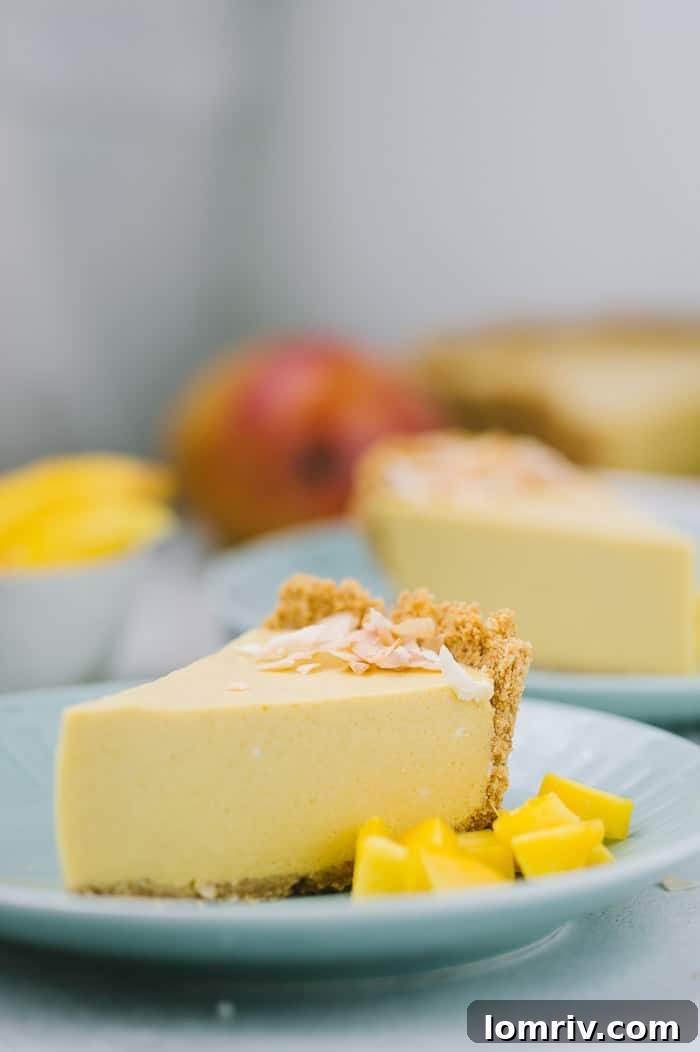
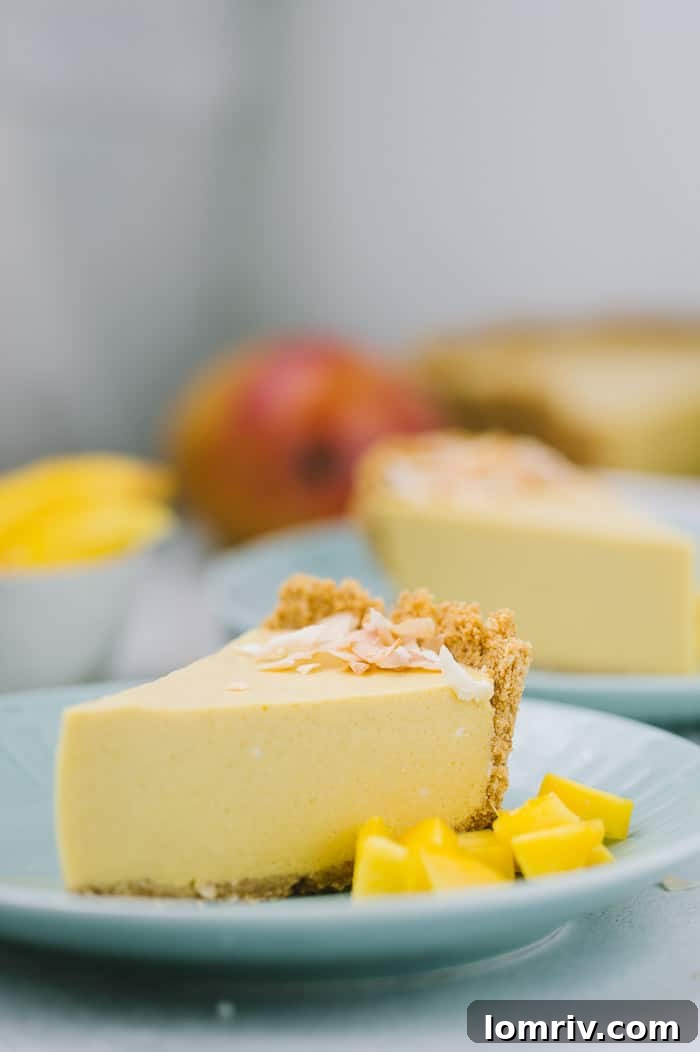
Welcome to a delightful escape for your senses, no matter the season outside! This extraordinary **Mango Pie with a Chewy Coconut Crust** is a vibrant masterpiece that promises to transport you straight to a sun-drenched beach with every single bite. Imagine a rich, tangy mango custard that bursts with tropical flavor, perfectly complemented by a uniquely chewy and aromatic coconut crust. This isn’t just a dessert; it’s an experience, a slice of pure, unadulterated bliss that proves some flavors are simply timeless.
Escaping Winter’s Chill with Tropical Flavors: Why This Mango Pie is a Must-Make
Perhaps you’re wondering why I’m championing a tropical delight like mango pie when the calendar might suggest cozy stews and hearty roasts. The simple truth is, we all need an escape, especially when winter’s grip feels particularly tight. This season has been relentless, and my kitchen has become my personal sanctuary for conjuring spring and summer vibes. Just like those sunny lemon ricotta pancakes or the decadent browned butter Meyer lemon cake that recently graced my table, this magnificent mango pie with its distinct coconut crust is another delicious invitation to a warmer, brighter place. It’s a powerful reminder that food has the incredible ability to uplift our spirits and transport us, even if only for a few delicious moments.
The inspiration for this specific mango pie recipe arrived in my inbox on a particularly snowy workday, a beacon of sunshine from the esteemed NYTimes. I was instantly captivated. I “oohed” and “goohed,” immediately scribbling down a shopping list, eager to recreate this tropical dream at home. That very night, I gathered the ingredients and embarked on my culinary journey. I cannot express how genuinely thrilled I was with the results; it was so phenomenal that I’ve made it twice since. This pie is a testament to the fact that some recipes are simply too good to pass up, regardless of the forecast outside your window.
A Personal Connection to Mangoes and Embracing New Baking Adventures
Growing up with a lush mango tree in my backyard, fresh mangoes were a staple of my childhood. Their sweet, juicy flesh holds a special place in my heart, evoking memories of warm, sun-drenched afternoons. While I’ve always adored eating them fresh, my baking adventures with mangoes had been somewhat limited, primarily to a delightful no-bake coconut mango mousse I created a few years back. So, encountering this innovative mango pie recipe was a truly exciting prospect, a chance to explore new dimensions of baking with this beloved fruit.
The Anatomy of Perfection: Crafting the Ultimate Mango Pie
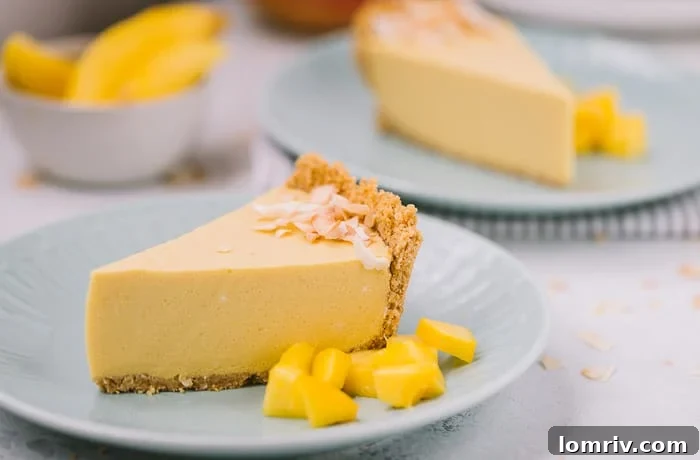
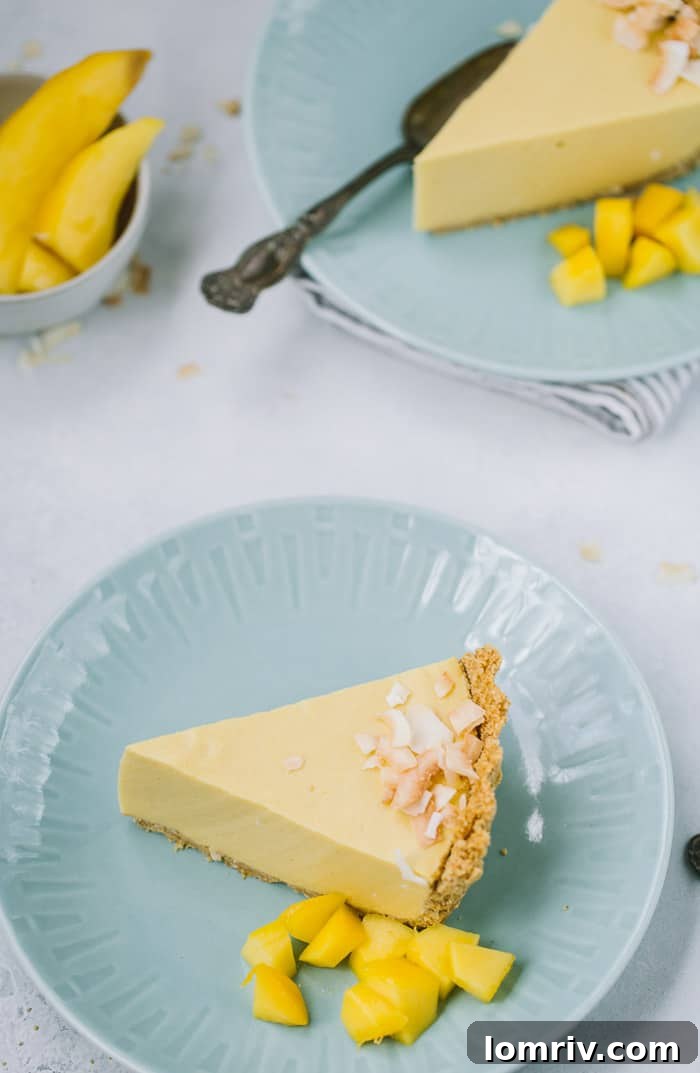
What sets this mango pie apart? It’s a harmonious blend of textures and flavors, starting with its exceptional crust. This pie rests upon a wonderfully crunchy yet chewy coconut crust, a beloved element adapted from my much-celebrated chocolate coconut tart. The inclusion of coconut introduces yet another layer of tropical delight, creating a foundation that perfectly complements the star of the show.
The filling is where the magic truly unfolds. It’s a luxurious custard, remarkably rich and subtly tangy, thanks to the thoughtful incorporation of cream cheese and light-as-air whipped cream. This combination yields a velvety smooth texture that melts in your mouth, carrying the bright, sunshine-y flavor of fresh mangoes. The chewy coconut crust provides an ideal textural contrast, making each bite an exquisite journey of creamy, fruity, and nutty notes. Seriously, this is not an exaggeration: it is unequivocally one of the best pies I’ve ever had the pleasure of creating and tasting. It’s pure tropical bliss in every single forkful.
Mastering Your Mango Pie: Tips for Success
Selecting the Perfect Mangoes
The quality of your mangoes directly impacts the flavor of your pie. Look for mangoes that are slightly soft to the touch, indicating ripeness. They should have a fragrant, sweet aroma near the stem. While color can be an indicator, it’s not always reliable as some varieties remain green even when ripe. For the best flavor, use fresh, ripe mangoes for your puree. If fresh mangoes are out of season or hard to find, high-quality frozen mango chunks can be thawed and pureed as a suitable alternative, ensuring you can enjoy this pie year-round.
The Chewy Coconut Crust: A Foundation of Flavor
This crust is a game-changer. The combination of unsweetened coconut flakes, almond meal, and a hint of cardamom creates a unique flavor profile that sets the stage for the vibrant filling. When processing the ingredients, pulse until they are finely combined but still retain a bit of texture – you want that satisfying chewiness. Ensuring the coconut oil and maple syrup are well-mixed with the dry ingredients will help the crust hold its shape beautifully. Pressing it firmly into the tart pan is crucial for a sturdy base that won’t crumble when sliced. Baking until golden ensures a wonderfully crisp exterior that contrasts perfectly with the creamy filling.
The Silky Mango Custard: A Symphony of Smoothness
Working with gelatin might seem daunting, but it’s key to achieving the pie’s firm yet tender custard texture. Always “bloom” the gelatin first by sprinkling it over cold water and allowing it to sit. This step ensures it dissolves smoothly without any lumps. When warming a portion of the mango puree, avoid boiling; gentle heat is sufficient to help the bloomed gelatin dissolve completely. The addition of cream cheese is what gives this pie its signature richness and subtle tang, balancing the sweetness of the mango. Make sure your cream cheese is at room temperature for easy blending, yielding a silky-smooth consistency. An immersion blender or a regular blender can be a great tool here if you desire the absolute smoothest filling possible, though a good electric mixer will also do the job admirably.
Chilling is Key for Perfect Slices
Patience is a virtue, especially with this pie. The chilling time of at least 5 hours, or preferably overnight, is essential. This allows the gelatin to fully set and the flavors to meld beautifully. Rushing this step will result in a soft, unset pie. A well-chilled pie is not only easier to slice but also offers the best textural experience, making it a truly refreshing treat.
Serving Suggestions and Creative Variations
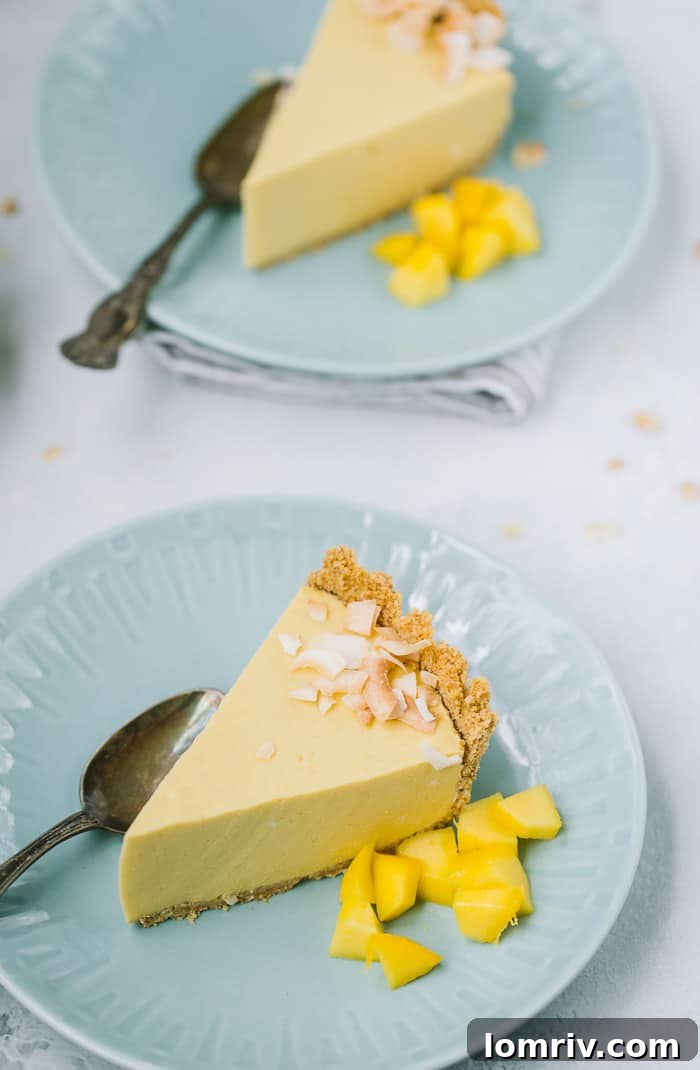
Just imagine yourself sitting on a pristine beach, the gentle sound of waves in the background, with a generous slice of this tropical mango pie. That’s the feeling it evokes! Serve this pie chilled, perhaps with a dollop of extra whipped cream or a sprinkle of toasted coconut flakes for added elegance and texture. A sprig of fresh mint or a few fresh mango slices can also elevate its presentation, making it an impressive dessert for any occasion, from casual family dinners to more formal gatherings.
For those looking to experiment, consider adding a touch of lime zest to the mango puree for an extra zing, or a pinch of ginger for a subtle warmth. While this recipe leans towards a tropical profile, the base could be adapted for other fruit purees, opening up a world of possibilities for delicious variations. The crust itself is naturally gluten-free, making this a wonderful option for guests with dietary considerations, ensuring everyone can enjoy a taste of paradise.
So, is it Spring yet? Perhaps not on the calendar, but definitely in our kitchens and on our plates! This Mango Pie with a Coconut Crust is more than just a dessert; it’s a celebration of flavor, a culinary journey, and a powerful antidote to the everyday. Dive in and let its tropical charm sweep you away.
Mango Pie with a Coconut Crust
This unique Mango Pie is rich and tangy with a chewy coconut crust that’s the perfect base for a vibrant custard that makes up the pie filling. A delightful tropical escape in every bite!
40 minutes
25 minutes
5 hours
6 hours 5 minutes
Ingredients
FOR THE CRUST:
- ½ cup unsweetened coconut flakes
- 1 1/2 cups almond meal/flour
- 1/4 teaspoon ground cardamon
- ¼ teaspoon salt
- 2 tablespoons coconut oil
- 2 tablespoons honey, maple syrup or agave syrup
For the Filling:
- ¾ cup cold water
- ½ cup granulated sugar
- 2 tablespoons plus ¼ teaspoon powdered gelatin (2 ½ packages)
- ½ cup heavy whipping cream, chilled
- 3 ¼ cups mango puree, at room temperature
- 4 ounces cream cheese, at room temperature
- 1 large pinch sea salt
Instructions
To make Crust:
- Heat oven to 350 degrees F. In the bowl of a food processor, combine the coconut flakes, almond meal, cardamom, and salt. Pulse briefly to combine, ensuring ingredients are well-mixed but not over-processed. In a small container, gently melt the coconut oil and maple syrup together until liquid. Pour this mixture into the food processor with the dry ingredients and pulse again until a well-combined, slightly sticky mixture forms.
- Carefully press the prepared crust mixture evenly into the bottom and up the sides of a 9-inch tart pan. For a perfectly uniform and firm base, use the flat bottom of a cup or a glass to press the crust hard and consistently into place.
- Bake the crust in the preheated oven for 10-12 minutes, or until it turns a lovely golden brown and feels firm to the touch. Once baked, remove it from the oven and allow it to cool completely on a wire rack before adding the filling. This prevents a soggy crust.
To make the Filling:
- In a large bowl, place the cold water. In a separate small bowl, mix ¼ cup of the granulated sugar and the powdered gelatin together. Evenly sprinkle this sugar-gelatin mixture over the surface of the cold water. Allow it to sit undisturbed for a few minutes (about 5-10 minutes) to “bloom” or soften. This ensures the gelatin dissolves smoothly.
- While the gelatin is blooming, prepare your whipped cream. In a separate bowl, combine the heavy whipping cream (ensure it’s well-chilled) and the remaining ¼ cup of granulated sugar. Using an electric mixer, whip the mixture until stiff peaks form. Be careful not to over-whip. Set the whipped cream aside in the refrigerator.
- In a small saucepan set over medium-low heat, gently warm up 1 cup of the mango puree. It is crucial not to bring the puree to a boil; it just needs to warm slightly to help dissolve the gelatin, typically taking about 2-3 minutes on medium heat. Pour the warmed mango puree over the bloomed gelatin mixture in the large bowl. Whisk continuously until the gelatin has completely dissolved into the mango puree and the mixture is smooth. Slowly whisk in the remaining room temperature mango puree. At this point, switch to an electric mixer with a beater attachment and beat on medium speed for a few minutes to ensure everything is thoroughly combined and smooth.
- In a separate medium bowl, and using a rubber spatula or an electric mixer, beat the room temperature cream cheese until it is soft, smooth, and free of lumps. Add the softened cream cheese to the mango mixture, along with the large pinch of sea salt. Mix on medium speed until all ingredients are well combined and the mixture is consistently smooth. (For an extra silky texture, an immersion blender or a regular blender can be used at this stage to achieve a perfectly smooth consistency. However, a good electric mixer will still yield excellent results.)
- Using a rubber spatula, gently fold about ¼ of the mango-cream cheese mixture into the whipped cream. This lightens the whipped cream and makes it easier to incorporate. Then, carefully fold this combined mixture back into the larger amount of mango custard until no streaks of whipped cream remain, ensuring a light and airy texture.
- Pour the creamy custard filling into your completely cooled, prepared coconut crust, spreading it evenly to create a smooth top. NOTE: This recipe yields a generous amount of custard. You will likely have more than enough for a single 9-inch pie. If desired, you can pour the excess custard into small ramekins and let them set overnight for individual desserts, or consider doubling the crust recipe to make two pies.
- Refrigerate the pie for at least 5 hours, or preferably overnight, to allow the custard to fully set and chill thoroughly. Serving this pie well-chilled is essential for the best texture and flavor.
Notes
This incredible pie filling recipe is adapted with appreciation from the NYTimes.
- As noted in the instructions, you will have more custard than is needed for a single 9-inch pie. You have a couple of options: you can pour the remaining custard into individual ramekins and let them set overnight in the refrigerator for delicious mini desserts, or you can double the crust recipe provided above to make two full pies.
- The pie pictured in this article was made using a deep 9-inch tart pan, which was able to accommodate the entire volume of the custard filling, resulting in a wonderfully substantial pie.
Making this Recipe?
Share it with us on Instagram using #aclassictwist so we can see what you are baking up in your kitchen!