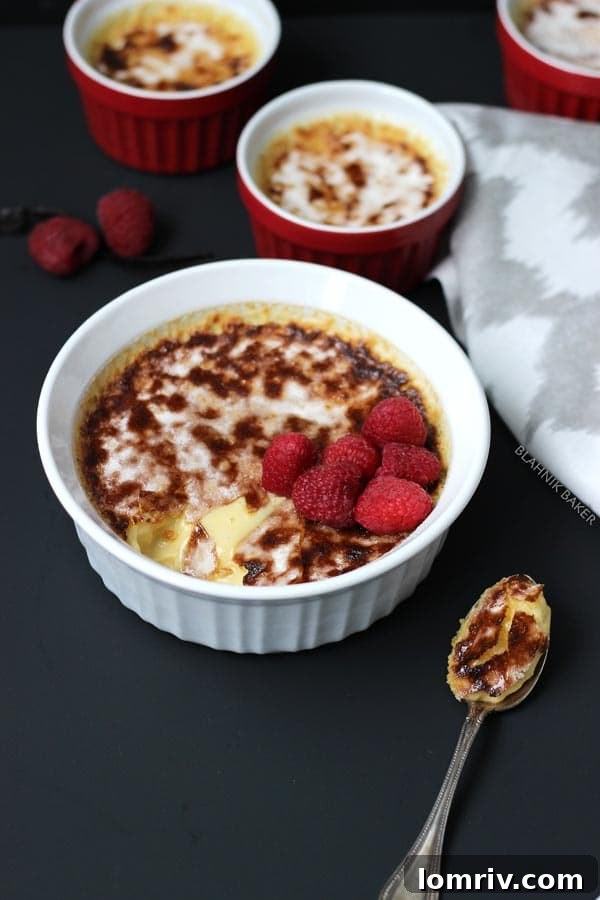
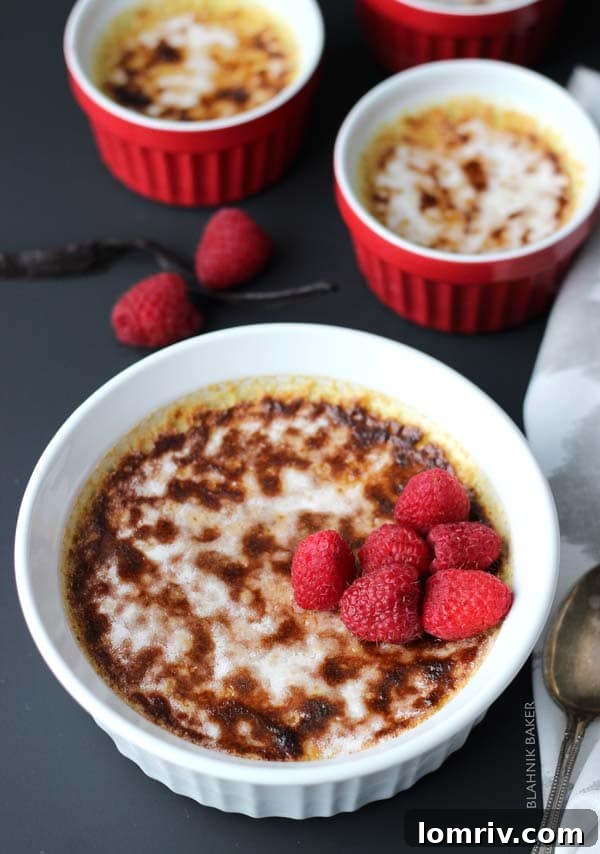
This classic vanilla bean crème brûlée is silky smooth, rich and delicious with a Chambord twist.
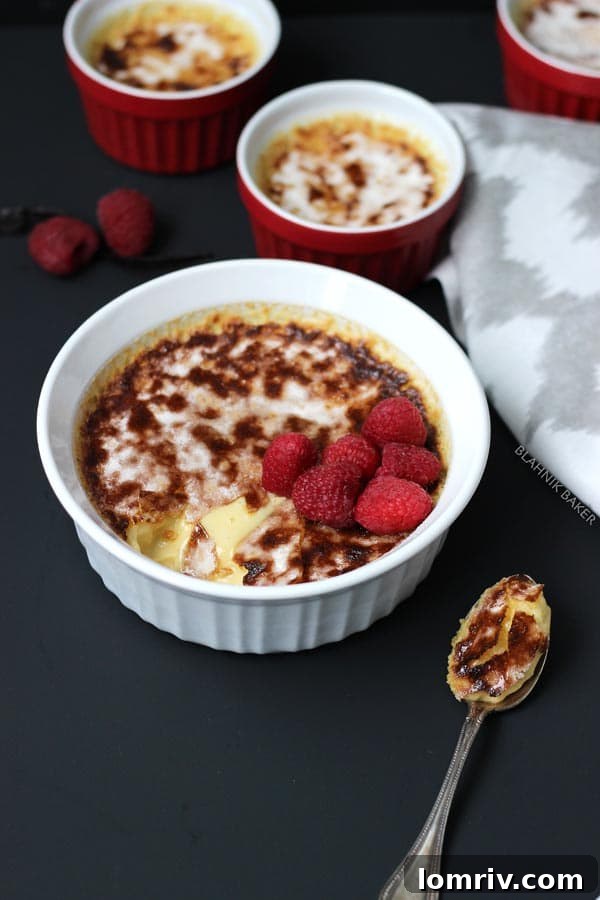
Unveiling the Simplicity Behind the Sophisticated Vanilla Bean Crème Brûlée
Embarking on a culinary journey, especially one that leads to mastering the art of baking, can be both exhilarating and, at times, incredibly intimidating. My adventure into the world of flour, sugar, and butter began relatively late in life, at the age of 28. Prior to this, my appreciation for delectable baked goods was strictly limited to the creations of professional bakers, bustling patisseries, and exquisite restaurant desserts. The thought of concocting something from scratch in my own kitchen felt like an insurmountable challenge, a realm reserved for seasoned culinary experts.
Over time, as I grew more comfortable with my trusty stand mixer and the rhythm of recipe following, I found myself achieving delightful successes. I could effortlessly whip up a decadent chocolate peanut butter cake or craft charming pink velvet cupcakes that garnered smiles and compliments. Yet, a particular list of desserts loomed large in my mind, an assembly of culinary titans I deemed too complex, too delicate, or simply too “fancy” for a home baker like myself. This formidable list included soufflés, the intricate art of bread making, delicate éclairs, flaky puff pastries, and, prominently, crème brûlée. These were the residents of my incredibly daunting list, dishes I admired from afar but never dared to attempt.
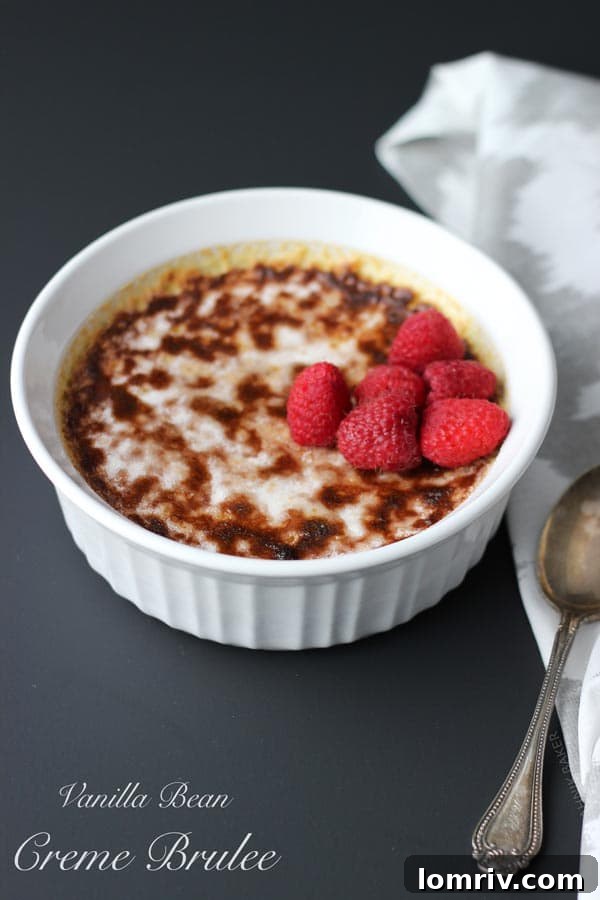
Dispelling the Myth: Crème Brûlée is Easier Than You Think
It’s truly remarkable how a casual conversation can completely shift your perspective. During a routine gynecologist appointment, a discussion about hobbies unexpectedly turned to baking. I found myself lamenting my “daunting list,” especially my apprehension towards crème brûlée. To my surprise, my doctor, amidst our rather unconventional setting (yes, it was quite odd, but memorable!), began passionately explaining how remarkably simple crème brûlée actually was to prepare at home. She insisted it had no business being on my intimidating list.
By the end of the exam, she had scribbled her mother’s time-honored recipe, a family favorite passed down through generations, on the back of my prescription slip. I even shared a snapshot of it here on Instagram, a testament to its authenticity. And, much to my astonishment, she was absolutely right. The process of making crème brûlée is deceptively straightforward, yielding a dessert that belies its simple origins with an air of profound sophistication. This particular vanilla bean crème brûlée recipe, infused with a subtle Chambord twist, stands as a delicious testament to that newfound revelation.
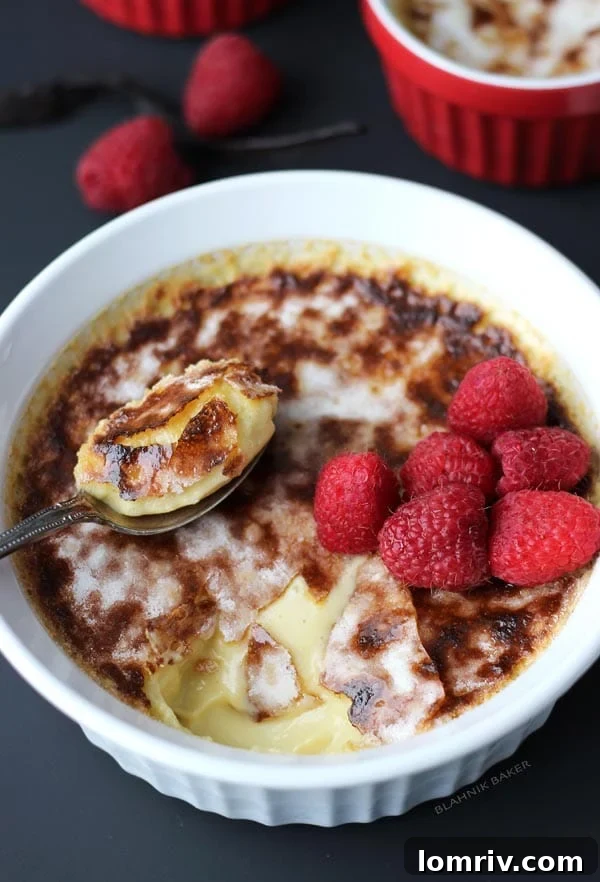
The Elegant Simplicity of Crème Brûlée: A Culinary Deconstruction
Despite its impressive presentation in high-end restaurants, crème brûlée is far from intimidating. At its core, it’s a beautifully simple custard that relies on a few fundamental ingredients and techniques. The magic begins with combining rich egg yolks with granulated sugar, whipping them until they achieve a pale yellow hue and a slightly thickened consistency. The next crucial step involves gently incorporating hot cream into this egg mixture – a process known as tempering – to prevent the eggs from scrambling, thereby creating a wonderfully smooth and luscious custard base.
This rich, aromatic custard is then carefully baked, typically in a water bath to ensure even cooking and a silky texture. After a period of chilling, which allows the custard to set perfectly, the pièce de résistance is added: a delicate layer of sugar, expertly caramelized with a kitchen torch or under a broiler, forming that signature crisp, glass-like topping. That’s truly all there is to it. So, if you, like my former self, are a baking novice convinced that the crème brûlée you savored at dinner is an unattainable feat, rest assured, it absolutely is not.
The Heart of the Flavor: Uncompromising Quality Ingredients
The secret to an truly exceptional vanilla bean crème brûlée lies unequivocally in the quality of its primary flavor agent: the vanilla bean. For this particular recipe, I reached for my cherished stash of Ugandan vanilla beans from Lagrima Vanilla Extract. Ugandan vanilla is renowned for its rich, creamy, and intensely aromatic profile, often carrying notes of chocolate and dried fruit, which perfectly complements the decadent custard base. The process of splitting the bean and scraping out its thousands of tiny, fragrant seeds allows for a profound infusion of this intense vanilla aroma into the heavy cream, elevating the entire dessert experience to new heights.
Beyond the vanilla, the addition of a tablespoon of Chambord, a luxurious French raspberry liqueur, introduces a sophisticated “twist” that harmonizes beautifully with the creamy vanilla. This optional, yet highly recommended, ingredient imbues the silky-smooth custard with subtle hints of sweet and tart raspberry, adding another layer of complexity without overpowering the star vanilla flavor. When this exquisitely flavored custard is paired with the satisfying crack of the crusty, melted sugar topping, the result is nothing short of fabulous – a symphony of textures and tastes that is both comforting and elegantly celebratory.
Understanding the role of each ingredient is key to achieving perfection. Heavy cream forms the luxurious base, providing the richness necessary for a truly indulgent crème brûlée. The egg yolks act as the primary thickener, creating the smooth, custardy texture when gently heated. Granulated sugar provides the sweetness, both within the custard and for the iconic caramelized topping. Turbinado sugar, with its larger crystals and molasses notes, is ideal for the topping as it creates a beautiful, even crust when torched. Every component plays a vital role in crafting this iconic French dessert.
Mastering the Technique: Step-by-Step Perfection
While the ingredients are few, the technique, though simple, requires attention to detail. The tempering of the egg yolks is paramount: gradually pouring the hot cream into the whisked yolks while continuously stirring prevents the eggs from cooking prematurely and ensures a uniformly smooth custard. The water bath, or bain-marie, during baking is another non-negotiable step. This gentle cooking environment prevents the edges of the custard from overcooking and becoming rubbery, instead promoting a slow, even set that results in that signature silky, quivering texture.
Chilling the custards for at least four hours, or ideally overnight, is crucial for them to fully set and for the flavors to meld. Rushing this step can lead to a less firm, less satisfying dessert. Finally, the dramatic flourish of caramelizing the sugar topping is where the crème brûlée truly earns its name (“burnt cream”). Whether using a kitchen torch for precision or a broiler for a quick finish, the goal is a beautiful, amber crust that shatters with a satisfying crack upon impact. Be vigilant during this stage, as sugar can go from perfectly golden to burnt in a matter of seconds – a lesson I, too, learned through experience!
Variations and Serving Suggestions for Your Crème Brûlée
While the vanilla bean crème brûlée with a Chambord twist is a masterpiece on its own, its versatility allows for exciting variations. Consider infusing the cream with other flavors: lavender, espresso beans, orange zest, or even star anise can add a unique aromatic dimension. For a chocolate lover’s dream, a touch of cocoa powder or melted dark chocolate can be folded into the custard base. The optional Chambord can be swapped for other liqueurs like Grand Marnier for an orange note, Kahlúa for a coffee twist, or even a high-quality rum or brandy for added depth.
When it comes to serving, fresh raspberries are a classic and elegant accompaniment, their tartness perfectly cutting through the richness of the custard. However, feel free to experiment with other fresh berries, a dollop of whipped cream, a sprinkle of toasted nuts, or a thin slice of candied orange peel. A small scoop of high-quality vanilla ice cream can also be a delightful addition, creating a play on temperatures and textures. The beauty of homemade crème brûlée is that you can truly make it your own, adapting it to your personal taste and the occasion.

Vanilla Bean Crème Brûlée
This classic vanilla bean crème brûlée is silky smooth, rich and delicious with a Chambord twist!
30 minutes
40 minutes
4 hours
5 hours 10 minutes
Ingredients
- 1 vanilla bean
- 2½ cups heavy cream
- 1 tablespoon Chambord, or any raspberry liqueur (optional)
- 8 large egg yolks
- ½ cup granulated sugar
- Topping: ¼ cup turbinado sugar (or superfine sugar), fresh raspberries for garnish
Instructions
- Preheat oven to 300 degrees F (150 degrees C).
- Carefully split the vanilla bean lengthwise in half using a sharp knife. Scrape out the tiny, fragrant seeds with the back of the knife.
- In a medium saucepan, combine the heavy cream with the scraped vanilla bean seeds (and the pod itself for maximum flavor). Heat over medium heat, stirring occasionally, until the cream begins to foam gently around the edges. Do not allow it to boil vigorously.
- Remove the saucepan from the heat. Stir in the Chambord (if using). Let the mixture cool for approximately 10 minutes to allow the vanilla flavor to steep and prevent cooking the eggs prematurely. Strain the mixture through a fine-mesh sieve to remove the vanilla bean pod and any potential cooked bits, ensuring a silky-smooth custard.
- In a large bowl, vigorously whisk the egg yolks and granulated sugar together until the mixture is pale yellow in color and has slightly thickened and become creamy. This step is crucial for incorporating air and dissolving the sugar. While continuously stirring with a whisk, gradually and slowly pour the warm (not hot) cream mixture into the egg yolk mixture. Adding the cream slowly, a little at a time, helps to temper the eggs and prevent them from curdling or scrambling. Mix until fully combined and smooth.
- Pour the custard mixture evenly into 6 individual 6-ounce ramekins. Arrange the filled ramekins in a larger baking pan (a 9×13-inch pan or similar size works well). Carefully fill the baking pan with hot water, ensuring the water level comes about halfway up the sides of the ramekins. This water bath (bain-marie) provides gentle, even heat, preventing the custards from overcooking and creating a perfectly smooth texture.
- Transfer the baking pan with the ramekins to the preheated oven. Bake the custards until they are set around the edges but still have a slight jiggly movement in the center when gently shaken, typically about 35-40 minutes. The exact time may vary based on your oven. Remove the ramekins from the water bath and place them on a wire cooling rack to cool completely to room temperature. Once cooled, cover each ramekin tightly with plastic wrap and refrigerate for a minimum of 4 hours, or ideally overnight, to allow the custards to fully set and chill.
- When you are ready to serve, remove the chilled ramekins from the refrigerator. Evenly sprinkle approximately 1 tablespoon of turbinado sugar (or superfine granulated sugar) over the top of each custard.
- To create the iconic caramelized crust, use a kitchen torch to melt the sugar, moving the flame constantly in a circular motion until it turns a beautiful golden-brown and forms a hard, glass-like shell. Alternatively, if you don’t have a torch, place the sugared ramekins under a preheated broiler. Broil for about 30 seconds to 1 minute, watching constantly and carefully, until the sugar melts and caramelizes. Be extremely careful not to burn the sugar, as it can happen very quickly (a common pitfall I’ve experienced!).
- Allow the caramelized sugar topping to cool for a few minutes until it hardens and becomes brittle. Serve immediately with fresh raspberries, if desired, to add a bright, fresh contrast to the rich custard. Enjoy your homemade, perfectly smooth, and utterly delicious Vanilla Bean Crème Brûlée!
Making this Recipe?
Share it with us on Instagram using #aclassictwist so we can see what you are baking up in your kitchen!