
Indulge in the vibrant flavors of spring with this exquisite Lemon Lime Macarons recipe! Perfect for impressing guests or simply treating yourself, these delicate cookies boast a bright, citrusy zest that awakens the palate. Beyond just a recipe, we’ll dive into essential tips and tricks, transforming you into a macaron master. Get ready to bake the most beautiful and delicious macarons you’ve ever tasted!

Hello, fellow baking enthusiasts! While the cozy charm of winter flavors and the beauty of snow hold a special place in our hearts, there comes a time when we all yearn for the warmth of sunshine and the cheerful burst of spring. Who’s with me in eagerly awaiting those longer, brighter days filled with outdoor adventures and vibrant treats? Every season has its charm, but there’s something truly magical about the freshness that spring brings.
And what better way to usher in the glorious spirit of spring than with these delightful lemon lime macarons? Their light, tangy, and undeniably cheerful flavors are guaranteed to bring a smile to your face. Imagine biting into a delicate, crisp shell, followed by a burst of zesty, creamy filling – it’s pure happiness in every bite. This recipe isn’t just about making a dessert; it’s about embracing the joy of baking and the anticipation of warmer days ahead.
Demystifying Macarons: Your Path to Perfect Lemon Lime Macarons
The very word “macaron” can conjure images of elaborate patisserie windows and seem a tad intimidating for the home baker. Many find the idea of making them daunting, often citing the precise measurements in grams or the elusive “macaron feet.” But fear not! I promise to guide you through each step with clarity and confidence, turning what might seem like a complex process into an enjoyable baking adventure. With a few key pieces of equipment and some patience, you’ll discover that creating these beautiful lemon lime macarons is entirely achievable.
One of the initial hurdles for many is the shift from volumetric measurements (cups and spoons) to gram measurements. However, once you embrace the precision of a kitchen scale, you’ll realize it’s actually a much more accurate and consistent way to bake, especially for delicate recipes like macarons. This accuracy is your secret weapon for achieving those perfectly smooth shells and characteristic “feet” that define a truly excellent macaron. Let’s conquer any hesitation you might have and embark on this delicious journey together!

Essential Ingredients for Your Lemon Lime Macarons
The beauty of macarons lies in their simple yet precise ingredient list. Quality matters here, so let’s break down what you’ll need and why each component is crucial for your perfect lemon lime macarons:
- Superfine Almond Flour: This is the backbone of your macaron shells. “Superfine” is key – it means the almonds have been ground to a very fine powder, which contributes to the smooth texture of the shells. Regular almond meal might be too coarse and can lead to bumpy macarons. If your almond flour isn’t superfine, a quick pulse in a food processor followed by sifting is essential.
- Confectioner’s Sugar (Powdered Sugar): Also known as icing sugar, this finely milled sugar provides structure and sweetness. It also helps create that delicate crispness.
- Granulated Sugar: Used in the meringue, granulated sugar stabilizes the egg whites and gives the shells their sheen and structure.
- Egg Whites: The star of the meringue! For best results, use aged egg whites (separated a day or two in advance and left at room temperature for an hour before using). Room temperature egg whites whip up with more volume and stability. Ensure absolutely no trace of yolk is present, as fat can prevent the whites from whipping properly.
- Cream of Tartar: This acidic powder helps stabilize the egg whites, promoting a stronger, more stable meringue. It’s a small but mighty ingredient!
- Fresh Lemon and Lime Zest: This is where the magic of our lemon lime macarons truly shines! The zest provides intense, natural citrus flavor and aroma without adding excess liquid. Use a microplane to get only the brightly colored outer layer, avoiding the bitter white pith.
- Lemon Extract and Vanilla Extract: These extracts boost the citrus flavor and add a layer of aromatic complexity to both the shells and the filling. Good quality extracts make a noticeable difference.
- Food Coloring (Optional): A few drops of yellow or green gel food coloring can enhance the visual appeal of your macarons, giving them that cheerful spring vibe. Gel coloring is preferred over liquid as it won’t thin out your batter.
- Unsalted Butter (Softened): For the rich and creamy filling, use unsalted butter at room temperature. This ensures it whips up light and fluffy.
- Heavy Cream: A touch of heavy cream adds richness and helps achieve the perfect consistency for your lemon lime buttercream filling.
Essential Equipment for Macaron Success
Having the right tools makes all the difference when baking macarons. Here’s what you’ll need:
- Kitchen Scale: Non-negotiable for precise gram measurements, which are crucial for macaron success.
- Food Processor: For pulsing almond flour, confectioner’s sugar, and zest into an even finer powder, ensuring smooth shells.
- Fine-Mesh Sieve: Essential for sifting the dry ingredients to remove any larger almond bits, preventing bumpy shells.
- Stand Mixer (or Hand Mixer): A powerful mixer with a whisk attachment is vital for achieving stiff peaks in your meringue.
- Rubber Spatula: Used for the delicate “macaronage” process – folding the dry ingredients into the meringue.
- Piping Bags and Round Tips (e.g., Wilton 1A or Ateco 805): For piping consistent, uniform macaron shells.
- Parchment Paper or Silicone Baking Mats: Parchment paper with drawn templates is excellent for guiding your piping. Silicone mats also work well for even baking.
- Baking Sheets: Sturdy, light-colored baking sheets help prevent over-browning.
- Thermometer (Optional but Recommended): An oven thermometer can help verify your oven’s true temperature, which is critical for macaron baking.
Crafting Your Perfect Lemon Lime Macarons: Step-by-Step Guide
Part 1: The Meringue Shells
The key to beautiful macarons lies in perfectly executed shells. Take your time with each step, and don’t rush the process!
- Prepare Your Template: Begin by drawing 1 1/2-inch circles on the back of a sheet of parchment paper, leaving about an inch between each circle. A round cookie cutter or a small glass can be used for this. Place this parchment paper, marked-side down, onto a sturdy baking sheet. The circles will guide your piping, ensuring uniform macaron shells.
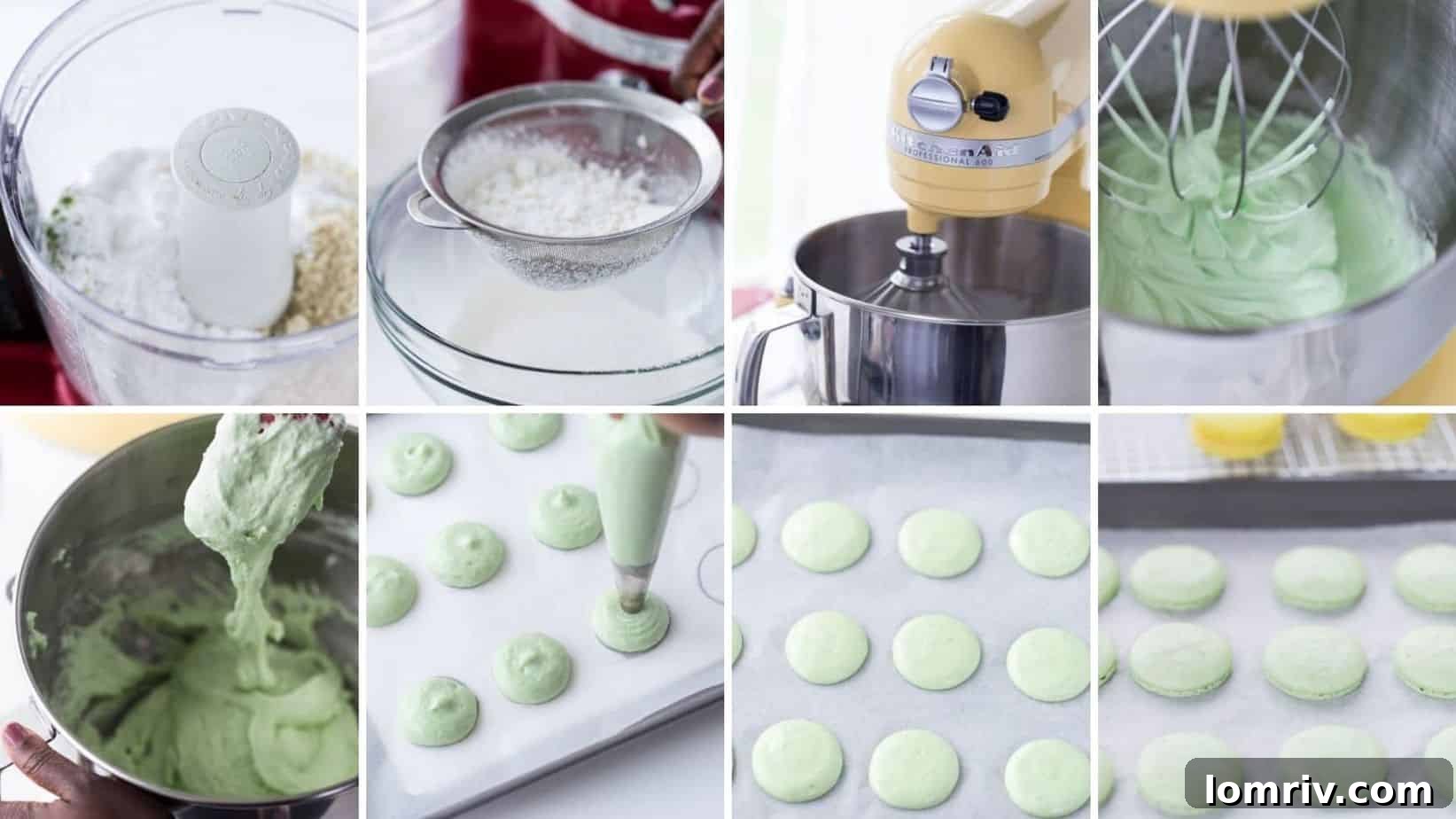
- Process Dry Ingredients: In a food processor, combine your superfine almond flour, confectioner’s sugar, and the vibrant zest of one lemon or lime. Pulse these ingredients together until they form an even finer powder. This step helps to ensure the smoothest possible macaron shells.
- Sift, Sift, Sift: Transfer the pulsed mixture to a fine-mesh sieve and sift it thoroughly into a large bowl. This is a critical step to remove any remaining coarse almond bits, which can lead to textured or lumpy shells. Aim to have less than 2 tablespoons of almond bits left in your sieve; discard any larger remnants. Set the finely sifted mixture aside.
- Whip the Meringue: In the clean, dry bowl of your stand mixer fitted with the whisk attachment, combine the room temperature egg whites, cream of tartar, and granulated sugar. Begin whipping on medium-low speed until the mixture is frothy, then gradually increase to medium-high speed. Continue whipping until stiff, glossy peaks form. When you lift the whisk, the meringue should hold its shape firmly without drooping.
- Add Flavor and Color: Once stiff peaks are achieved, carefully add your lemon extract (or lime juice if preferred) and a few drops of yellow or green gel food coloring (if using). Whip for another minute on medium-high speed to fully incorporate the color and flavor.
- The Art of Macaronage: This is arguably the most crucial step! Add the sifted dry ingredients to your meringue. Using a rubber spatula, gently begin to fold the dry mixture into the meringue. The goal is to deflate the meringue just enough to achieve the right consistency without overmixing. Press the spatula against the side of the bowl and scoop from the bottom, rotating the bowl as you go. Continue folding until the batter is smooth, shiny, and flows like slow-moving lava or a thick ribbon from your spatula when lifted. This typically takes about 20-25 gentle folds, but consistency is key. Test by allowing some batter to fall from your spatula; if it forms a ribbon and slowly melts back into the main batter in about 10-15 seconds, it’s ready. If it breaks quickly, fold a few more times. Stop immediately once the correct consistency is reached.
- Pipe the Shells: Transfer the macaron batter to a pastry bag fitted with a large round tip (e.g., Wilton 1A). Holding the bag perpendicular to your baking sheet, pipe uniform circles onto your prepared parchment paper templates. Apply steady, even pressure, then quickly flick your wrist to stop the flow of batter, aiming for a small “tail” that quickly flattens.
- Remove Air Bubbles: Once all shells are piped, firmly tap the baking sheet on your counter several times. This helps to release any trapped air bubbles, which can cause cracks during baking. You can also use a toothpick to pop any visible bubbles on the surface.
- Rest and Dry: Let the piped macaron shells sit on the counter at room temperature for 20-60 minutes, or until a “skin” forms. You should be able to gently touch a shell without any batter sticking to your finger. This resting period is crucial for the development of the signature “feet” during baking. Humidity levels will affect resting time; on humid days, it might take longer.
- Bake to Perfection: Preheat your oven to 300°F (150°C). Bake the macaron shells for 11-15 minutes. Baking times can vary by oven, so keep a close eye on them. The shells are done when they have developed their “feet” and no longer wobble on their feet when gently nudged.
- Cool Completely: Remove the baking sheet from the oven and let the macaron shells cool completely on the pan before attempting to remove them from the parchment paper. Peeling them off too soon will result in broken shells. Patience is a virtue here!
Part 2: The Zesty Lemon Lime Filling and Assembly
No macaron is complete without a luscious filling. Our lemon lime buttercream is the perfect complement to the crisp shells.
- Whip the Butter: In the bowl of your stand mixer fitted with the paddle attachment, whip the softened unsalted butter on medium speed until it is light, fluffy, and pale in color. This usually takes 2-3 minutes. Scrape down the sides of the bowl as needed.
- Add Remaining Filling Ingredients: Gradually add the powdered sugar to the whipped butter, mixing on low speed until combined, then increase to medium-high. Add the heavy cream, the fresh zest of 1 lemon or lime, vanilla extract, and lemon extract. Continue whipping for an additional 2-3 minutes until the filling is wonderfully light, airy, and creamy. Taste and adjust for flavor if desired – you can add a touch more zest or extract for a stronger citrus punch.
- Assemble Your Macarons: Transfer the prepared lemon lime filling to another pastry bag fitted with a large round tip. Take two cooled macaron shells of similar size. Pipe a generous dollop of filling onto the flat side of one shell, then gently sandwich it with the second shell. Press lightly until the filling spreads to the edges.
- Chill and Enjoy: Store your finished lemon lime macarons in an airtight container in the refrigerator for at least a few hours, or ideally overnight. This allows the flavors to meld and the shells to soften slightly, achieving that delightful chewiness. Allow them to come to room temperature for about 15-20 minutes before serving for the best texture and flavor experience.

Troubleshooting Common Macaron Issues
Even seasoned bakers encounter challenges with macarons. Here are some common problems and their solutions:
- No “Feet”: This is often due to under-mixed meringue, over-mixed batter (macaronage), or insufficient drying time. Ensure your meringue is stiff, your batter is the right consistency, and the shells have developed a dry skin before baking.
- Cracked Shells: Usually caused by insufficient resting time (no dry skin), too high oven temperature, or trapped air bubbles. Tap your trays firmly and ensure a good dry skin forms.
- Hollow Shells: A common issue that can be tricky. It might stem from under-whipped meringue, over-macaronage, or incorrect oven temperature (too high or too low). Experiment with slight adjustments to your meringue stiffness and oven temperature.
- Bumpy Shells: This means your dry ingredients weren’t sifted finely enough or the almond flour wasn’t superfine. Always process and sift your almond flour and powdered sugar.
- Chewy but Not Crisp: Macarons should have a delicate crispness on the outside and a chewy interior. If they’re too chewy, they might be underbaked. If they’re too crisp, they might be overbaked.
Tips for Macaron Success
- Precision is Paramount: Invest in a good kitchen scale. Macarons are a science, and precise measurements are non-negotiable.
- Cleanliness Matters: Ensure your mixing bowl and whisk are absolutely spotless and free of any grease. Any trace of fat can prevent egg whites from whipping properly.
- Patience, Patience, Patience: From separating egg whites to cooling the shells, patience is your best ingredient. Don’t rush any step.
- Know Your Oven: Ovens can vary wildly. An oven thermometer is a small investment that can save you a lot of heartache. If your macarons are burning or not developing feet, your oven temperature might be off.
- Practice Makes Perfect: Don’t be discouraged if your first batch isn’t perfect. Macaron making is a skill that improves with practice. Each batch teaches you something new!
Storage and Enjoyment
Once assembled, these lemon lime macarons are best stored in an airtight container in the refrigerator. They taste even better the next day, as the filling has time to soften the shells, creating that signature delicate chew. They can be stored in the fridge for up to 5-7 days. For longer storage, freeze them in an airtight container for up to 1-2 months. Thaw them in the refrigerator overnight and let them come to room temperature before serving.
You’ll be a macaron-making pro in no time, whipping up these zesty lemon lime treats with confidence and flair. Enjoy the process, and delight in the delicious rewards!
If you loved these Lemon Lime Macarons, explore these other homemade macaron recipes:
- Raspberry Macarons with Passionfruit Filling
- Lavender Honey Macarons
- Mango Macarons
- Blood Orange Walnut Macarons

Lemon Lime Macarons
Ingredients
For the meringue shells
- 110 grams superfine almond meal/flour
- 155 grams confectioner’s sugar
- Zest of one lemon or lime
- 90 grams egg white (3 large egg whites)
- 55 grams granulated sugar
- 1/4 teaspoon cream of tartar
- 1/4 teaspoon lemon extract or lime juice
- Few drops of yellow or green food coloring (optional)
For the lemon & lime filling
- 1/2 cup (1 stick) unsalted butter, softened
- 1 1/2 cups powdered sugar
- 2 tablespoons heavy cream
- Zest of 1 lemon or lime
- 1/2 teaspoon vanilla extract
- 1/4 teaspoon lemon extract
Instructions
- For the meringue shells
Using a 1 1/2″ round cookie cutter, draw circles on the back of parchment paper and line the Half Sheet Pan from your KitchenAid® Professional-Grade Nonstick Quarter Sheet and Half Sheet Pan with the parchment paper, marked-side down. - Using the KitchenAid® Pro Line® Series 16-Cup Food Processor, pulse the powdered sugar, almond flour and zest into a fine powder. Sift the mixture several times until there is less than 2 tablespoons of almond bits left. Discard leftovers and set the sifted mixture aside.
- In the bowl of your KitchenAid® Professional 600™ Series 6 Quart Bowl-Lift Stand Mixer fitted with the whisk, combine the egg whites, cream of tartar, and sugar. Whip on medium-high speed (4 or 6) until stiff peaks form, about 5-7 minutes. Add the food coloring and lemon extract and whip for another minute.
- Add the dry ingredients to the meringue and fold with a rubber spatula. Gently fold to deflate the meringue by pressing against the side of bowl and scooping from bottom until batter is smooth and shiny; about 20-25 folds. To check the consistency, use a spatula to scrape up some of the mixture. When the mixture is loose enough to fall off your spatula, stop folding. Start checking the batter after 20 folds.
- Transfer batter into a pastry bag fitted with a large round tip and pipe the batter onto the pre-traced circles on the Half Sheet Pan. Tap the Half Sheet Pan hard on the counter to release any air bubbles trapped in the batter. Let shells sit on the counter for 20-30 minutes or until dry to touch.
- Preheat your KitchenAid® Electric Convection Slide-In Range to 300°F. Bake the meringue for 11-15 minutes or until shells harden. Cool completely on the Half Sheet Pan before peeling from the parchment.
For the filling and assembly
- Whip butter with your Stand Mixer on a speed of 2 until light and creamy. Then, add your powdered sugar, heavy cream, lemon or lime zest, vanilla extract, and lemon extract and whip for an additional 2-3 minutes.
- Using a pastry bag fitted with a large round tip, sandwich the filling between two meringue shells. Store in refrigerator until ready to serve. Allow to get to room temperature before enjoying!
Making this Recipe?
Share it with us on Instagram using #aclassictwist so we can see what you are baking up in your kitchen!