
Holiday baking is a cherished tradition, a heartwarming way for families to connect, create lasting memories, and share the spirit of the season. As the festive lights twinkle and carols fill the air, there’s nothing quite like the aroma of freshly baked cookies wafting from the kitchen. This ultimate guide, featuring our easy-to-follow **royal icing recipe**, empowers you to transform simple cookies into edible works of art, perfect for gifting, entertaining, or simply enjoying with loved ones. Dive into the delightful world of **cookie decorating** and discover how to make your holiday treats truly unforgettable.

The holiday season is undeniably a time for indulging in delicious treats, and **decorated cookies** often steal the show. While many frosting options exist, **royal icing** stands out as the gold standard for intricate and beautiful cookie designs. Its unique properties allow it to dry to a smooth, hard finish, creating a protective shell that preserves freshness and prevents smudging. This makes it ideal for stacking, packaging, and transporting your festive creations without fear of damage. Whether you’re aiming for sophisticated patterns or whimsical characters, mastering a reliable royal icing recipe is your first step towards becoming a **cookie decorating** pro. This comprehensive guide will walk you through everything you need to know, from ingredients to techniques, ensuring your holiday creations are both stunning and delicious.
Making exquisite royal icing doesn’t require a culinary degree; it’s surprisingly straightforward, making it a skill every home baker can easily master. Our recipe focuses on readily available ingredients, ensuring your **holiday baking** experience is enjoyable and stress-free. With just a few staple items and a little patience, you’ll be well on your way to crafting stunning cookies that will impress everyone on your list and become a highlight of your seasonal celebrations.
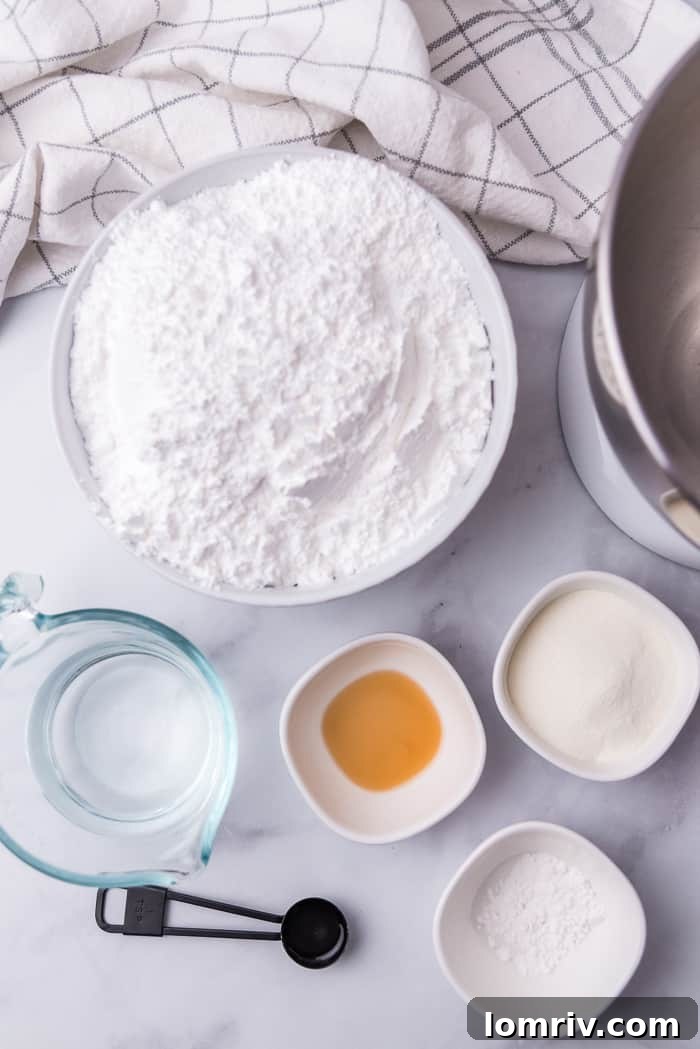
The magic of **perfect royal icing** comes from a simple yet powerful combination of ingredients. You’ll primarily need meringue powder, confectioners’ (powdered) sugar, and cream of tartar. These core components are responsible for the icing’s stability, texture, and its characteristic ability to dry hard and smooth. Beyond these, a touch of extract adds delightful flavor, transforming plain sugar into a truly gourmet experience that complements your carefully baked cookies.
- Meringue Powder: This is a crucial ingredient, acting as a convenient and safe substitute for raw egg whites. It provides vital stability, structure, and helps the icing dry hard and smooth, eliminating any food safety concerns associated with raw eggs. Investing in high-quality meringue powder is key for the best results and a consistent texture.
- Powdered Sugar (Confectioners’ Sugar): Forming the sweet base of your icing, powdered sugar provides both sweetness and bulk. Its incredibly finely milled texture is essential for ensuring a smooth, lump-free consistency, which is paramount for achieving detailed and elegant decorating work. Always remember to sift your powdered sugar thoroughly to remove any potential clumps before adding it to your mixture.
- Cream of Tartar: A common and highly effective baking additive, cream of tartar plays a significant role in stabilizing the meringue. It contributes to the icing’s overall strength, preventing it from breaking down or becoming too soft. Furthermore, it aids in achieving that characteristic hard, glossy finish that makes royal icing so visually appealing.
- Water: The liquid element that binds all the dry ingredients together, water is also essential for adjusting the consistency of the icing. It allows you to transform thick piping icing into thinner flooding icing, crucial for different decorating techniques.
- Extracts (Vanilla, Almond, etc.): While technically optional, extracts are highly recommended as they add delightful depth and complexity to the flavor profile of your royal icing. Pure vanilla extract is a classic and beloved choice, but a touch of almond extract can elevate the taste of sugar cookies beautifully. Feel free to experiment with other flavorings like lemon, peppermint, or even clear vanilla if you need to maintain pristine white colors for your designs.
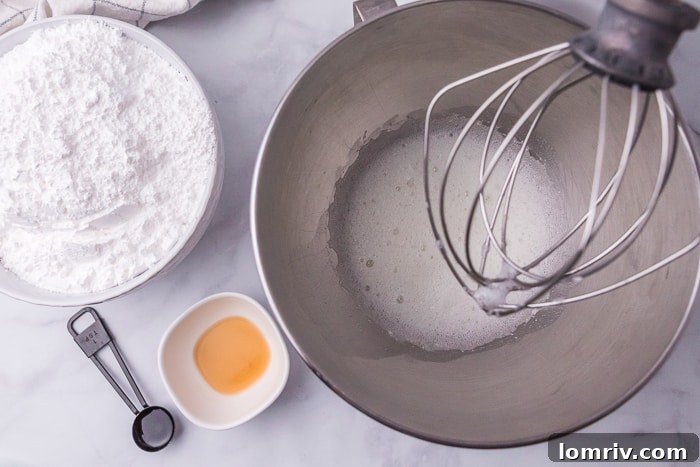
Once you’ve gathered all your essential ingredients and prepared your workspace, the process of making royal icing is surprisingly swift and incredibly rewarding. Using a stand mixer is highly recommended for optimal results, as it ensures thorough mixing and proper aeration, which are key to a stable and beautiful icing. Begin by ensuring your mixer bowl and whisk attachment are completely clean and grease-free, as any trace of fat can prevent the meringue from setting properly.
Start by combining the specified amount of cold water, meringue powder, and cream of tartar in the bowl of your stand mixer. Attach the whisk attachment and begin to whisk these ingredients together on a low speed for approximately one minute. This initial step is crucial for ensuring that the meringue powder is fully dissolved and properly activated, creating a stable and airy base for your icing. As you mix, you’ll notice the liquid mixture becoming slightly foamy and opaque, indicating that the meringue powder is beginning to work its magic.
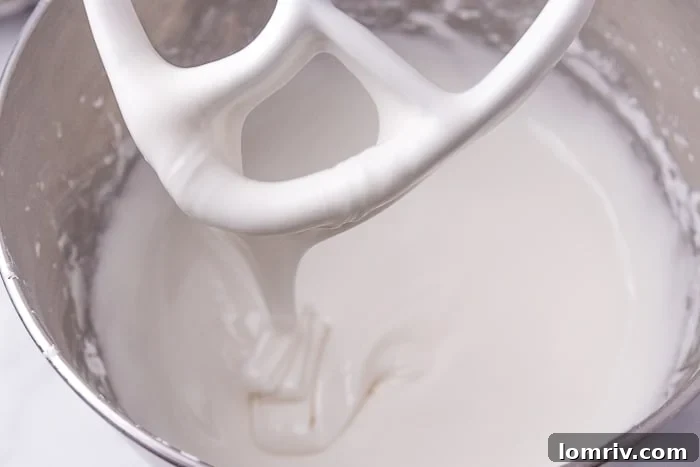
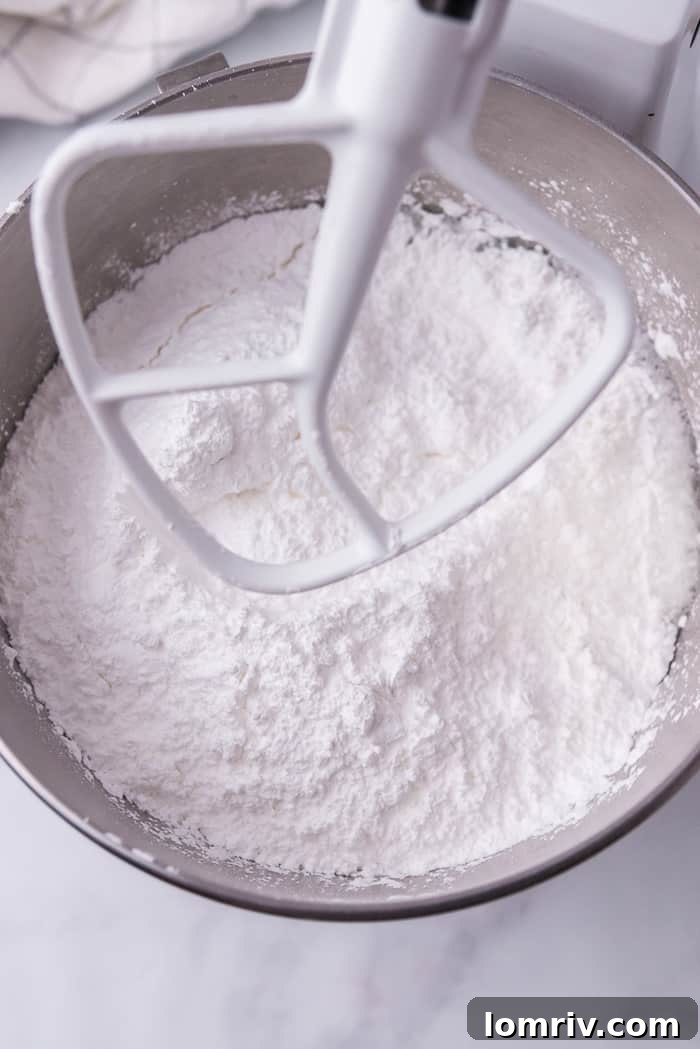
Next, carefully add all of the sifted powdered sugar to the mixer bowl. Once the sugar is in, switch from the whisk attachment to the paddle attachment. Beat the mixture on the lowest speed for about 10 minutes. This extended beating time is absolutely crucial; it thoroughly incorporates the sugar, develops the icing’s strong structure, and helps achieve that signature smooth, glossy finish that defines well-made royal icing. While beating, ensure you occasionally stop the mixer to scrape down the sides and bottom of the bowl, guaranteeing all ingredients are uniformly combined. It’s important to avoid over-beating, as this can incorporate too much air into the icing, potentially leading to a brittle or crumbly texture once dry. The final mixture should be very thick and bright white, forming soft peaks when the paddle is lifted.
After the primary mixing process, it’s time to infuse your icing with delightful flavor. Incorporate your chosen extracts – typically pure vanilla extract and almond extract, or any other flavor you desire – and mix them on low speed until they are just combined. At this stage, the royal icing will be quite thick, resembling the consistency of toothpaste or soft-serve ice cream. This robust, stiff consistency is perfect for initial **piping outlines** and creating intricate details that require sharp edges and firm definition. However, for the majority of your decorating needs, particularly for filling in areas, you’ll need to thin it down to a more manageable consistency.
Achieving the right consistency is perhaps the most critical skill in **royal icing cookie decorating**, impacting both the ease of application and the final appearance of your cookies. You’ll typically need at least two main consistencies for most projects: a thicker one for outlining and detailing, and a thinner one for flooding (filling in) areas.
- Piping Consistency: This is the thicker consistency you obtain directly after the initial mixing process. It should be firm enough to hold its shape perfectly when piped, allowing for crisp lines and elaborate designs, but still flow smoothly from a piping bag without breaking. A good test for piping consistency is to lift a spoonful of icing; it should form a peak that slowly folds back into itself after approximately 15-20 seconds. This firm yet pliable texture is ideal for creating borders, fine lettering, delicate lace patterns, and other intricate details that require precision.
- Flooding Consistency: To achieve this crucial consistency, you’ll gradually thin your piping consistency icing with water. Add water very sparingly, a mere teaspoon at a time, mixing thoroughly after each addition. The ideal flooding consistency is often described by decorators as “10-second icing” or “15-second icing.” This refers to a simple test: when you draw a line through the icing with a spoon, the line should disappear and the surface should become smooth again within 10 to 15 seconds. This thinner consistency spreads easily to fill in outlined areas, creating a beautifully smooth, even, and glossy base coat on your cookies. It’s vital to add water slowly to avoid making the icing too thin, which can lead to it running off the cookies.
Once you have prepared your various consistencies, the next exciting step is infusing your royal icing with vibrant colors, bringing your cookie designs to life.
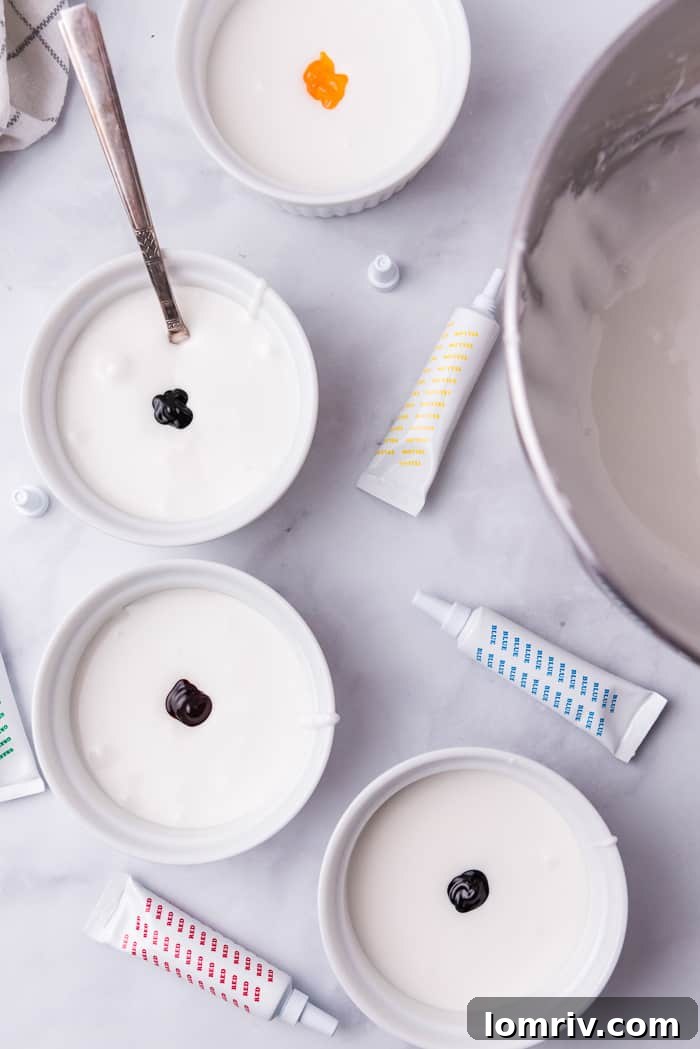
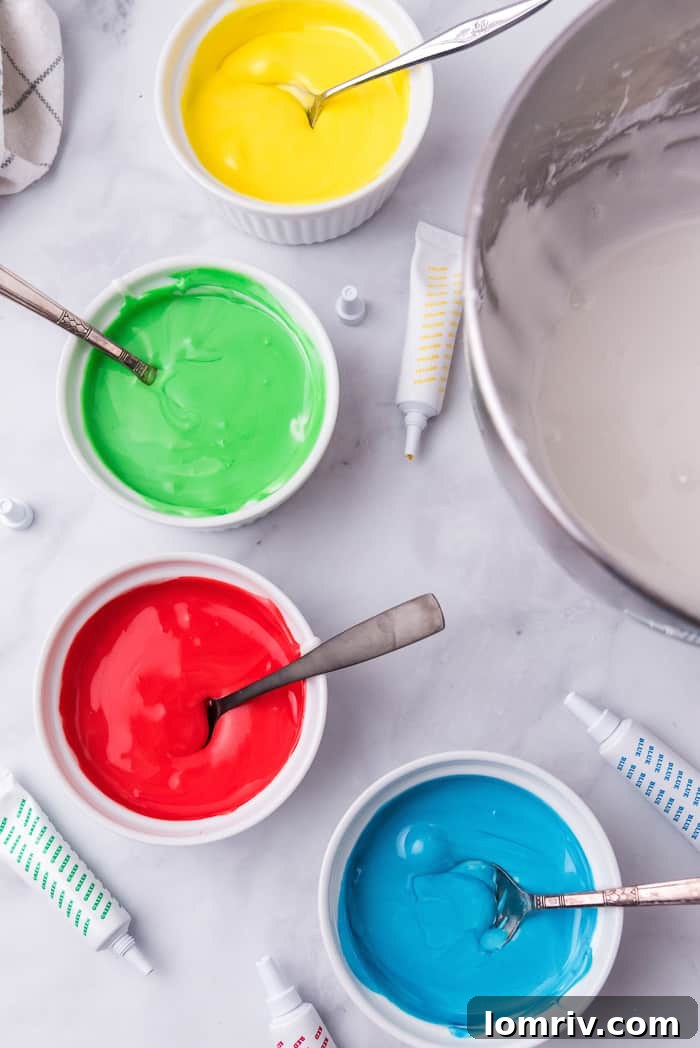
When it comes to adding vibrant hues to your royal icing, gel food coloring is your absolute best friend. Unlike traditional liquid food coloring, gel colors are highly concentrated, meaning a very small amount goes an incredibly long way. This concentration is crucial because liquid colors can significantly alter the consistency of your icing, making it too thin and difficult to work with. To add color, dip a clean toothpick into the gel color and then transfer a tiny amount to your bowl of icing. Mix thoroughly to ensure an even color distribution, adding more gel coloring incrementally until you achieve your desired shade. Remember, colors tend to deepen slightly as the icing dries, so it’s often best to aim for a shade that is slightly lighter than your final desired goal. Always use separate toothpicks for different colors to prevent cross-contamination.
Before you even begin with the beautiful icing, selecting the right cookie base is paramount for successful **decorated cookies**. You need a sturdy, relatively flat cookie that won’t spread excessively during baking, providing a stable and smooth canvas for your artistic endeavors. Classic choices like simple sugar cookies and gingerbread cookies are ideal. They hold their shape beautifully, offer a delightful flavor that complements the sweet royal icing, and their firm texture ensures they can withstand the decorating process without crumbling. Following reliable recipes, as I did from Better Homes and Gardens and Bake at 350, ensures your foundation is perfect for the artistry that follows. My initial attempts with these bases turned out wonderfully, proving that a solid, no-spread cookie recipe is half the battle won in achieving professional-looking results.
My own journey into the captivating world of **cookie decorating** has been a delightful adventure of learning and discovery. Like many aspiring decorators, I dedicated considerable time to watching countless videos and devouring blogs from esteemed artists such as Bake at 350, Sweetopia, Glorious Treats, and Sweet Sugarbelle. These resources are invaluable for understanding foundational techniques, acquiring clever tips, and discovering professional tricks that can truly elevate your decorating skills. For my first significant foray, I decided to keep things manageable, focusing on mastering the basics. I meticulously prepared two different consistencies (piping for outlines and flooding for filling) for each color, just as described above, and nervously, yet eagerly, took my first shot at transforming plain cookies into festive masterpieces. It was a step-by-step process of outlining, flooding, and then adding delicate details, allowing each layer to dry before proceeding.


The ultimate reward for all this effort and dedication in the kitchen came when I carefully assembled beautiful holiday treat bags, filled with these delightful sweets – from the intricately decorated royal icing cookies to the rich brownies and chocolate balls. I eagerly sent them off to my new in-laws, my dear friends, and cherished family members, spreading a little bit of homemade cheer. The overwhelming positive feedback and the sheer joy of knowing they all thoroughly enjoyed the homemade treats made every minute spent in the kitchen worth it. Sharing these edible gifts is truly what the holiday spirit is all about – extending warmth, love, and a little bit of sweetness to those who mean the most to us.
Now, with one successful baking spree behind me and the satisfaction of spreading holiday cheer, the delightful dilemma arises: what culinary masterpiece shall I prepare tomorrow for Christmas dinner at my sister-in-law’s? The endless possibilities of **holiday recipes** continue to inspire and call me back to the kitchen for more festive creations!
From my kitchen to yours, I wish you all the happiest of holidays and a season filled with delicious baking adventures, wonderful memories, and beautifully decorated cookies!
Embrace the Joy of Holiday Baking and Decorating with this Easy Royal Icing Recipe!
Ultimate Easy Royal Icing Recipe
10 minutes
10 minutes
20 minutes
Ingredients for Royal Icing:
- ¾ cup cold water
- 5 tablespoons meringue powder (high quality recommended)
- 1 teaspoon cream of tartar
- 2.25 pounds (approx. 8 cups) powdered icing sugar, sifted
- 1 teaspoon pure vanilla extract
- 1 teaspoon almond extract (optional, but highly recommended for flavor)
Step-by-Step Instructions:
- In the bowl of a stand mixer fitted with the whisk attachment, combine the cold water, meringue powder, and cream of tartar. Whisk on low speed for approximately 1 minute, until the meringue powder is fully dissolved and the mixture is slightly foamy.
- Gradually add all of the sifted powdered sugar to the bowl. Switch to the paddle attachment. Beat on the lowest speed for 10 minutes. The icing will become very thick, glossy, and bright white. Scrape down the sides of the bowl as needed to ensure all ingredients are well incorporated.
- Stir in the vanilla extract and almond extract (if using) until just combined. At this stage, the icing will be very thick – perfect for piping intricate details.
- For Flooding Consistency: To thin the icing for flooding, add water one teaspoon at a time, mixing well after each addition, until it reaches a “10 to 15-second” consistency (meaning a line drawn through the icing with a spoon disappears in 10-15 seconds).
- Divide the icing into separate bowls for coloring. Use gel food coloring, adding small amounts with a toothpick and mixing thoroughly until the desired vibrant shades are achieved. Remember, a little goes a long way!
- Transfer colored icing to piping bags fitted with desired tips. Decorate your cooled cookies and allow them to dry completely (several hours or overnight) for a hard, smooth finish. Enjoy your beautifully decorated holiday treats!
Made this Royal Icing Recipe?
We’d love to see your beautiful creations! Share your decorated cookies on Instagram using #aclassictwist and tag us so we can admire your festive **holiday baking**!