Irresistible Homemade Coconut Cheesecake: Your Tropical Dessert Dream
Hello, fellow dessert enthusiasts! Prepare to be captivated by a culinary creation that perfectly marries the comforting familiarity of a classic cheesecake with the exotic allure of tropical coconut. Today, we’re diving into the delightful world of Coconut Cheesecake – a truly special dessert that promises to be the star of your spring celebrations, Easter gatherings, and all your sun-drenched summer moments. If you’re searching for the ultimate tropical cheesecake recipe, look no further!
There’s an undeniable magic that comes with a homemade cheesecake. While convenience often dictates reaching for a store-bought option, especially in our fast-paced lives, the unparalleled taste and texture of a cheesecake made from scratch are simply unmatched. Each bite offers a fresh, rich, and truly bespoke experience that no pre-made version can replicate. Remember the rave reviews for our Pina Colada Cheesecake? This coconut rendition promises to be just as unforgettable, if not more!
I understand the chaos that life often brings, and the rare moments we get to truly breathe. But let me assure you, this particular coconut cheesecake recipe is an endeavor worth every second of your time. Beyond the delicious outcome, there’s a therapeutic quality to the process of baking a cheesecake – a calming rhythm from mixing ingredients to the slow, gentle bake. It’s a delightful escape into the world of culinary creation, culminating in a dessert that’s worth bragging about.
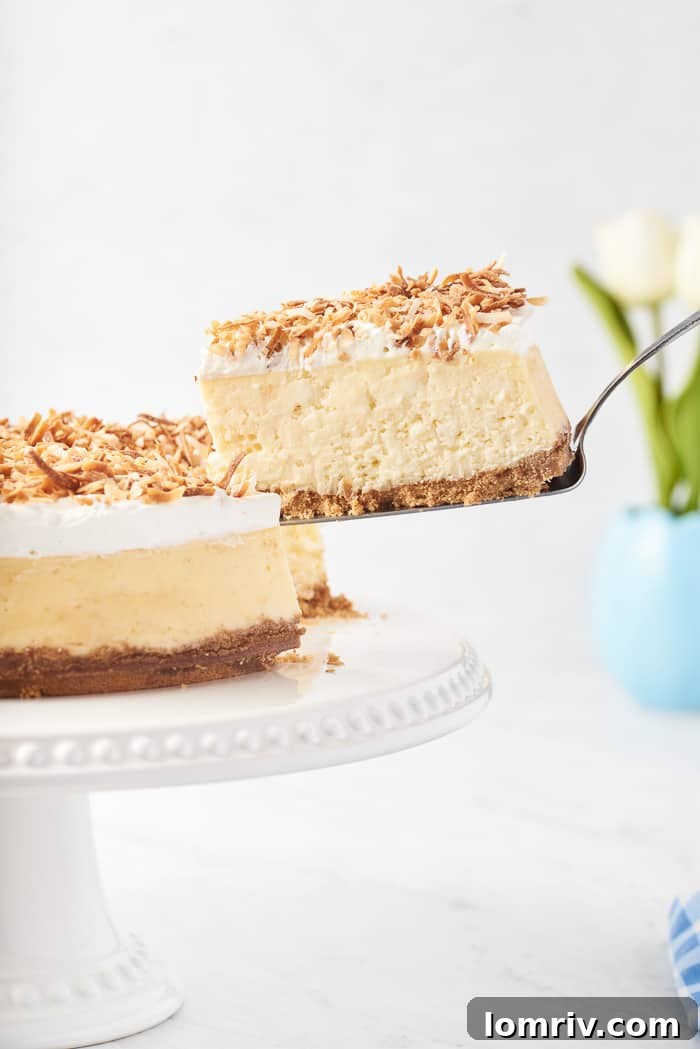
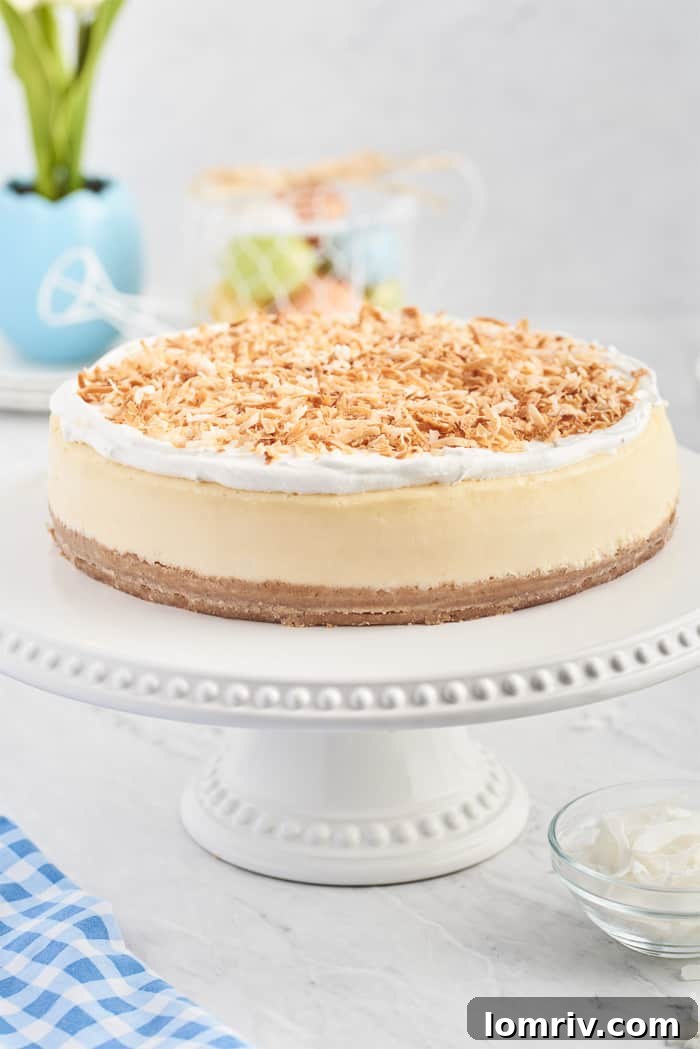
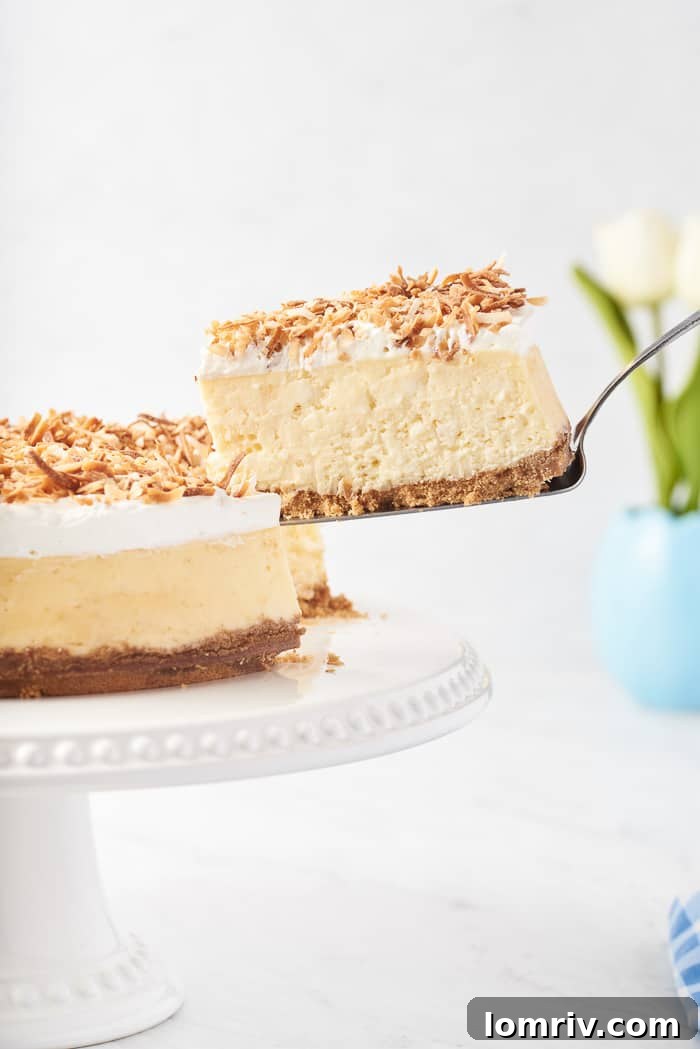
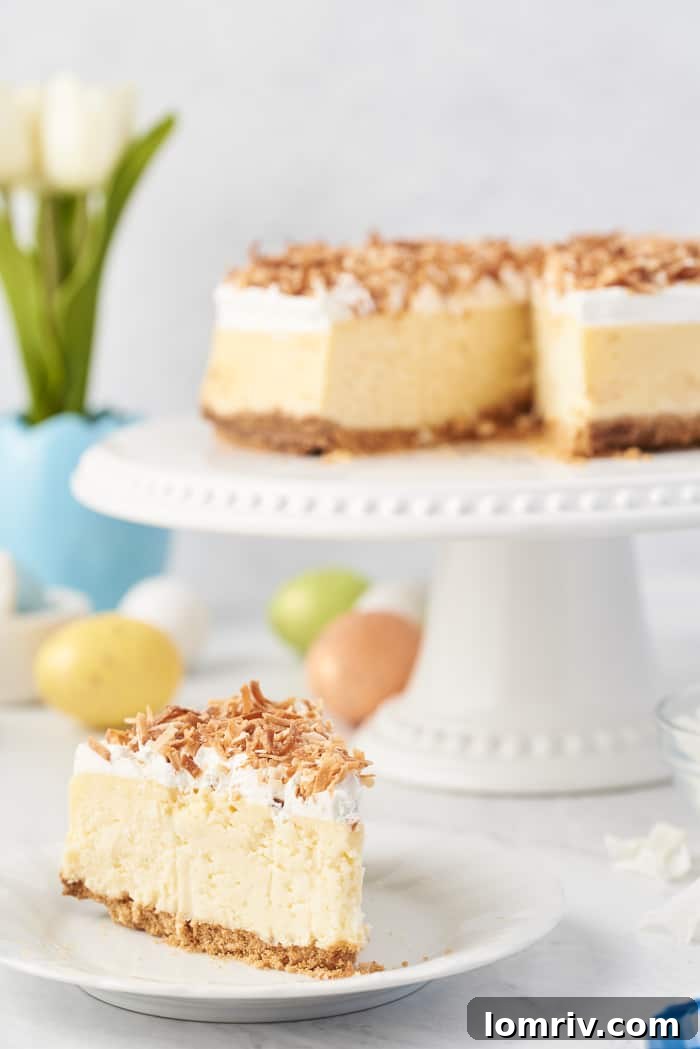
As a true coconut devotee, I’ve ensured that this magnificent dessert is infused with pure coconut bliss at every turn. From the perfectly spiced, homemade graham cracker crust, enhanced with toasted coconut flakes, to the velvety, rich coconut cheesecake filling, and finally, crowned with a delicate, cloud-like homemade whipped cream and more toasted coconut – every element celebrates the vibrant flavor of coconut. This is not just a cheesecake; it’s a decadent, light, and unbelievably creamy ode to one of nature’s most enchanting ingredients. Each mouthful is an absolute dream, delivering a refreshing taste of the tropics straight to your palate.
To ensure your baking journey is smooth and successful, I’ve provided a comprehensive, step-by-step guide on how to whip up this easy coconut cheesecake. However, if you’re a seasoned baker or simply eager to get straight to the kitchen, feel free to scroll directly to the end for the complete recipe card. Get ready to create the best coconut cheesecake you’ve ever tasted!
Essential Ingredients for Your Luscious Coconut Cheesecake
Crafting a truly spectacular toasted coconut cheesecake begins with selecting the right ingredients. Each component plays a vital role in achieving that perfect balance of flavor and texture. Here’s what you’ll need to gather:
- Graham cracker crumbs (for the wonderfully crunchy base)
- Unsweetened coconut flakes (to infuse that authentic coconut taste without added sweetness)
- Coconut oil (the secret to binding the crust and adding tropical richness)
- Full-fat cream cheese, softened (the foundation of any truly creamy cheesecake)
- Granulated sugar (to sweeten the filling just right)
- All-purpose flour (a small but mighty ingredient that prevents cracks and adds stability)
- Cream of coconut or coconut cream (ensure it’s not coconut milk for that rich, thick consistency)
- Kosher salt (a pinch to balance the sweetness and enhance flavors)
- Pure vanilla extract (a classic flavor enhancer)
- Coconut extract (to amplify the coconut flavor profile beautifully)
- Large eggs, at room temperature (for a smooth, custardy filling)
- Homemade whipped cream (for an airy, decadent topping)
Mastering the Art of Homemade Coconut Cheesecake: A Step-by-Step Guide
Embark on your baking adventure with confidence, following these detailed steps to create a show-stopping homemade coconut cheesecake. The process is a labor of love, but the results are incredibly rewarding.
Step 1: Crafting the Perfect Coconut Graham Cracker Crust
The foundation of any great cheesecake is its crust, and for our coconut masterpiece, we’re starting with a flavorful graham cracker, coconut, and coconut oil blend. This combination creates a sturdy yet tender base that beautifully complements the creamy filling.
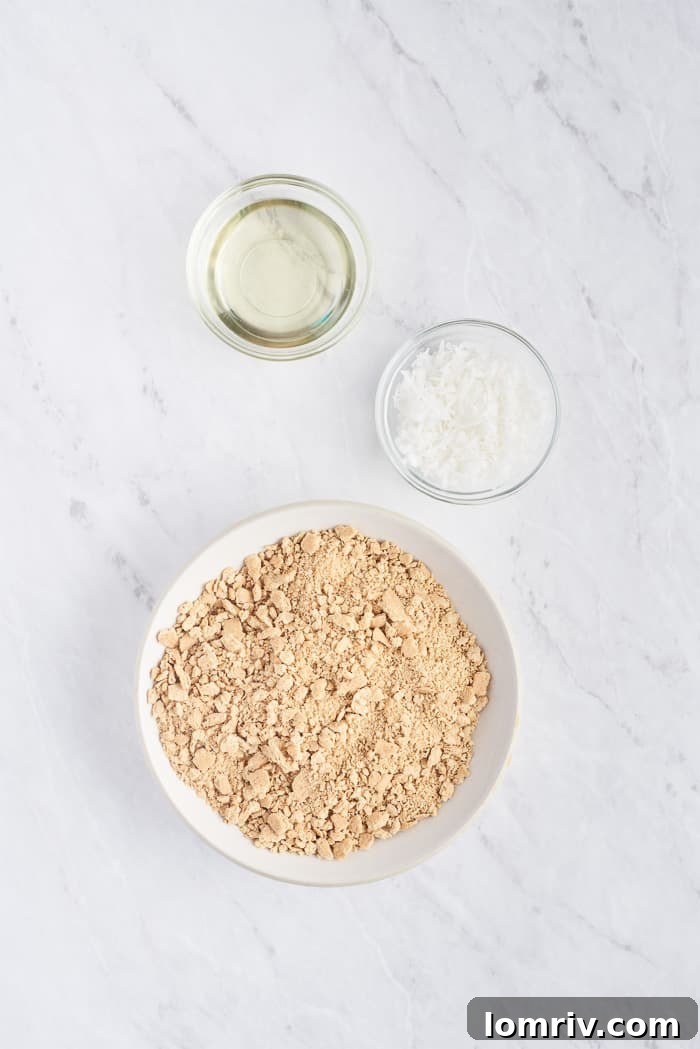
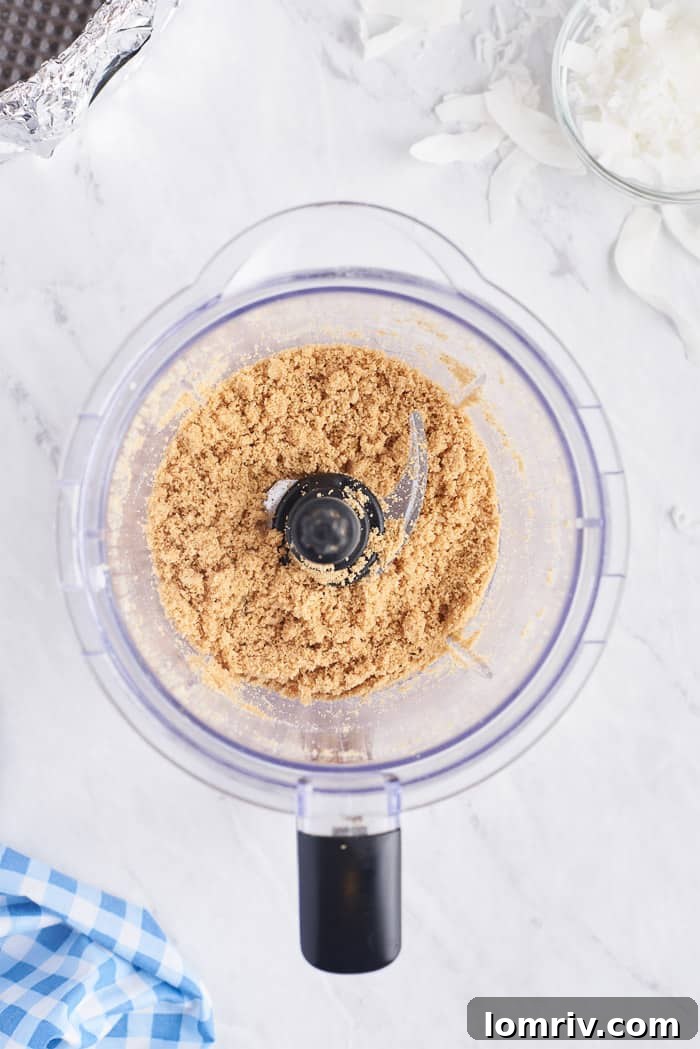
In a food processor, combine the graham cracker crumbs, unsweetened coconut flakes, and melted coconut oil. Pulse these three ingredients together until they are thoroughly blended and the mixture takes on the consistency of moist sand. This indicates that the coconut oil has evenly coated the crumbs, preparing them for a perfect bind.
Even with a high-quality leakproof springform pan, I always take the extra precaution of wrapping the entire outside with two layers of heavy-duty aluminum foil. This is a crucial step to prevent any water from seeping in during the water bath, ensuring your crust remains perfectly crisp. Once your pan is prepared, transfer the moist crust mixture into it. Using the flat bottom of a glass or a measuring cup, firmly press the mixture down into an even, compact layer across the bottom of the pan. This creates a solid base that won’t crumble when sliced.
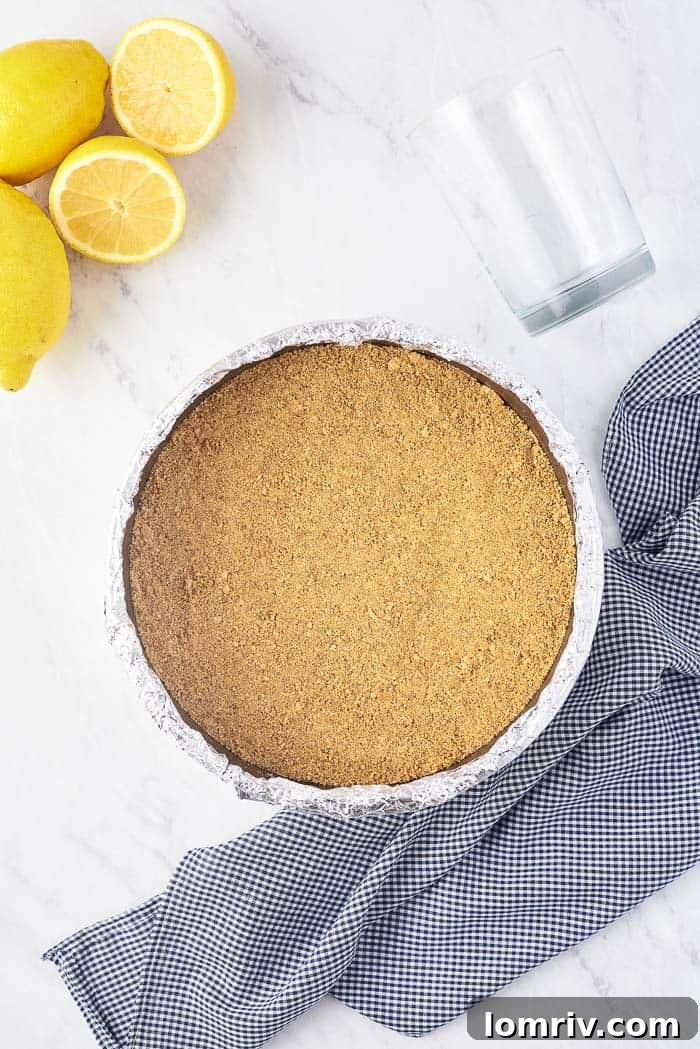
Bake this pressed crust in a preheated oven until it turns a light golden brown and smells fragrant. This brief bake sets the crust and enhances its flavor. Once baked, remove it from the oven and allow it to cool completely while you prepare the creamy cheesecake filling. A cool crust prevents the warm filling from making it soggy.
Step 2: Preparing the Velvety Coconut Cheesecake Filling
Before you dive into mixing the filling, remember to adjust your oven temperature. Immediately after removing the crust, reduce your oven’s temperature to 325 degrees F. This allows ample time for the oven to cool down to the correct temperature for baking the delicate cheesecake filling.
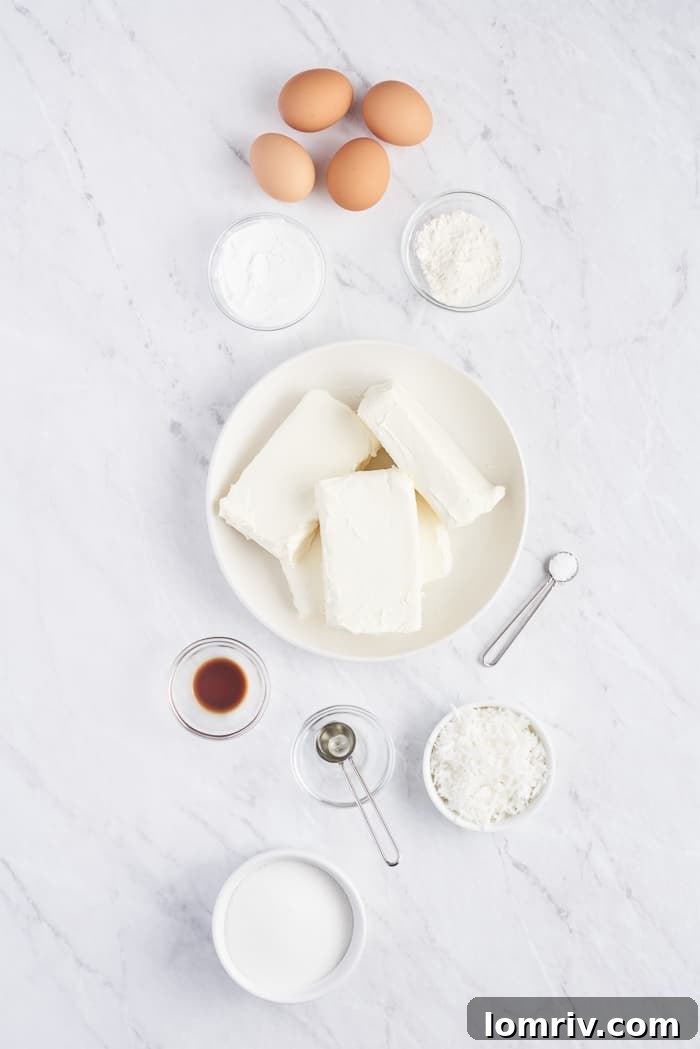
In the bowl of your electric mixer, add the softened cream cheese. It’s imperative that your cream cheese is at true room temperature; this prevents lumps and ensures a flawlessly smooth, creamy consistency. Beat the cream cheese on medium speed for about 2-3 minutes until it becomes exceptionally smooth and creamy. If it was properly softened, this should happen quite quickly.
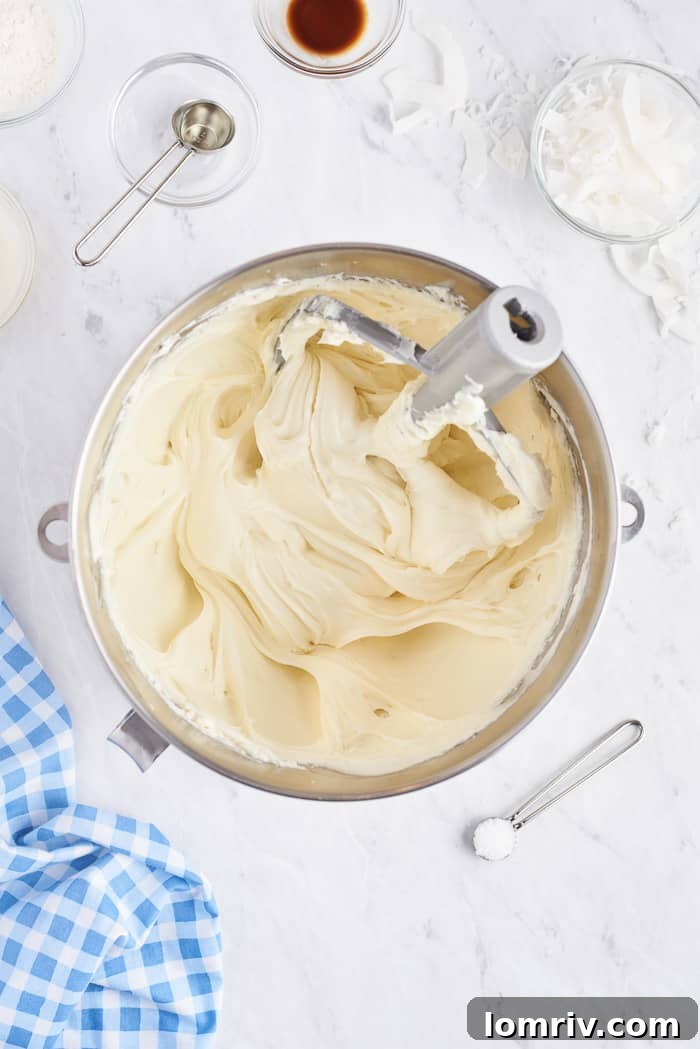
Next, pour in the granulated sugar. Continue to mix on medium speed until the sugar is fully incorporated into the cream cheese, which typically takes about a minute or two. Make sure to pause and scrape down the sides and bottom of the bowl frequently with a spatula. This ensures all ingredients are thoroughly blended and prevents any unmixed pockets.
Now, it’s time to introduce the flavor powerhouses! Add the all-purpose flour, kosher salt, the rich cream of coconut (or coconut cream), pure vanilla extract, and yes, that essential coconut extract. The combination of cream of coconut and coconut extract ensures a deep, authentic coconut flavor that truly shines through.
Continue mixing on medium-low speed until all these new additions are just combined. Avoid overmixing! Reduce the mixer speed to low and add the large eggs one at a time, mixing only until each egg is just incorporated before adding the next. Overmixing eggs can introduce too much air, leading to cracks in your cheesecake. Once the eggs are in, give the entire filling one final gentle mix for about another minute until perfectly smooth. Finally, gently fold in the remaining unsweetened coconut flakes into the batter for added texture and an extra burst of coconut flavor.
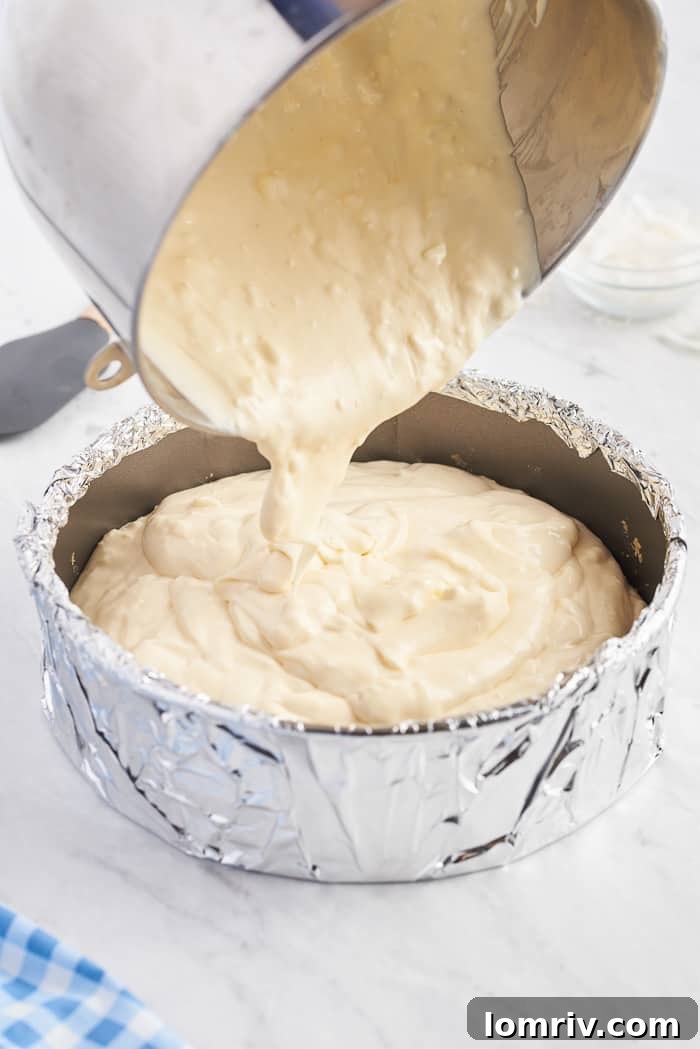
Carefully pour the luscious coconut cheesecake batter into the cooled crust in the springform pan. Gently spread the batter evenly across the crust using a spatula to ensure a level top, which will result in a beautifully uniform baked cheesecake.
Step 3: The Critical Water Bath and Baking Process
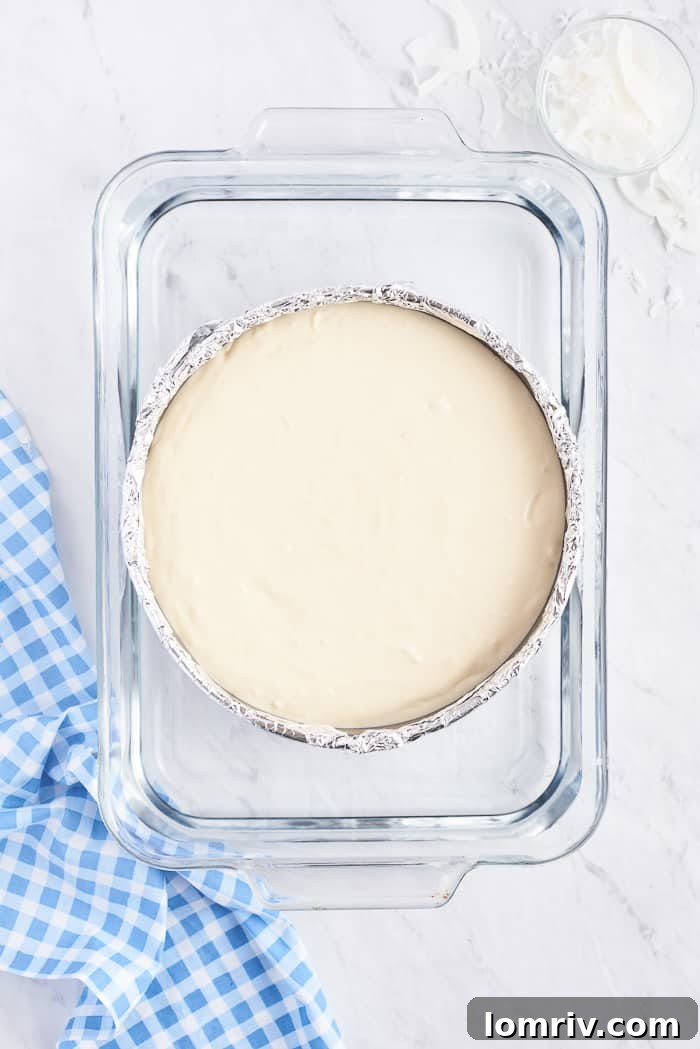
For a truly creamy, crack-free cheesecake, a water bath is indispensable. To create this essential baking environment, place your foil-wrapped springform pan into a much larger baking pan or casserole dish (a roasting pan works wonderfully). This outer pan will hold the hot water.
Once the springform pan is securely in the larger dish, carefully pour hot water into the larger pan. Be extremely cautious to pour slowly and avoid splashing any water into your cheesecake batter, as this could ruin the texture. Fill the outer pan with hot water only halfway up the sides of your springform pan; do not overfill. The steam created by this water bath provides a moist, even heat, preventing the cheesecake from drying out and cracking.
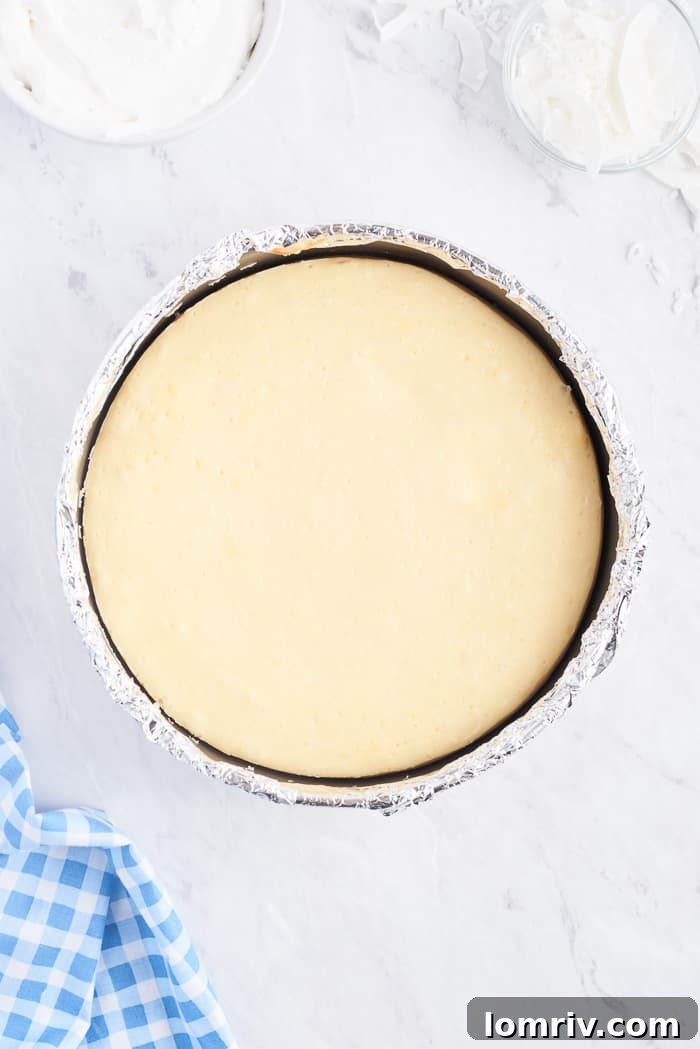
Bake your cheesecake in the preheated 325 degrees F oven for approximately one hour. You’ll know it’s done when the edges are set, but the center still has a slight wobble when gently jiggled. This subtle jiggle is key – it indicates a perfectly creamy texture that will firm up beautifully upon cooling. Once baked, turn off the oven, but leave the cheesecake inside for an additional 45 minutes. This gradual cooling prevents thermal shock, which can often cause cracks.
After this crucial period, remove the cheesecake from the oven and carefully lift it out of the water bath. Remove the foil wrapping. Let it cool on your kitchen counter at room temperature for at least one hour. This step is super important for proper setting; resist the urge to rush it! We can’t rush perfection, after all. Finally, transfer the cheesecake to the refrigerator and chill for a minimum of six hours, or ideally, overnight. This chilling period is essential for the cheesecake to fully set and develop its rich, dense, and creamy texture.
Step 4: The Grand Finale – Topping and Serving Your Masterpiece
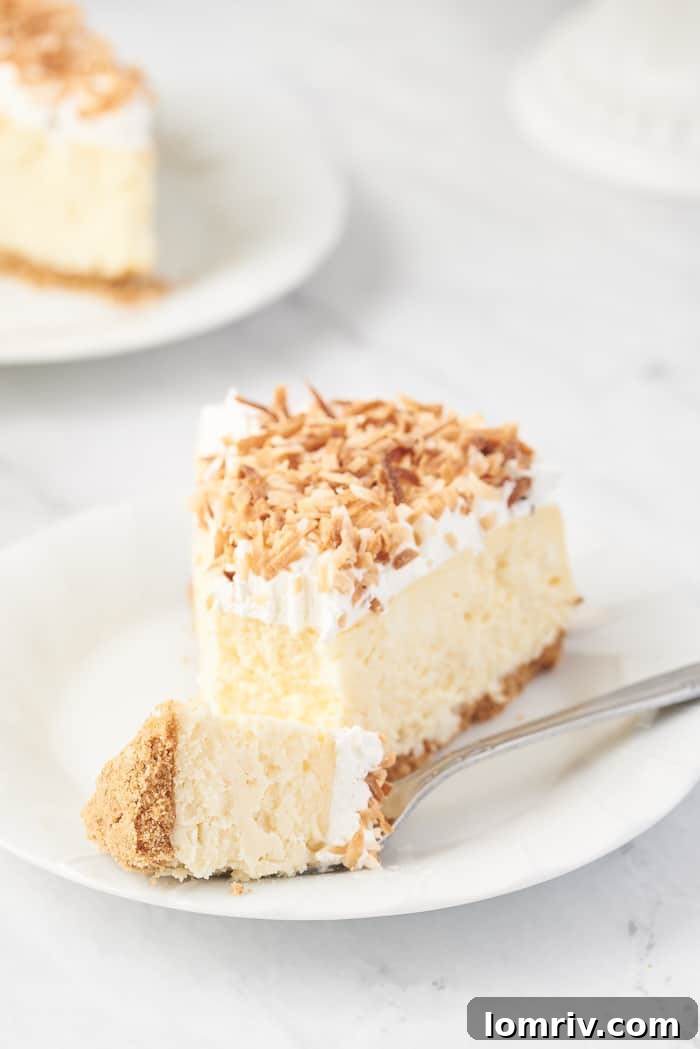
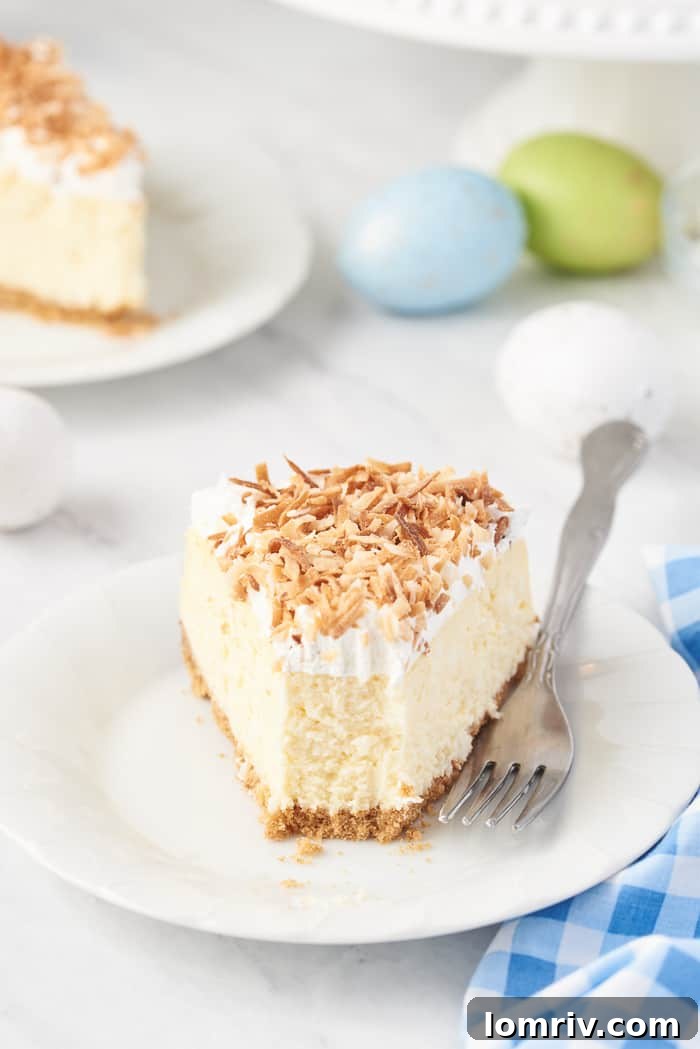
Once your exquisite coconut cheesecake has chilled sufficiently and is ready for its grand debut, it’s time to add the finishing touches. Generously top each slice with a dollop of fresh homemade whipped cream. For an extra flourish and intensified flavor, sprinkle a generous amount of beautifully toasted coconut flakes over the whipped cream. The toasted flakes add a delightful crunch and aroma, elevating the entire dessert experience.
For an even more vibrant presentation, consider adding a sprinkle of lime zest or a few fresh berries. A light drizzle of white chocolate ganache could also add an extra layer of decadence. This coconut cheesecake pairs wonderfully with a cup of freshly brewed coffee, a fragrant herbal tea, or even a light tropical cocktail for an adult treat. No matter the occasion, this dessert is sure to impress and delight everyone who takes a bite!
Unlocking the Secrets to a Perfectly Creamy Cheesecake
Baking a flawless cheesecake can seem daunting, but with a few key techniques, you can achieve professional results every time. These “secrets” are crucial for mastering any homemade cheesecake recipe, ensuring a smooth texture and preventing common issues like cracks:
- Room Temperature Cream Cheese: This is arguably the most vital step. Cold cream cheese will result in a lumpy batter, no matter how much you beat it. Ensure your cream cheese, and also your eggs, are at room temperature for a perfectly smooth, silky filling.
- A Touch of Flour: Adding a small amount of all-purpose flour to the batter helps stabilize the cheesecake structure. It prevents curdling and contributes to that desirable creamy, custard-like texture, reducing the chances of cracks.
- Do Not Overmix the Batter: Overmixing introduces excessive air into the cheesecake batter. During baking, this air expands, and then contracts rapidly upon cooling, leading to unsightly cracks. Beat just until combined and smooth.
- Embrace the Water Bath: As discussed, a water bath is a cheesecake’s best friend. It provides even, gentle heat and a humid environment, which are crucial for a slow, uniform bake and a perfectly creamy, crack-free surface.
- Underbake Slightly: A cheesecake is truly done when its edges are set, but the very center still has a slight jiggle. This slight wobble will firm up during the cooling process, ensuring a tender rather than overbaked, dry texture.
- Patience During Cooling: Do not rush the cooling process! Gradual cooling is essential. First, leave the cheesecake in the turned-off oven, then allow it to cool completely at room temperature, and finally, chill it in the refrigerator for at least 6 hours (or overnight). Resist the temptation to cut into it until it has fully set.
Why a Water Bath is Your Cheesecake’s Best Friend
Often overlooked by novice bakers, the water bath (or “bain-marie”) is a non-negotiable technique for achieving the ideal cheesecake. Its benefits are profound and directly address common cheesecake woes.
The primary role of a water bath is to provide a moist, consistent, and gentle cooking environment. Cheesecake is a delicate custard, and direct, dry heat can cause it to bake too quickly on the outside, leading to a tough texture and the dreaded surface cracks. The steam from the hot water prevents the cheesecake from drying out and baking too fast, ensuring that the entire cake cooks evenly from the edges to the very center. This results in a smooth, perfectly creamy, and beautifully uniform texture, free from any blemishes.
Always take the time to prepare a water bath for your cheesecake. It’s a simple step that makes a monumental difference in the final product, transforming a good cheesecake into an extraordinary one. It’s the secret to achieving that luscious, restaurant-quality creaminess you crave.
While the journey of making a homemade coconut cheesecake may seem like a heartfelt labor, I promise you, the outcome is undeniably worth every minute. The joy of presenting such a magnificent dessert, infused with tropical flavor and made with your own hands, is truly special. I can’t wait to hear how much you love it! Please share what delightful accompaniments you served with your slices and for which memorable occasion you surprised everyone with this incredible tropical treat.
Explore More Decadent Cheesecake Recipes to Try
If you’ve fallen in love with the rich, creamy, and utterly decadent experience of cheesecakes as much as I have, then you’re in for a treat! Discover some of my other cherished cheesecake recipes, perfect for any occasion or just a delightful indulgence:
- Blackberry Cheesecake: A vibrant and fruity delight, perfect for berry lovers.
- Lemon Cheesecake: Zesty, bright, and refreshing, a classic for a reason.
- Classic No-Bake Cheesecake: For those times when you crave cheesecake but prefer to skip the oven.
- Piña Colada Cheesecake: Another tropical dream, featuring the beloved flavors of pineapple and coconut.
Coconut Cheesecake Recipe
Experience the ultimate tropical delight with this creamy, decadent, and utterly delicious homemade coconut cheesecake! Perfect for any celebration.
45 minutes
2 hours 45 minutes
6 hours
9 hours 30 minutes
Ingredients
For the Coconut Graham Cracker Crust:
- 2 cups graham cracker crumbs
- 1/3 cup unsweetened coconut flakes
- 1/4 cup coconut oil, melted
For the Creamy Coconut Filling:
- 32 ounces (4 packages) full-fat cream cheese, softened at room temperature
- 1 cup granulated sugar
- 2 tablespoons all-purpose flour
- 1/4 cup cream of coconut or coconut cream (ensure it’s not coconut milk)
- ¼ teaspoon kosher salt
- 1 teaspoon pure vanilla extract
- 1 teaspoon coconut extract
- 4 large eggs, at room temperature
- 1/2 cup unsweetened coconut flakes
For Topping & Garnish:
- Homemade whipped cream
- 1/2 cup unsweetened coconut flakes, toasted
Instructions
- Preheat your oven to 350 degrees F (175°C). Prepare a 9-inch springform pan by wrapping its entire outside with two sheets of heavy-duty aluminum foil to prevent water seepage during the water bath.
- In the bowl of a food processor, combine the graham cracker crumbs, 1/3 cup unsweetened coconut flakes, and melted coconut oil. Process until the mixture is thoroughly moistened and resembles wet sand.
- Transfer the crumb mixture to the prepared springform pan. Use the flat bottom of a glass or measuring cup to firmly press the mixture into an even and compact layer across the bottom of the pan.
- Bake the crust for 10 minutes, or until it is lightly golden brown and fragrant. Remove from the oven and set aside to cool completely while you prepare the filling.
- Reduce the oven temperature to 325 degrees F (160°C). This allows the oven to gradually cool to the ideal temperature for baking the cheesecake.
- In the bowl of an electric mixer fitted with the paddle attachment, beat the softened cream cheese on medium speed for about 2 minutes, until it is exceptionally smooth and creamy with no lumps. Add the granulated sugar and mix for another 1-2 minutes, until just combined. Scrape down the sides and bottom of the bowl frequently to ensure even mixing.
- Add the all-purpose flour, cream of coconut (or coconut cream), kosher salt, pure vanilla extract, and coconut extract to the mixture. Beat on medium-low speed until well combined. Reduce the speed to low and add the large eggs one at a time, mixing only until each egg is just incorporated before adding the next. Overmixing at this stage can introduce too much air, leading to cracks. Mix the filling for an additional minute until it is smooth and uniform. Gently fold in the ½ cup unsweetened coconut flakes into the batter.
- Carefully pour the creamy coconut cheesecake filling into the cooled crust in the springform pan. Spread it evenly with a spatula to create a level surface.
- Prepare your water bath: Place the foil-wrapped springform pan into a much larger baking pan (a roasting pan works well). Carefully pour hot water into the larger baking pan, ensuring it reaches halfway up the sides of your springform pan. Be careful not to splash water into the cheesecake batter.
- Bake in the preheated 325 degrees F (160°C) oven for approximately one hour. The cheesecake is done when the edges are set, but the center still has a slight wobble when gently shaken. Turn off the oven, but leave the cheesecake inside for an additional 45 minutes to cool gradually.
- Remove the cheesecake from the oven and carefully lift it out of the water bath. Remove the foil from around the pan. Allow the cheesecake to cool completely at room temperature for at least an hour before chilling. Once cooled, transfer it to the refrigerator and chill for a minimum of 6 hours, or ideally, overnight, for it to fully set and achieve optimal texture.
- Before serving, top the chilled coconut cheesecake with homemade whipped cream and a generous sprinkle of toasted coconut flakes.
- Store any leftover coconut cheesecake covered in the refrigerator for up to 5 days.
Chef’s Notes & Tips
- For the best results, ensure all cold ingredients, especially the cream cheese and eggs, are at room temperature. This is crucial for a smooth, lump-free batter.
- Cream of coconut is a sweetened product typically found in the cocktail mixer aisle, while coconut cream is unsweetened and thicker than coconut milk, usually found in the Asian foods aisle. Either works, but adjust sweetness slightly if using unsweetened coconut cream.
- To toast coconut flakes: spread them in a single layer on a baking sheet and bake at 325°F (160°C) for 5-10 minutes, stirring occasionally, until golden brown. Watch closely as they can burn quickly.
- For a truly show-stopping presentation, garnish with fresh lime zest or a few lime wedges alongside the toasted coconut.
Recommended Products for Perfect Cheesecake Baking
As an Amazon Associate and member of other affiliate programs, I earn from qualifying purchases, helping to support this blog at no extra cost to you.
- Goya Crema de Coco – Cream of Coconut (3 Pack, Total of 45oz)
- Honey Maid Graham Cracker Crumbs (13.5-Ounce Box)
- Nordic Ware Leakproof Springform Pan, 9 Inch
Making this Recipe?
Share your beautiful creation with us on Instagram using #aclassictwist so we can celebrate what you are baking up in your kitchen!
What are your thoughts on this truly tasty coconut cheesecake recipe? What glorious sides or refreshing drinks would you pair with a slice of this tropical delight? I’d love to hear your creative ideas and experiences in the comment section below. Your feedback helps me create even more wonderful recipes for you!
If you decide to share your dazzling creation across social media, please make sure to tag #aclassictwist. I adore seeing your culinary masterpieces come to life and celebrating your baking successes!
Happy baking, friends, and enjoy every tropical bite!