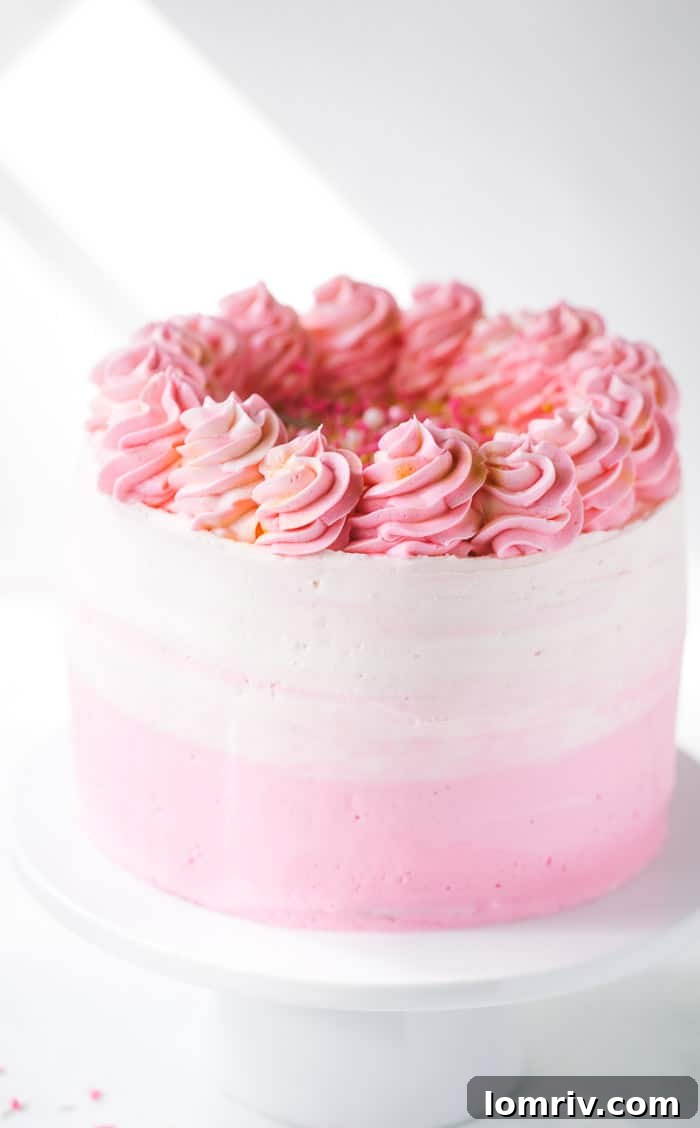
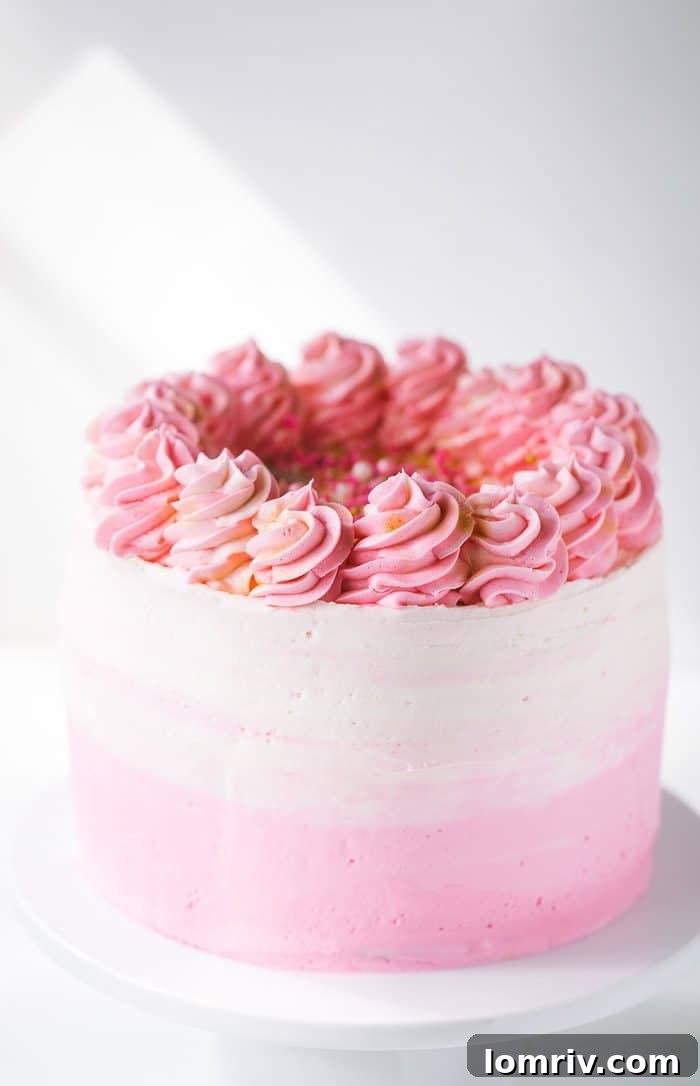
Hello, fellow bakers and dessert enthusiasts! Today, I’m thrilled to share a delightful creation that brings a smile to my face every time I see it: a gorgeous Pink Ombre Cake. This cake isn’t just a dessert; it’s a celebration in itself, a perfect blend of elegance and playful charm that can brighten any special occasion. Its mesmerizing gradient of pink hues makes it a true showstopper, and I promise you, creating this masterpiece is far simpler than it looks.
I recently had the pleasure of baking this beautiful cake for a bridal shower, and the excitement was palpable. As soon as it was finished, I couldn’t resist capturing its beauty with a few photographs before whisking it away to the event. The subtle transition of colors, from a deep, vibrant pink at the base to a delicate blush and finally pristine white at the top, creates a stunning visual effect that truly makes this cake unforgettable. It’s more than just a cake; it’s a piece of edible art designed to impress and delight.
There was a time when my days were filled with ambitious baking projects and intricate cake decorating experiments. In fact, my passion for baking truly took root during cake decorating lessons at my local craft store. Those foundational Wilton classes taught me the basics, from mastering different piping techniques to understanding the nuances of buttercream, and they solidified my lifelong love for creating edible art. You can even see one of my very first fondant-covered cakes here – a humble beginning that shows just how far a little practice and passion can take you!
Fast forward to today, and life as a busy mom of two often means my baking ventures are limited to quick school cupcakes or simple treats. My usual go-to’s are elegant naked cakes or fuss-free bundt cakes, which are delicious and always a hit without demanding too much time. However, every now and then, a special occasion calls for something more elaborate, something that allows me to rekindle that early joy of intricate cake design. A bridal shower for one of my favorite cousins presented the perfect opportunity to dive back into a more involved project, and my heart immediately settled on the idea of an ombre cake.
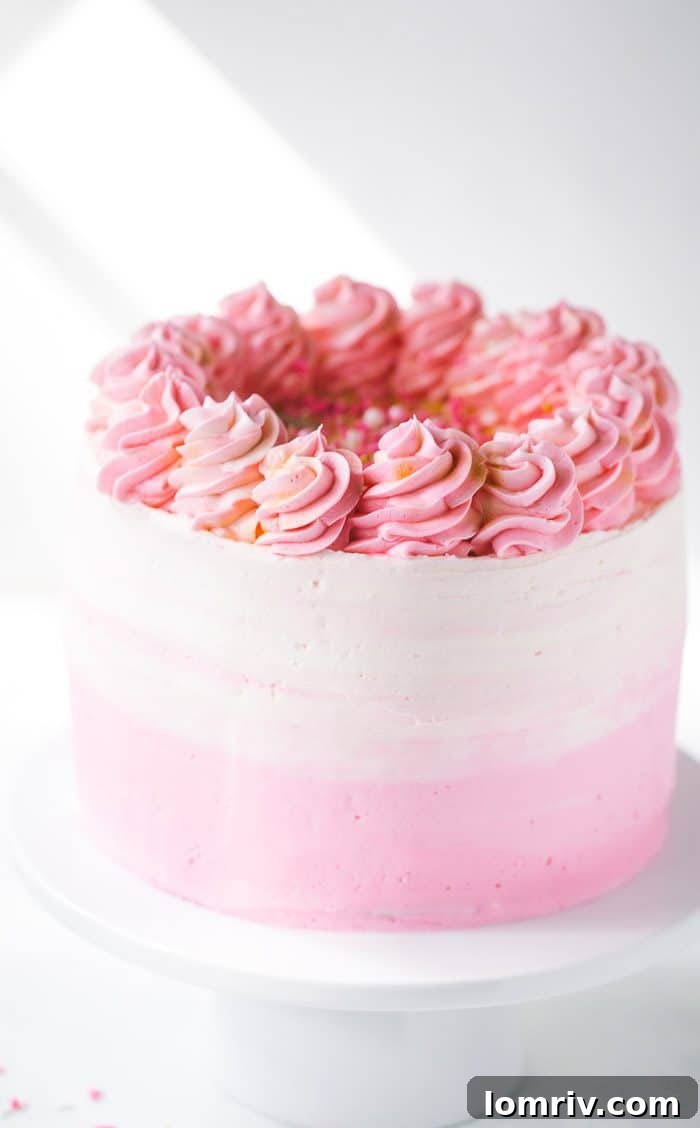
As the designated family baker, I was given complete creative freedom for the bridal shower cake, a trust I absolutely cherish. I had been itching to try the ombre frosting technique for ages. While I’ve experimented with ombre before, notably in this lemon layer cake recipe, that attempt focused primarily on achieving the gradient through different piping techniques. For this particular pink ombre cake, I wanted the smooth, blended look of a true ombre frosting on the sides, reserving decorative piping only for the cake’s crown.
Creating an ombre cake is all about a thoughtful approach to color and application. The first step is to decide on your primary color and how many shades you want to incorporate. For beginners, it’s highly recommended to start with just two shades – which is precisely what I did for this pink masterpiece. You simply color half of your chosen frosting with your desired hue (pink, in my case) and leave the other half plain white. This creates a striking yet manageable contrast. As you gain confidence, you can certainly venture into more complex gradients, dividing your frosting into three, four, or even five different shades, each progressively lighter than the last, for an even more dramatic effect.
Choosing the right food coloring is also crucial. Gel food colorings are usually preferred over liquid ones because they are highly concentrated, meaning you need less of them to achieve vibrant colors without altering the consistency of your buttercream. For pink, a tiny drop can create a soft blush, while a few more drops will yield a deep fuchsia. Always start with a very small amount and gradually add more until you reach your desired shade, mixing thoroughly each time. Remember, the color often deepens slightly as it sets, so it’s better to go a shade lighter than you think you need initially.
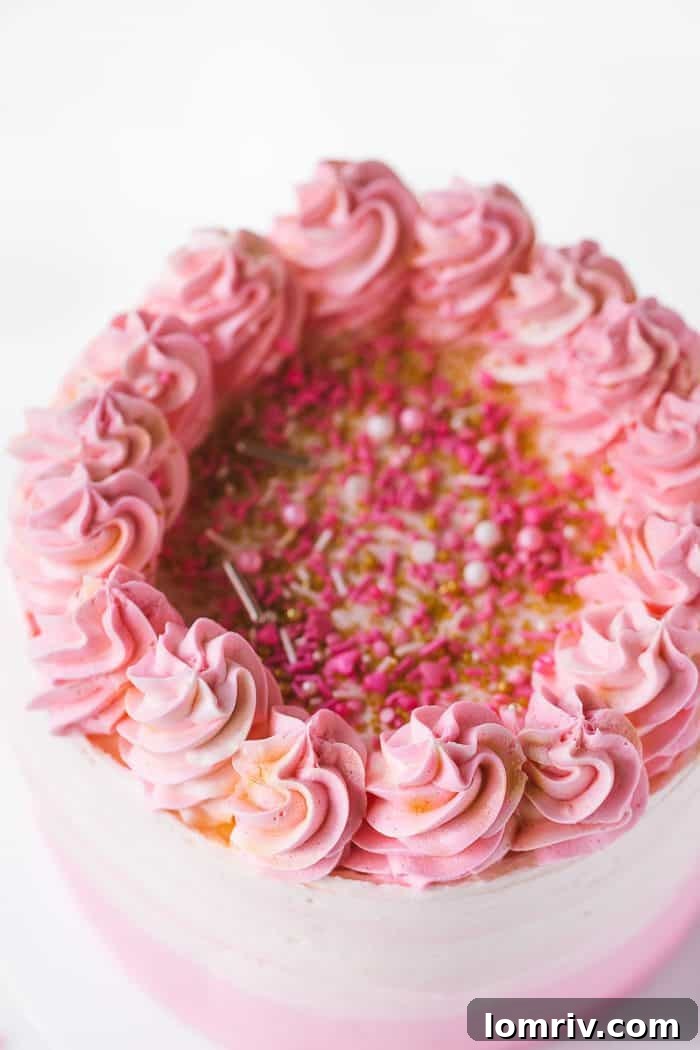
Once your frosting is prepared, the assembly process begins. Start by baking your favorite cake recipe – a moist vanilla cake works beautifully as a canvas for any flavor of frosting and filling. Allow your cake layers to cool completely before leveling them and applying a thin crumb coat of frosting. A crumb coat is a vital, thin layer of frosting that traps any loose crumbs, ensuring your final layer of frosting is perfectly smooth and crumb-free. After applying the crumb coat, chill your cake in the refrigerator or freezer for at least 20-30 minutes. This step is non-negotiable for cake decorating, as a firm, cold cake is much easier to handle and frost.
Now, for the fun part: applying the ombre frosting. With your chilled, crumb-coated cake ready, carefully apply your darker colored frosting to the bottom half of the cake. Then, apply your lighter shade (or plain white) to the top half. You can use an offset spatula to spread these layers, making sure they meet roughly in the middle, creating a distinct line between the two colors. Don’t worry about perfection at this stage; the blending happens next. Some bakers prefer to pipe horizontal lines of each color around the cake, which can also be an effective way to apply the frosting evenly before smoothing.
The magic truly happens as you smooth out the frosting. Using a long offset spatula or, ideally, a bench scraper, gently press against the side of the cake and rotate your turntable. As you scrape and smooth, the distinct line between your colored frosting and the plain white frosting will begin to blur, creating a beautiful, seamless gradient. You have complete control over how pronounced or subtle you want this blend to be. If you desire a very precise, polished transition, you might use lighter pressure and more passes with your scraper. However, if, like me, you appreciate the charm of imperfect, artisanal touches in cake decorating, you can allow for a more organic, slightly rustic blend. There’s no right or wrong way; it’s all about achieving the look that speaks to you. A warm spatula (wiped clean after running under hot water) can also help create a super smooth finish.
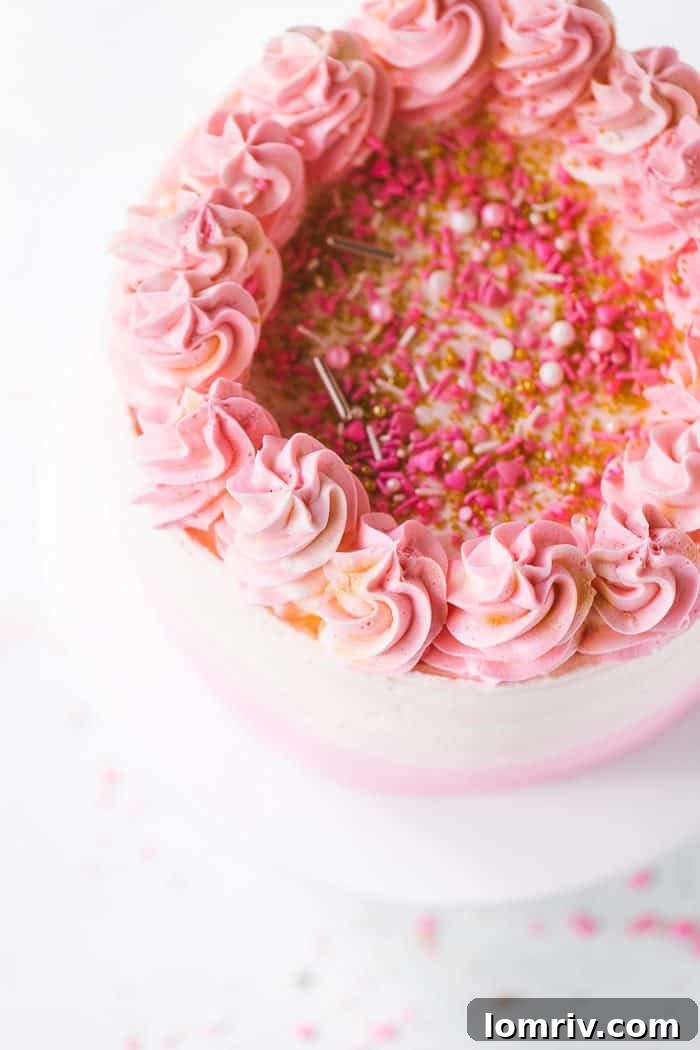
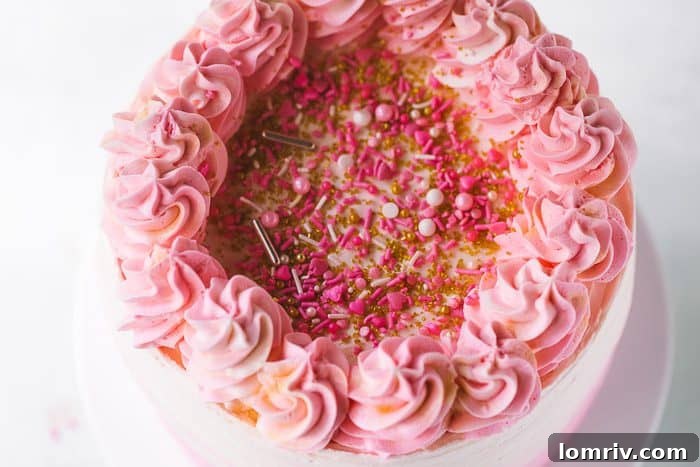
And there you have it – a stunning ombre cake, simple in its execution, yet incredibly elegant in appearance. To add a final touch of sophistication to this pink ombre cake, I used a Wilton Tip 1M to pipe elegant tall swirls on the very top. This classic star tip creates beautiful, defined swirls that perfectly complement the smooth ombre sides. A scattering of delicate sprinkles added that extra sparkle and festive touch. For those who are visual learners, a quick search for “ombre cake frosting tutorial” on YouTube will yield many helpful videos that demonstrate this technique step-by-step, making it even easier to follow along.
This Pink Ombre Cake is more than just a dessert; it’s a versatile canvas for celebration. Its lovely aesthetic makes it absolutely perfect for a variety of girl-themed events. Imagine it as the centerpiece at a baby shower, welcoming a sweet little girl into the world, or gracing the table at a joyous bridal shower, symbolizing new beginnings. It’s also an ideal choice for a princess-themed birthday party, bringing a touch of magic to any young girl’s special day. The beauty of this design is its adaptability; simply change the color palette, and you have a stunning ombre cake suitable for any theme or occasion. For instance, blues and greens for a boy’s baby shower, or vibrant rainbow colors for a fun birthday bash.
To help you recreate this delicious experience, I’m linking below my go-to recipe for a perfectly moist vanilla cake paired with a delectable vanilla frosting. You’ll simply need to use your preferred food coloring to transform the vanilla frosting into the beautiful ombre shades you desire. This cake promises not only a feast for the eyes but also a delightful treat for the taste buds, making your next celebration truly unforgettable.
Pink Ombre Cake
This pink ombre cake starts with a moist vanilla cake filled with a strawberry rose compote and frosted with whipped rose buttercream.
45 minutes
35 minutes
1 hour 20 minutes
Ingredients
For Strawberry Compote:
- 1 cup fresh strawberries, hulled and sliced
- 2 tablespoons granulated sugar
- 2 tablespoons water
- ½ teaspoon rosewater
For the Cake:
- 1 cup cake flour, sifted
- ¾ cup all-purpose flour
- 1 cup granulated sugar
- 1 ½ teaspoons baking powder
- ½ teaspoon salt
- ½ cup (1 stick) unsalted butter cut into 1-inch cubes, room temperature
- 2 large eggs, at room temperature
- ½ cup whole milk, at room temperature
- ½ teaspoon vanilla bean paste or 1 teaspoon vanilla extract
- ¼ teaspoon rosewater
For the Frosting:
- 1 1/2 cups (3 sticks) unsalted butter, softened
- 4 cups confectioners’ sugar, sifted
- 2-3 tablespoons milk
- 1 teaspoon pure vanilla extract
- ½ teaspoon rosewater
- pinch of salt
Instructions
Strawberry Rose Compote
- In a medium saucepan set over medium heat, bring the strawberries, sugar, and water to a boil.
- Cook on medium-low heat, stirring occasionally until the berries break down and compote thickens up about 10 minutes.
- Remove from heat and stir in rosewater. Let cool completely before filling the cake.
FOR CAKES
- Preheat oven to 325 degrees F. Grease four 6 x 2-inch cake pans or two 8-inch cake pans with baking spray. Line with parchment and grease the parchment.
- In the bowl of an electric mixer, combine the dry ingredients and mix on low speed until well blended.
- Increase speed to medium-low and add the cubes of butter, one at a time mixing each one for a few seconds before adding the next. Mix until there are no large chunks.
- Add eggs, one at a time and mix well between each addition. In a small mixing bowl, whisk together the milk, vanilla, and rosewater. Increase mixer speed to medium and add in the wet ingredients in 3 parts, mixing until incorporated and scraping down the bowls after each addition. DO NOT over beat otherwise, you will end up with dense cakes.
- Divide batter into prepared cake pans, filling each about ⅔ full. Bake cakes until a toothpick inserted into the center come out clean, 20-25 minutes. Let cakes cool in the pan for at least 10 minutes before inverting onto wire cooling racks. Let cool on a cooling rack completely before frosting.
- Once cool, shave off the top of each cake if domed, using a wire cake cutter or serrated knife. You want to make sure your cake has an even layer for stacking.
FOR FROSTING
- Whip butter for 8 minutes on medium speed using the paddle attachment of an electric mixer. The butter will become pale and creamy.
- Add the rest of the ingredients and mix on low-speed for 1minute. Then increase speed to medium and mix for 6 minutes until the frosting is light, creamy and fluffy.
To ASSEMBLE
- Place one layer of cake on a cake stand or serving platter. Spread about ½ cup of frosting over the top using an offset spatula. Add half of the strawberry rose compote on top and gently spread.
- Top with another layer of cake and repeat until you get to your final layer. Top with a final layer of cake. Frost cake with a thin crumb coat of buttercream. Smooth as much as you can. Chill cake for 15 minutes.
- Divide the remaining frosting into the colors you plan to use for the ombre effect. I used two shades of pink and white.
- Frost cake, starting at the bottom with the darkest color and then the next color and finally the top with white.
- Decorate the cake with a border (i used tip 1M) and with sprinkles and fresh strawberries.
Recommended Products
As an Amazon Associate and member of other affiliate programs, I earn from qualifying purchases.
- Fat Daddio’s Anodized Aluminum Round Cake Pan, 6 Inches by 2 Inches
- OXO Good Grips 3-Piece Silicone Spatula Set
- Pyrex Glass Mixing Bowl Set (3-Piece)
Making this Recipe?
Share it with us on Instagram using #aclassictwist so we can see what you are baking up in your kitchen!