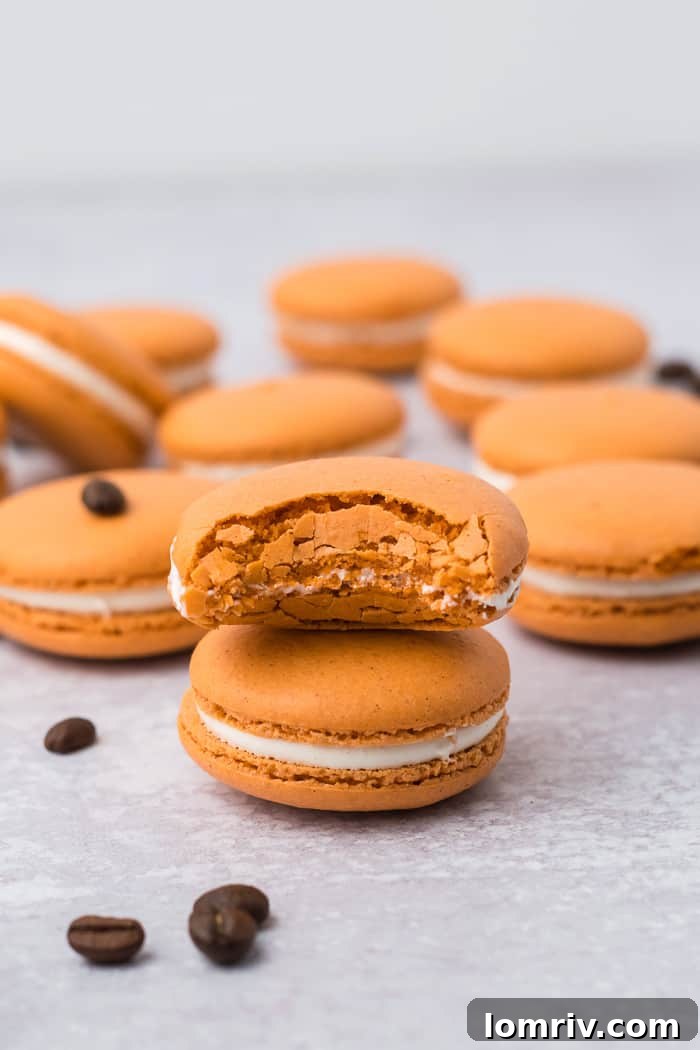
If you’ve ever dreamt of creating those delicate, delightful French macarons in your own kitchen but felt intimidated, this is your ultimate guide! I’m here to demystify the process and share my very best tips and tricks to help you master the art of homemade macarons. Get ready to bake like a pro!
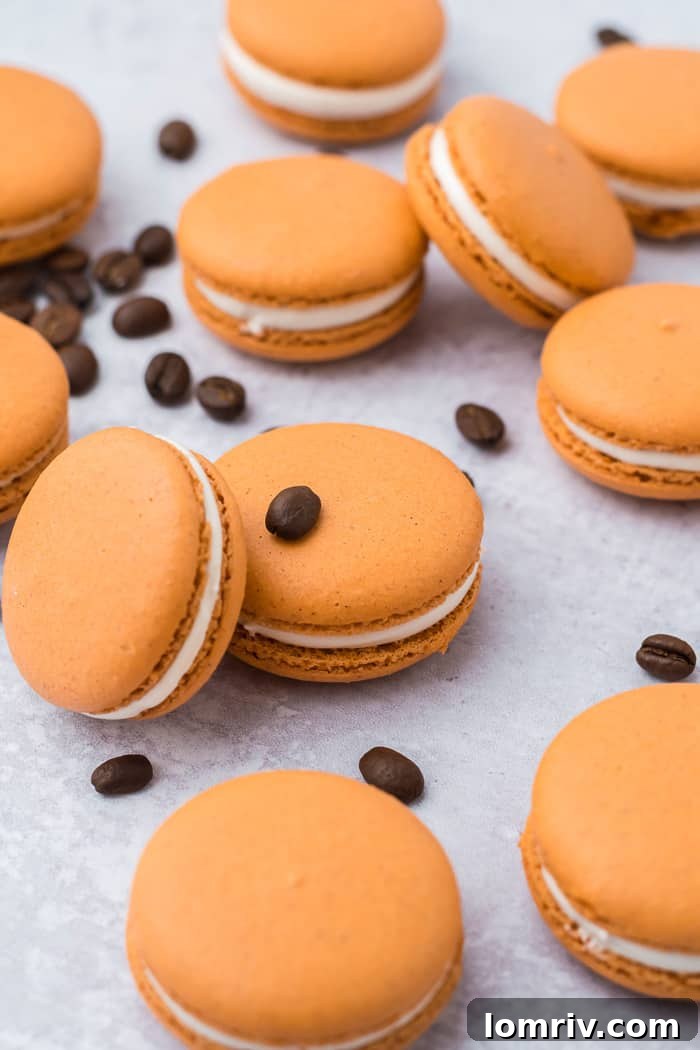
Oh, macarons, how I adore you! There’s something truly magical about these exquisite little sandwich cookies. The crisp, airy meringue shells, the perfectly smooth and sweet filling – every bite is a little piece of heaven. It’s no wonder they’re a global sensation, gracing the windows of patisseries and bakeries worldwide. While many adore eating them, the thought of making them at home often feels like a daunting task. But fear not! With this comprehensive, step-by-step guide, you’ll unlock the secrets to achieving perfect macarons every single time. Having shared numerous macaron recipes on my blog, I felt it was essential to create a dedicated resource outlining all my techniques for success.
I will meticulously walk you through each stage of the macaron-making journey. From selecting the right equipment and understanding crucial ingredients to mastering the delicate art of macaronage and achieving those coveted “feet,” you’ll gain the confidence and knowledge needed. By the end, you’ll be a macaron-making expert, ready to impress friends and family with your exquisite creations!
What Exactly is a Macaron?
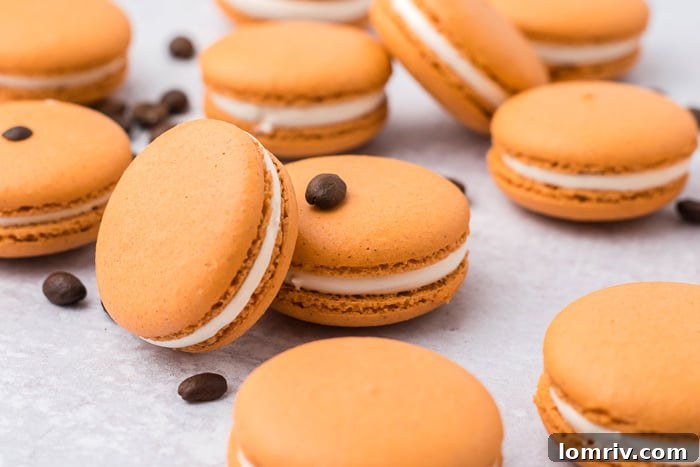
Before we dive into baking, let’s clarify what a macaron truly is. A macaron (pronounced mah-kah-ROHN) is a sweet meringue-based confection made with egg white, icing sugar, granulated sugar, almond meal, and food coloring. It’s essentially a delicate, crisp, and slightly chewy sandwich cookie, composed of two identical meringue shells joined by a delicious filling. The shells are known for their distinct “feet” – a ruffled edge at the base where the meringue rises during baking.
Macaron vs. Macaroon: A Common Confusion
It’s crucial not to confuse macarons with macaroons, although their names are very similar. Macaroons (pronounced mah-kah-ROON) are dense, chewy cookies primarily made from shredded coconut, egg whites, and sugar. They often have a rustic, uneven appearance and are sometimes dipped in chocolate. While equally delicious, they are an entirely different confection from the delicate almond-based French macaron. Keeping them straight will save you any culinary mix-ups!
A Glimpse into Macaron History
The history of macarons is as rich and sweet as the cookies themselves. While often associated with France, their origins are believed to trace back to Italian monasteries during the Renaissance. Catherine de’ Medici is credited with bringing them to France in the 16th century when she married Henry II. However, the modern “sandwich” macaron, as we know it today, with two shells and a creamy filling, gained popularity in the early 20th century in Paris, famously popularized by bakeries like Ladurée. Over the decades, macarons have evolved into a global symbol of refined French pâtisserie.
Essential Tools for Macaron Mastery
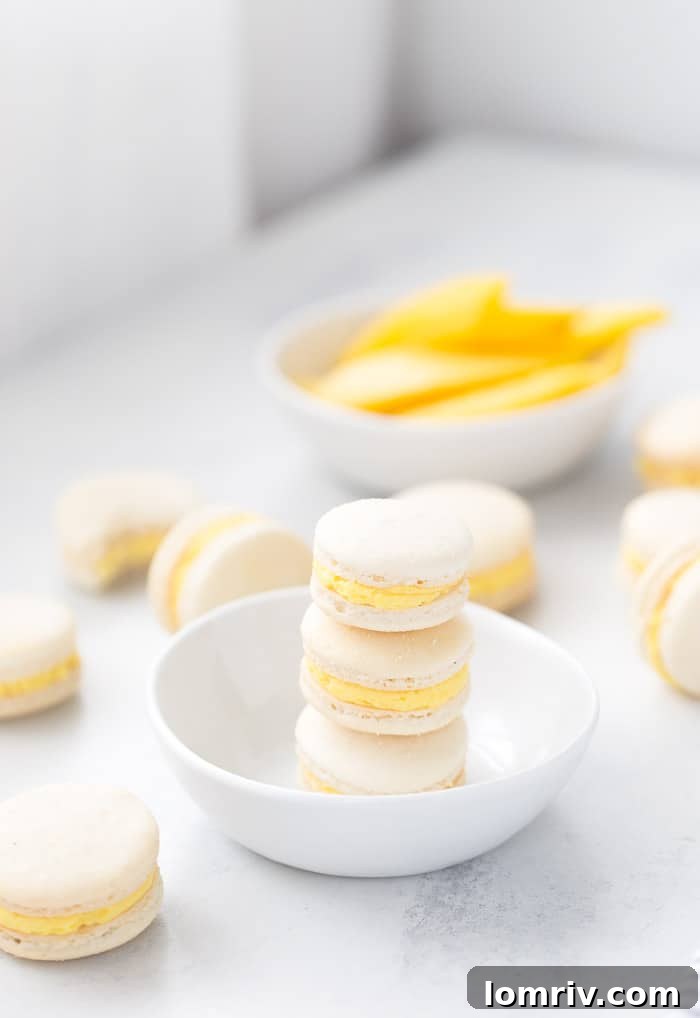
Achieving perfect macarons relies heavily on precision and the right equipment. While some tools might seem optional, they significantly contribute to consistent success. Here’s a list of the gear that will make your macaron journey much smoother:
- 1.5-inch Round Cookie Cutter or Macaron Mat: For uniform macaron shells, a guide is indispensable. I prefer tracing a cookie cutter on the underside of parchment paper – it’s a simple, effective method that has served me well for years. Alternatively, a silicone macaron mat with pre-printed circles is a fantastic investment, ensuring perfectly sized shells every time.
- Digital Kitchen Scale: This is, without a doubt, the most critical tool for macaron making. Macaron recipes require ingredients to be measured by weight (grams) rather than volume. Baking is a science, and precision is paramount for these delicate cookies. A kitchen scale ensures accurate measurements, which is non-negotiable for consistent results.
- Food Processor: To achieve that smooth, delicate texture characteristic of macaron shells, your dry ingredients (almond flour and powdered sugar) must be incredibly fine. Pulsing them together in a food processor breaks down any larger almond bits and helps prevent grainy shells. A basic model is perfectly sufficient.
- Stand Mixer: Whipping egg whites to stiff peaks is a core step in macaron making, and it requires significant mixing time. A stand mixer, like a KitchenAid, simplifies this process immensely, freeing your hands for other tasks. While a stand mixer is ideal, a powerful electric hand mixer can also get the job done with a bit more arm work.
- Fine-Mesh Sifter: After processing, sifting your dry ingredients (almond flour and powdered sugar) is essential. This step removes any remaining coarse almond pieces, ensuring a smooth, lump-free batter for perfectly textured shells. Don’t skip this, as it contributes significantly to the macaron’s delicate structure.
- Pastry Bags: Piping macaron batter requires control and precision. Pastry bags, coupled with a round piping tip, allow you to pipe uniform circles neatly. They are also excellent for neatly dispensing your chosen macaron filling.
- Large Round Piping Tip (e.g., Wilton 1A or Ateco 805): A large, round tip provides the ideal opening for piping macaron batter, giving you excellent control over the flow and size of your shells.
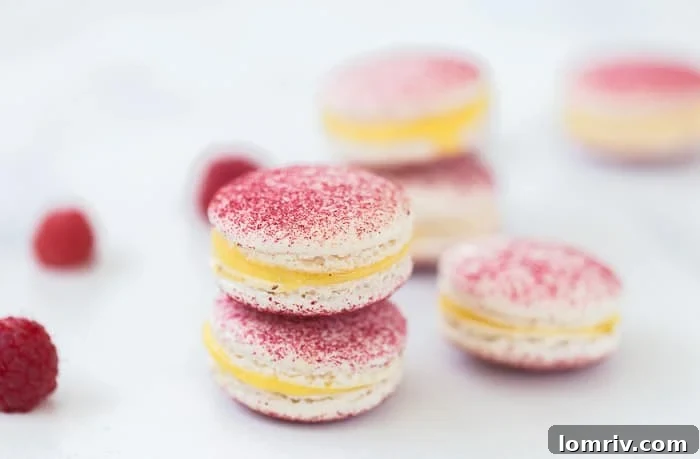
Mastering the Macaron Shells: A Step-by-Step Journey
This is where the magic happens! Creating the perfect macaron shells involves precision, patience, and attention to detail. Follow these steps carefully for the best results:
Step 1: Prepare Your Baking Sheets and Dry Ingredients
First, prepare your baking sheets. If you’re not using a silicone mat, take parchment paper and draw 1.5-inch circles, spaced about 1 inch apart, on one side. Flip the parchment paper over so the drawn circles are on the underside (this prevents graphite from transferring to your macarons) and place it on your baking sheet.
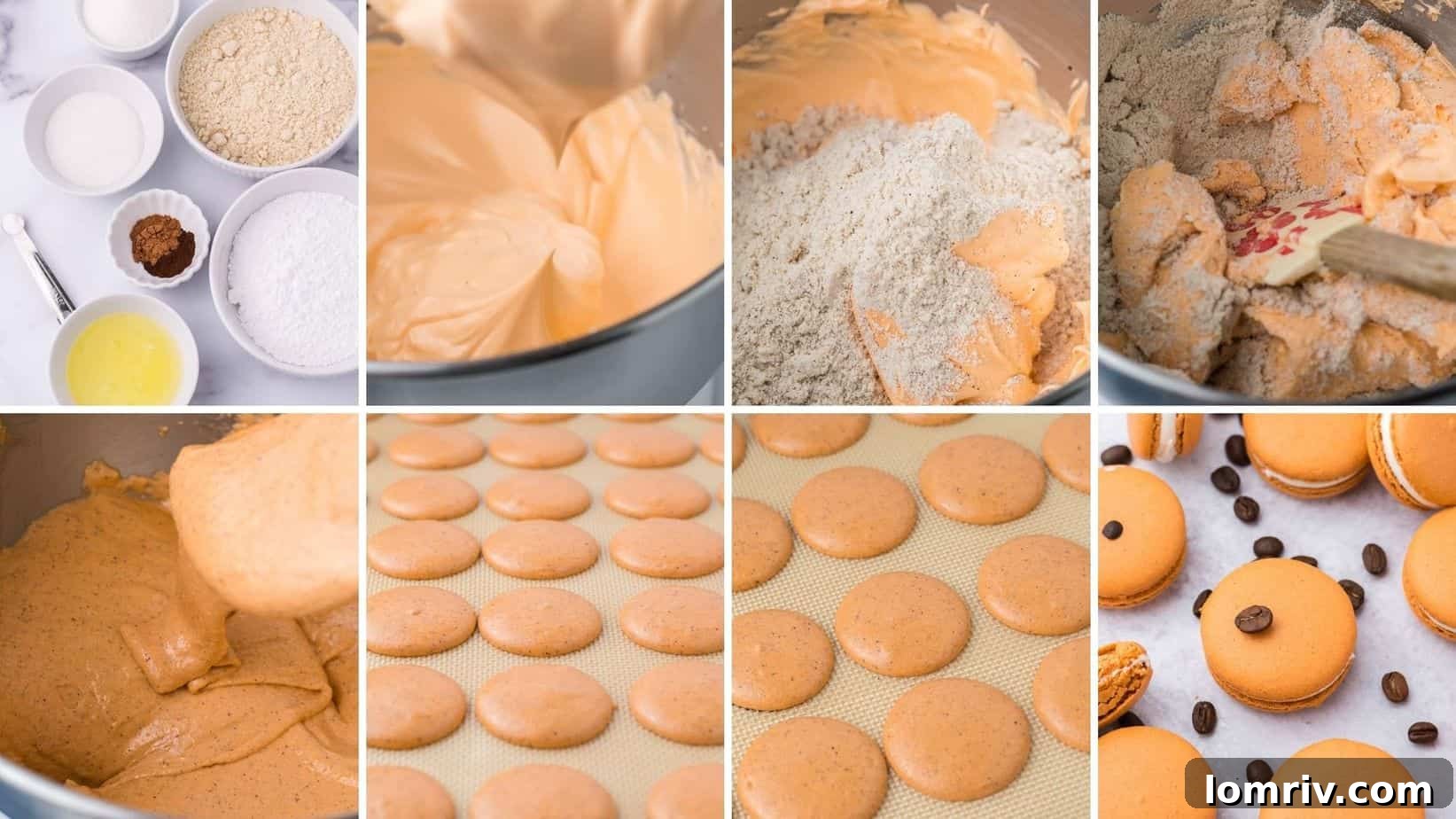
Next, combine your dry ingredients: almond flour and powdered sugar. Pulse them together in a food processor for about 30 seconds to break down any large clumps and achieve a super fine mixture. This is also the stage where you can incorporate dry flavorings like espresso powder (as in my chocolate espresso macarons), cinnamon spices (pumpkin spice latte macarons), or even freeze-dried fruit powders (mango macarons). Always adhere to your specific recipe for quantities.
After processing, sift the dry mixture thoroughly into a large bowl. Sift it several times until you have very few (less than 2 tablespoons) almond bits remaining in the sifter. Discard these larger pieces, as they can create textured shells. Set aside your perfectly fine dry mixture.
Step 2: The Meringue – Whipping Those Egg Whites
The meringue is the backbone of your macaron shells. The key is to incorporate enough air to create a stable structure.
Egg White Preparation: While some bakers swear by “aged” egg whites (egg whites left at room temperature overnight), I’ve consistently had success by simply ensuring my egg whites are at room temperature before whipping. This helps them whip up faster and achieve greater volume. What is absolutely critical, however, is that there are no traces of egg yolk in your whites. Even a tiny speck of yolk can prevent your egg whites from whipping to stiff peaks.
In the bowl of your stand mixer (ensure the bowl and whisk attachment are impeccably clean and grease-free), combine the room-temperature egg whites and cream of tartar. The cream of tartar acts as a stabilizer, helping the egg whites hold their structure. Begin whisking on medium-low speed until the egg whites become foamy. Gradually add the granulated sugar, a tablespoon at a time, while increasing the speed to medium-high. Continue beating until stiff, glossy peaks form, which typically takes about 5-7 minutes. You’ll know they’re ready when you can invert the whisk, and the meringue stands tall without drooping.
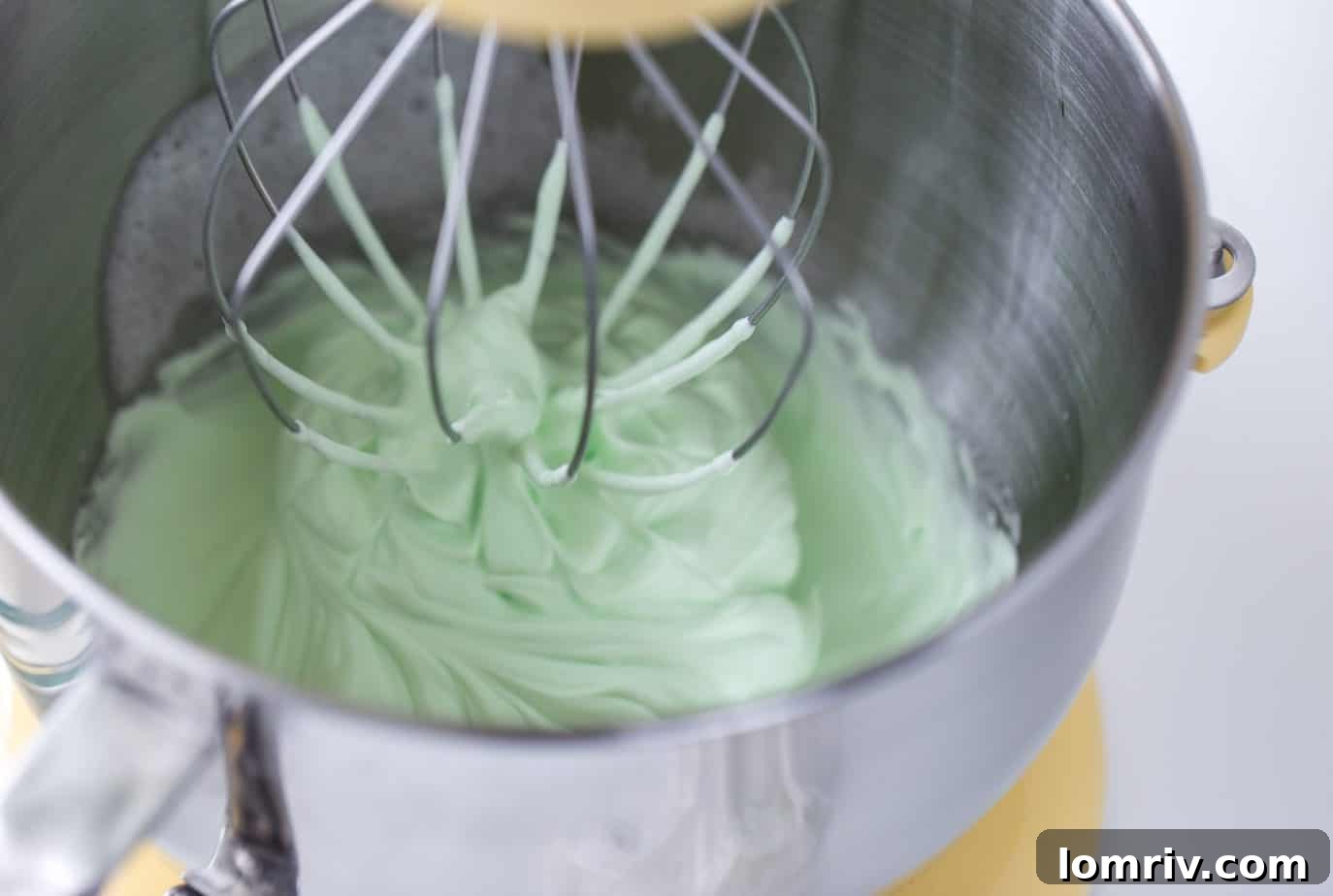
Color and Flavor (Optional): At this stage, you can gently mix in any gel food coloring or liquid flavorings (like lemon extract or vanilla bean paste). Whip for another minute or so until evenly incorporated. Gel food coloring is preferred over liquid as it adds minimal moisture.
Step 3: Macaronage – The Most Critical Fold
This is arguably the most crucial step in macaron making. “Macaronage” is the process of gently folding the dry ingredients into the whipped meringue. The goal is to deflate the meringue just enough to create a flowing, yet thick, batter. Undermixing will result in lumpy shells with no feet, while overmixing will create a thin, oily batter that spreads too much and won’t form feet.
Add about one-third of the sifted dry ingredients to the meringue. Using a rubber spatula, gently fold the mixture. The technique involves pressing the batter against the side of the bowl and then scooping from the bottom, rotating the bowl as you go. This motion helps to deflate the meringue gradually while incorporating the dry ingredients. Repeat with the remaining dry ingredients in two more additions.
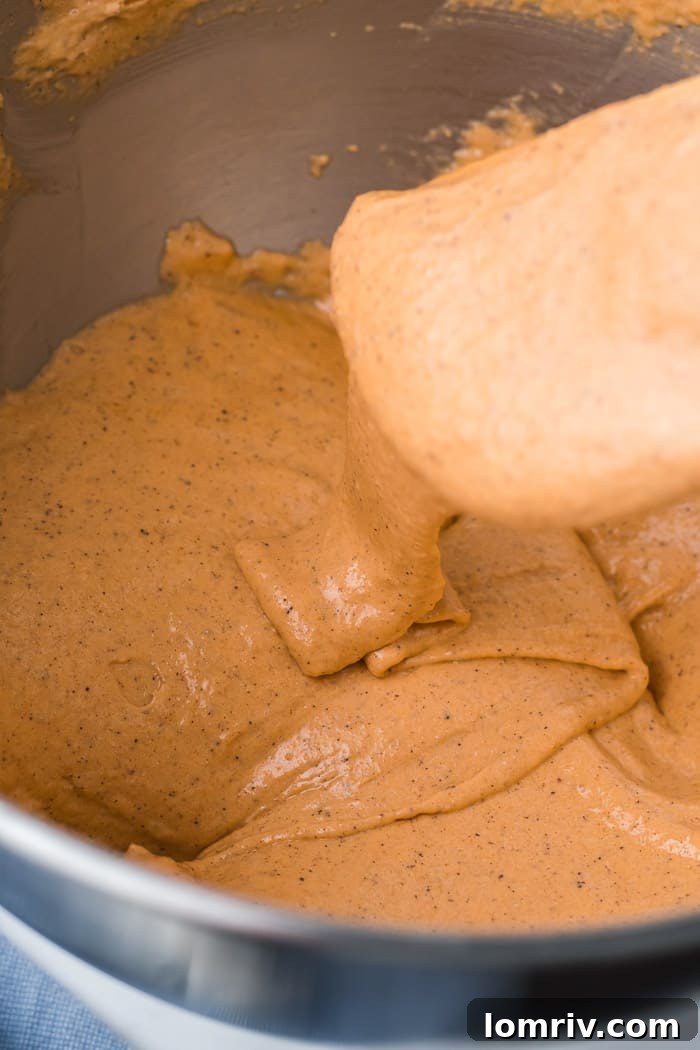
Checking for the Right Consistency (The “Ribbon Stage”): This is where intuition comes in. Start checking the batter after about 20-25 gentle folds. To test, scoop some batter with your spatula and let it fall back into the bowl. It should fall in a slow, continuous ribbon-like stream and slowly reincorporate into the rest of the batter within 10-15 seconds. If it’s too thick and breaks off quickly, continue folding for a few more turns. If it runs too quickly, it’s likely overmixed. Stop folding as soon as you achieve this “ribbon stage.”
Step 4: Piping and Resting the Shells
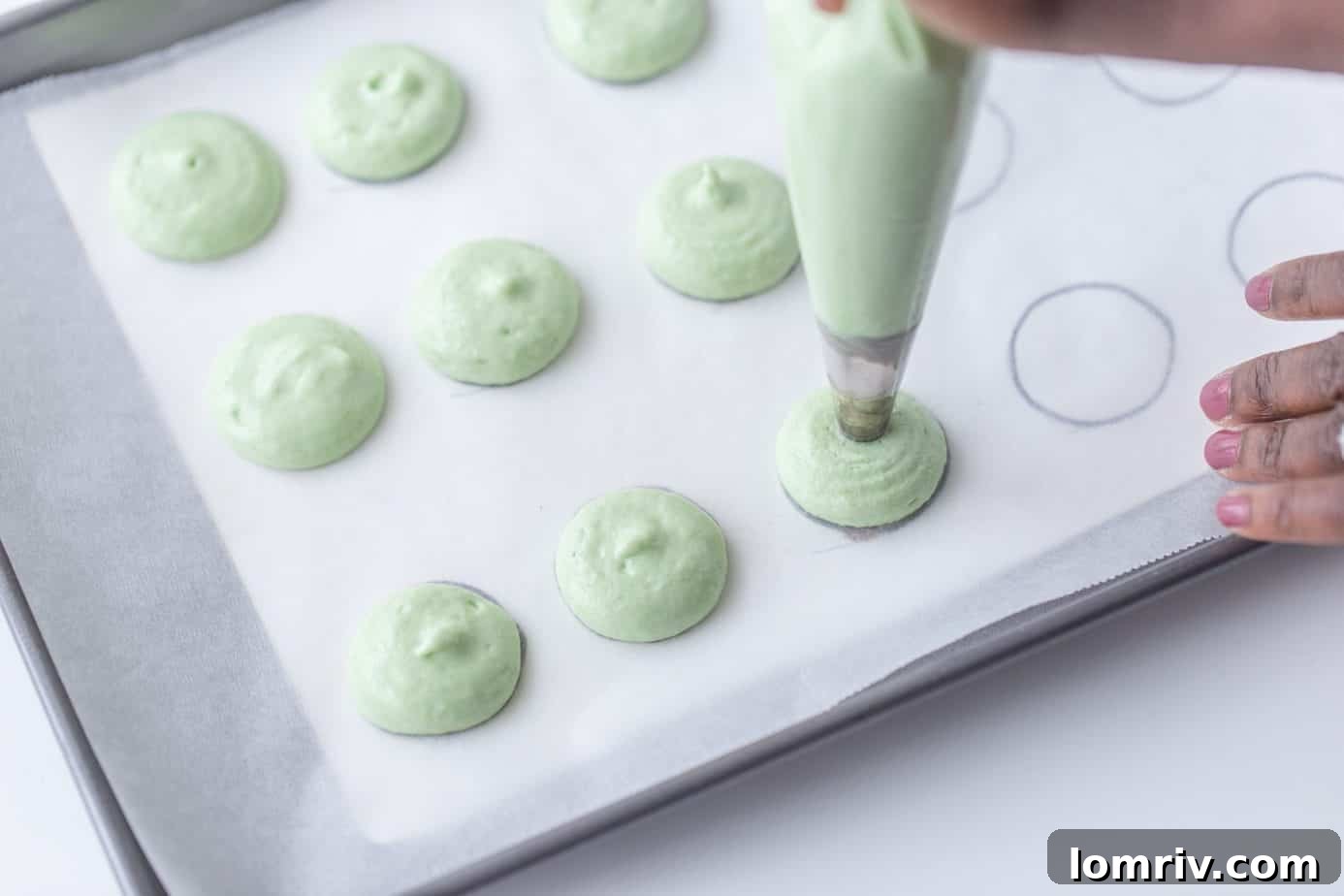
Transfer the perfectly mixed macaron batter into a pastry bag fitted with your large round tip. Hold the pastry bag vertically, about half an inch above your prepared baking sheet. Apply even pressure to pipe circles of batter onto your traced guides or silicone mat. Aim for smooth, consistent circles.
Once all your shells are piped, firmly tap the baking sheet against your counter 2-3 times. This crucial step releases any trapped air bubbles from the batter, preventing cracked shells. You can also use a toothpick to pop any visible bubbles. Then, let the piped shells rest on the counter. This resting period, known as “crusting,” allows a skin to form on the surface of the shells. This can take anywhere from 20 minutes to over an hour, depending on the humidity in your kitchen. The shells are ready for baking when they feel dry to the touch and don’t stick to your finger.
Step 5: Baking the Macarons
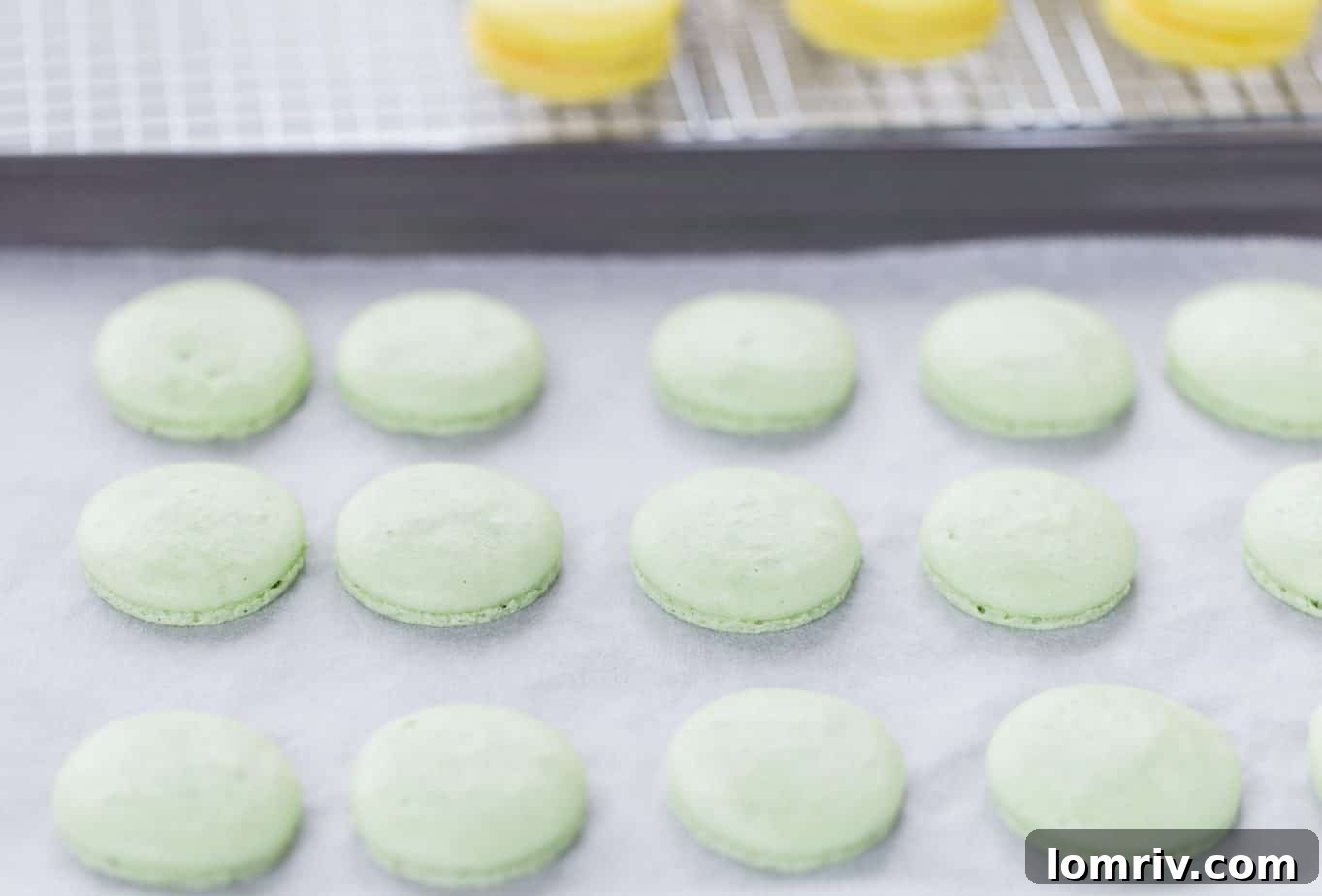
Preheat your oven to 300°F (150°C). Oven temperature is critical for macarons, so if you have an oven thermometer, now is the time to use it. Place one baking sheet of macarons in the preheated oven and bake for 11-15 minutes. Baking time can vary greatly depending on your oven, so it’s essential to observe.
You’ll know they’re ready when they have developed their characteristic “feet” and the shells are firm enough that they don’t wiggle when gently touched. They should peel easily from the parchment paper. If they stick, they need a few more minutes. Once baked, remove the baking sheet from the oven and allow the macaron shells to cool completely on the pan before attempting to peel them off the parchment. Prematurely removing them can cause them to break or lose their feet.
Crafting Your Macaron Filling
Once your beautiful macaron shells are baked and cooled, it’s time for the delightful filling! The choice of filling offers endless possibilities and allows you to tailor your macarons to any flavor profile imaginable. From rich buttercreams to tangy fruit curds, sweet jams, or even unique options like apple sauce (as seen in my salted caramel spiced apple macarons), the sky truly is the limit.
For me, a classic buttercream is often the perfect complement, offering a smooth texture and balanced sweetness that enhances the delicate shells without overpowering them. However, experiment with different flavors and textures to find your favorite combinations!
Assembling Your Masterpiece and Maturation
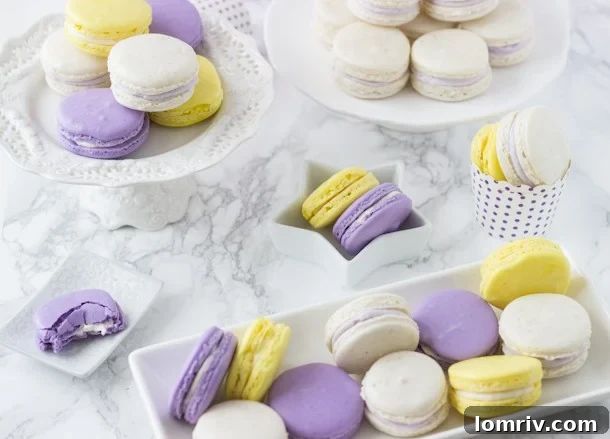
The final step is to fill your macarons. Take one cooled macaron shell, pipe your chosen filling onto its flat side (using a pastry bag with or without a round tip allows for neat application), and then gently top it with another shell. Congratulations – you’ve made your first macaron!
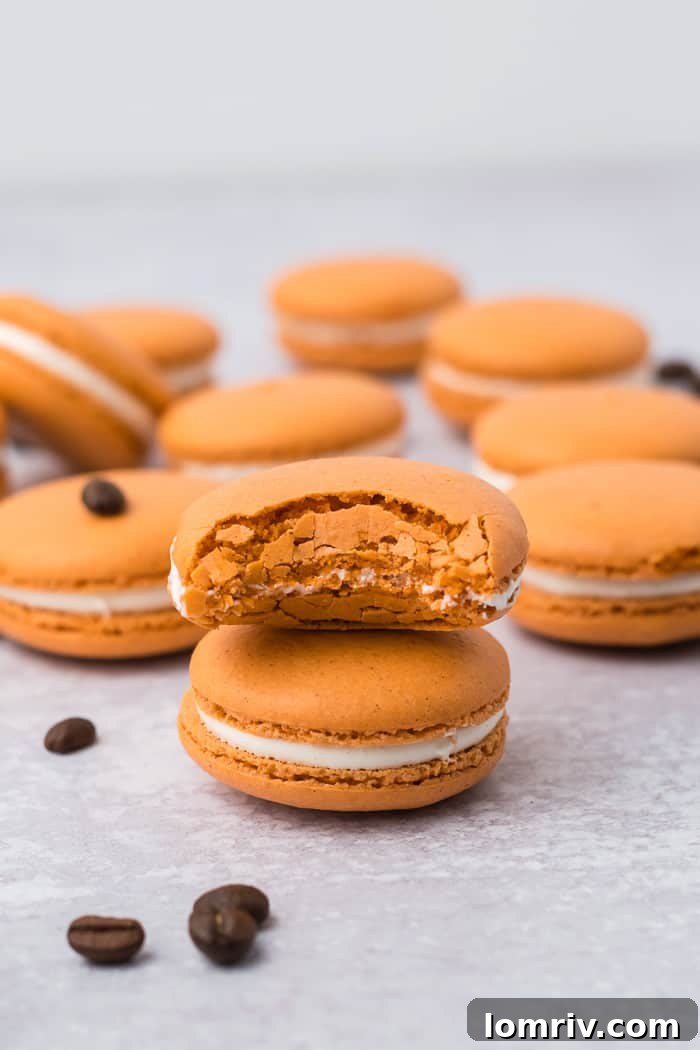
Once assembled, macarons benefit greatly from a process called “maturation” or “aging.” While delicious immediately, their flavors and textures truly shine after being stored in the refrigerator for at least 12-24 hours. During this time, the moisture from the filling softens the shells slightly, creating that characteristic chewy-crisp texture that makes macarons so irresistible.
Store your filled macarons in an airtight container in the refrigerator. Macarons with buttercream fillings can keep well for up to 7 days. For fillings like fruit curds, jams, or apple sauce, which have higher moisture content, it’s best to enjoy them within 2-3 days for optimal freshness and texture.
Troubleshooting Common Macaron Challenges
Macarons can be finicky, and even experienced bakers encounter issues. Don’t be discouraged if your first batch isn’t perfect! Understanding common problems can help you diagnose and improve your technique.
- Hollow Shells: This is a frequent issue where the macaron shell appears perfect on the outside but is empty inside. Common causes include undermixing (macaronage), oven temperature being too high or too low, or not tapping the trays sufficiently to release air.
- Cracked Shells: Cracks usually indicate that the shells didn’t rest long enough before baking, preventing a proper skin from forming. It can also be caused by trapped air bubbles (insufficient tapping) or an oven that’s too hot.
- No Feet: The iconic “feet” are a sign of proper technique. Lack of feet can be due to undermixing or overmixing the batter, shells not resting long enough, or incorrect oven temperature (too low often prevents feet, while too high can cause them to spread too quickly and disappear).
- Lopsided Macarons: If your macarons are taller on one side, it might be an uneven piping technique, or an uneven oven temperature. Rotating your baking sheet halfway through baking can help.
- Flat, Spreading Macarons: This is a classic sign of overmixed batter (over-macaronage). The batter is too thin and runny, spreading out without structure.
- Granulated Shells: If your shells feel grainy, it’s likely that your dry ingredients (almond flour and powdered sugar) weren’t processed or sifted finely enough.
The key to mastering macarons is consistent practice and meticulous attention to detail. Take notes on your successes and failures – what worked, what didn’t, and what changes you made. This will help you identify the specific factors in your environment (like oven quirks or humidity) that influence your baking.
Tips for Macaron Success
- Precision is Key: Always measure ingredients by weight using a kitchen scale.
- Cleanliness Matters: Ensure your mixing bowl and whisk are impeccably clean and grease-free for proper meringue formation.
- Room Temperature Egg Whites: Use egg whites that are at room temperature for maximum volume.
- Don’t Rush Macaronage: This is the trickiest part. Aim for the “ribbon stage” – flowing but not runny. Practice makes perfect!
- Tap and Rest: Always tap your piped shells to release air and allow them to rest until a skin forms.
- Know Your Oven: Every oven is different. An oven thermometer is invaluable, and you may need to adjust temperature and baking times.
- Patience: Macarons are a labor of love. Don’t get discouraged by imperfect batches; learn from them.
- Maturation: Don’t forget to refrigerate your assembled macarons overnight for the best texture and flavor.
You now have all the tools and knowledge to embark on your macaron-making adventure. While they require a bit of dedication, the reward of biting into a perfectly homemade macaron is truly unparalleled. Happy baking!
Some of my favorite macaron recipes:
- Raspberry Macarons with Passionfruit Filling
- Mango Macarons
- Lavender Honey Macarons
- Lemon Macarons