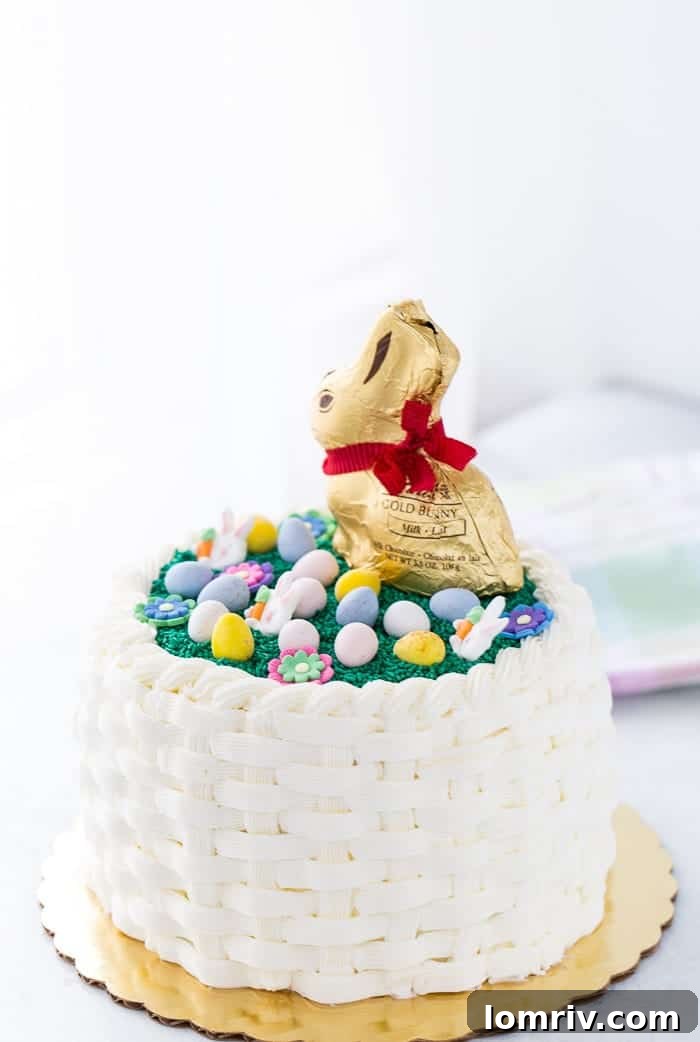
Hello, fellow bakers and creative spirits! Get ready to embark on a delightful culinary journey that culminates in a show-stopping dessert. Today, we’re diving into the enchanting world of cake decorating with a focus on a timeless technique: the basketweave. This method, often perceived as complex, is surprisingly simple to master and yields incredibly impressive results, making it perfect for your next special occasion.
The beauty of the basketweave lies in its intricate appearance, reminiscent of a beautifully woven Easter basket, a picnic hamper, or even a cozy knitted blanket. It’s a design that truly captivates, yet it’s built upon a series of straightforward piping strokes. With just a few essential tools and a batch of perfectly consistent buttercream, you’ll be creating confectionery masterpieces in no time. This detailed guide will walk you through every step, ensuring your basketweave cake is not only visually stunning but also a joy to create.
Mastering the Elegant Basketweave Cake
For years, the idea of crafting a basketweave cake has danced in my imagination. Initially, I envisioned a romantic chocolate-covered strawberry basket cake for Valentine’s Day – a rich strawberry cake adorned with chocolate frosting in a delicate basketweave pattern, crowned with luscious chocolate-dipped strawberries. What a charming idea, right? Unfortunately, year after year, the busy demands of life kept that vision on the back burner.
But this year, I finally made it a reality! Channeling my long-held aspirations and piping enthusiasm, I decided to create this exquisite Easter basketweave cake. It’s the perfect centerpiece for any Easter celebration, bringing a touch of homemade elegance to your holiday table. And the best part? Its versatility means you can easily adapt the decorations for other special occasions, like a beautiful Mother’s Day tribute or a charming summer picnic dessert.
Before I embarked on this blogging adventure, I honed my skills by taking Wilton’s comprehensive cake decorating courses. Among the many techniques I learned, the basketweave piping stood out as a personal favorite. It’s incredibly elegant and always makes a striking impression, leading many to believe you’re a seasoned professional. Yet, the secret is its inherent simplicity. It truly is one of those techniques that look far more difficult than they actually are, making it a fantastic skill to add to your baking repertoire.
The Secret to Perfect Piping: Consistent Buttercream
The cornerstone of any successful buttercream piping design, especially the intricate basketweave, is a perfectly prepared and consistently smooth buttercream frosting. You absolutely need a medium-consistency buttercream that holds its shape beautifully while remaining pliable enough to flow smoothly through your piping tip. This balance is crucial for creating crisp, fluid lines and patterns that define the basketweave technique.
My absolute favorite for all my cake decorating endeavors is my go-to whipped vanilla buttercream. This recipe consistently delivers a frosting that is silky smooth, incredibly stable even at room temperature, and perfectly consistent for intricate piping work. You can see its versatility in other creations like my strawberry rainbow cake. It also takes gel food coloring exceptionally well, allowing you to achieve vibrant hues without thinning out the frosting’s consistency.
Achieving the right buttercream consistency might seem daunting at first, but with a few tips, you’ll master it. If your frosting is too stiff, it will be difficult to pipe smoothly and might break. If it’s too soft, your beautiful basketweave lines will merge and lose their definition. A good test is to pipe a line on a piece of parchment paper – it should hold its shape without spreading, but also not feel like you’re fighting the piping bag. Adjusting with a tiny bit of heavy cream for stiffness or powdered sugar for thickness can save the day.
Basketweave Cake Ingredients
Here’s what you’ll need to create your stunning Easter basketweave cake. Remember, quality ingredients make a difference in both taste and presentation.
- One recipe for lemon cake, or any preferred cake recipe that yields two 8-inch or 9-inch layers.
- 2 cups (4 sticks) unsalted butter, softened to room temperature for optimal whipping.
- 4 cups powdered sugar, sifted, to ensure a smooth, lump-free frosting.
- 2 teaspoons pure vanilla extract for that classic, comforting flavor.
- 2-3 tablespoons heavy cream, to achieve the perfect buttercream consistency.
- Wilton Tip 47 (basketweave tip) or Wilton Tip 48 (which is slightly wider and can speed up the process) and Wilton Tip 21 (for the decorative rope border).
- Wilton Disposable decorating bags for easy cleanup and quick color changes.
- Green Jimmies, to create a delightful grassy effect on top of your cake.
- Mini Cadbury Eggs, for a festive and colorful Easter touch.
- Wilton Bunny Decorations and Wilton Flower Icing Decorations, to complete your charming Easter scene.
How to Make a Basketweave Cake: A Step-by-Step Guide
Let’s get down to the art of creating this magnificent cake. Each step is designed to guide you toward a flawless finish.
For the Cake:
- Begin by preparing your chosen cake recipe according to its specific instructions. Ensure you bake your cake in either 8-inch or 9-inch round cake pans to achieve layers suitable for stacking and decorating. Once baked, allow the cakes to cool completely on a wire rack. This critical step prevents the frosting from melting and sliding off when applied.
For the Frosting:
- In a large mixing bowl, using an electric mixer fitted with the whisk attachment, whip the softened unsalted butter on medium speed for approximately 6 minutes. You’re looking for a light, fluffy, and pale-yellow consistency. Stop the mixer, scrape down the sides of the bowl, and then add the sifted powdered sugar, pure vanilla extract, and 2 tablespoons of heavy cream. Mix on low speed until all ingredients are just combined and no dry powdered sugar remains. Increase the speed to medium-high and beat the frosting for another 6 minutes until it becomes incredibly light, airy, and fluffy. If the frosting feels too stiff, add the remaining tablespoon of heavy cream gradually until you reach the desired smooth, pipeable consistency.
Assembly and Decorating:
- To begin assembling your cake, place your first cooled cake layer onto a cake board or serving plate. Using an offset spatula, spread an even layer of approximately one cup of your prepared buttercream frosting over the top of this layer. Gently place the second cake layer on top, aligning it carefully. If your recipe yields a third layer, repeat the filling process. Next, apply a very thin layer of frosting all over the entire cake – this is known as the “crumb coat.” Its purpose is to trap any loose crumbs, ensuring a smooth finish later. Chill the crumb-coated cake in the refrigerator for at least 20 minutes to set the frosting. This step is crucial for stable decorating.
- While your cake chills, prepare your piping bag. Attach Wilton Tip 47 (or Tip 48 for a wider weave) to a decorating bag and fill the bag about two-thirds full with your perfectly consistent buttercream. The basketweave technique, though impressive, is easy to follow. For a visual demonstration, I highly recommend watching this instructional video from Wilton, which clearly illustrates the movements.
- In essence, to create the basketweave, begin by piping a long, straight vertical line of frosting from the top to the bottom of your cake. Next, holding your piping bag at a 45-degree angle, pipe short horizontal lines over the first vertical line. Ensure these horizontal lines are spaced evenly, with the distance between them being roughly the same as the width of your piping tip. Once you’ve completed a section of horizontal lines, pipe your next vertical line over the *edges* of these horizontal lines. Then, pipe another set of horizontal lines, making sure to “bury” your piping tip slightly between the vertical lines from the previous step. Continue this pattern of alternating vertical and horizontal strokes, carefully overlapping to create the woven effect, until the entire side of your cake is covered with the basketweave pattern. Keep your eye level with the cake by using a rotating cake stand for ease and straight lines.
- To give your cake a polished and complete look, switch to Wilton Tip 21. Pipe a beautiful rope-like border around the top edge of the cake. This not only adds a decorative flourish but also neatly finishes the top of your basketweave design.
- Finally, it’s time to bring your Easter scene to life! Generously spread the green jimmies across the top of the cake, creating a vibrant, grassy bed. Artfully arrange the Mini Cadbury Eggs, Wilton Flower Icing Decorations, and the adorable Wilton Bunny Decorations on top. The chocolate bunny, in particular, adds a whimsical and classic Easter touch.
Tips for Flawless Basketweave Cake Decorating
Once you’ve perfected your whipped buttercream – and remember, that’s truly the foundation – the rest of this cake comes together quite easily. The beauty of this recipe is its adaptability. You can use any favorite cake recipe for the base. For this particular Easter delight, I opted for my beloved lemon cake recipe. Its bright, zesty flavor is absolutely perfect for springtime and complements the richness of the buttercream beautifully. However, feel free to use your favorite homemade cake recipe or even a high-quality box mix if time is a factor. Just ensure your cake is baked in at least two layers using 8-inch or 9-inch round pans to provide enough surface for your stunning basketweave.
Deep Dive into Basket Weave Piping Technique
The basketweave design is achieved by systematically piping vertical lines and horizontal strips in a series of coordinated steps. It’s all about creating an illusion of depth and texture. To begin, use Wilton Tip 47 (which has one serrated edge and one flat edge) or Wilton Tip 48 (which is slightly wider and often preferred for larger cakes as it covers more surface area faster – I personally used Tip 48 for this project). The first step involves piping a single, straight vertical line of frosting down the side of your crumb-coated cake.
Following this initial vertical line, you’ll then pipe short horizontal strips *over* it. Crucially, these horizontal strips should be evenly spaced, with the gap between each strip being roughly the same as the width of your piping tip. This consistent spacing is what creates the authentic woven look. After you’ve completed a set of horizontal strips, you’ll pipe the *next* vertical line directly over the edges of those newly piped horizontal strips. This technique ensures that the “weave” is continuous and seamless.
The process then repeats: pipe another set of horizontal lines *over* the most recent vertical line, making sure to carefully “bury” your tip slightly into the spaces between the lines you just piped. Continue this alternating pattern of vertical lines and horizontal strips, working your way around the cake until the entire surface is covered. It sounds simple, doesn’t it? If you’re still a bit unsure, remember that Wilton’s instructional video is an invaluable resource, offering a clear visual guide to help you master this technique.
This cake and technique are an excellent opportunity to practice and refine your buttercream decorating skills. Trust me, the effort is truly worth it. The collective “oohs” and “aahs” you’ll receive when you unveil this beautiful cake will make all your hard work feel incredibly rewarding. It’s a testament to how simple steps can combine to create something truly spectacular.
If you decide to give this charming basketweave cake a try, or if you have any questions along the way, please don’t hesitate to share your thoughts in the comments section below. I love hearing about your baking adventures!
More Delightful Easter Recipes to Explore
Easter is a time for sweet treats and festive baking! If you enjoyed making this basketweave cake, you might also love these other holiday-inspired recipes:
- Speckled Easter Cake: A whimsical cake perfect for spring.
- Easter Cake Pops: Bite-sized delights that are fun for kids and adults.
- Lemon Easter Cookies: Zesty and sweet, these cookies are a refreshing treat.
- Easter Chocolate Cupcakes: Classic chocolate cupcakes with an Easter twist.
- Spring Cookies: Beautifully decorated cookies to celebrate the season.
What are your thoughts on this incredible Easter basketweave cake recipe? Imagine serving a slice of this artistic creation; what delicious beverage or side dish would you pair with it? Share your ideas and comments in the section below. Your creativity inspires us all!
If you create this cake and share your masterpiece across social media, please make sure to tag #aclassictwist. I can’t wait to see your beautiful creations come to life and celebrate your baking success!
Happy baking, my friends, and may your kitchen be filled with joy and delicious aromas!
Easter Basket Weave Cake Recipe Card
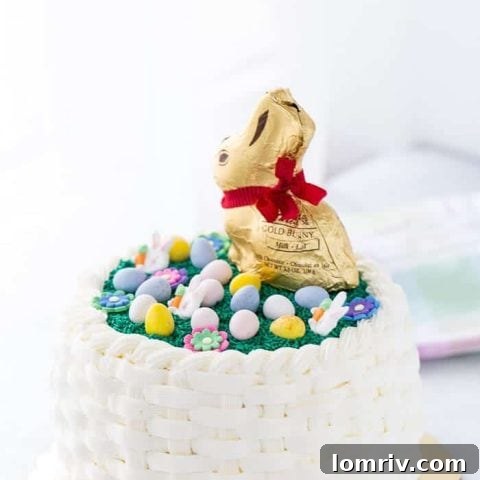
Easter Basket Weave Cake
Creating a beautiful Easter basketweave cake is easier than you think with these step-by-step instructions. All you need are the right tools and perfectly whipped buttercream frosting.
1 hour 30 minutes
Ingredients
For the Cake:
- One recipe for Lemon Cake or any cake of your choice
- 2 cups (4 sticks) unsalted butter, softened at room temperature
- 4 cups powdered sugar, sifted
- 2 teaspoons pure vanilla extract
- 2-3 tablespoons heavy cream
- Wilton Tip 47 (basketweave) OR Tip 48 and Tip 21 (for the rope borders)
- Wilton Disposable decorating bags
- Green Jimmies
- Mini Cadbury Eggs
- Wilton Bunny Decorations
- Wilton Flower Icing Decorations
Instructions
For the Cake:
- Bake cake according to the instructions of your recipe. Bake in either 8-inch or 9-inch round cake pans. Let cakes cool completely before frosting.
For the Frosting:
- In a large mixing bowl, whip the butter on medium speed with an electric mixer using the whisk attachment for about 6 minutes until light and fluffy. Stop the mixer and add the rest of the ingredients. Mix on low until just combined and then increase speed to medium-high and beat the frosting for another 6 minutes until light and fluffy.
Assembly:
- Place a layer of the cake onto a cake board or plate. Fill with a cup of the frosting and top with a second layer. If you have another cake layer, repeat the process. Frost your whole cake with a thin layer of frosting for a crumb coating. Chill cake for 20 mins.
- Attach Wilton Tip 47 to a decorating bag and fill the bag with frosting. To make the basket weave, follow the instructions in this video.
- Briefly, start by piping a vertical line from top to bottom of the cake. Then holding your bag at a 45-degree angle, pipe horizontal lines over the vertical line, spacing the horizontal lines the same as the width of your tip. Pipe the next vertical line over the edges of your horizontal lines. Pipe the horizontal lines over the vertical line, ensuring you bury your tip in between the lines. Continue piping lines and strips until you cover the entire cake.
- To finish the cake, use Tip 21 to pipe a border on top of the cake in a rope-like manner.
- To decorate, spread the green jimmies all over the top of the cake. Add the eggs, flowers, and decorations, including the chocolate bunny.
Notes
NOTES:
- Keep the cake at eye level to ensure your lines are straight. I suggest using a rotating cake stand for ease.
- You can use the flat edge of Tip 47 for a different look or combine the serrated side and flat edge for a combo look. I used Tip 48 because it is wider and takes less time to go around the cake.
Making this Recipe?
Share it with us on Instagram using #aclassictwist so we can see what you are baking up in your kitchen!
Disclosure: Affiliate links to amazon included.