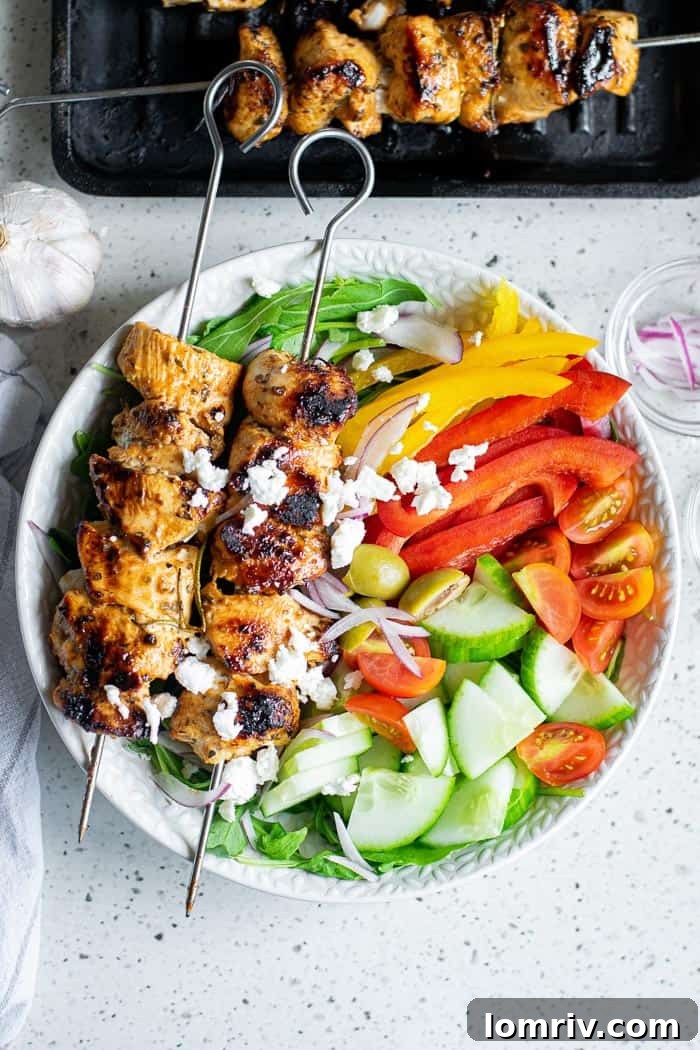
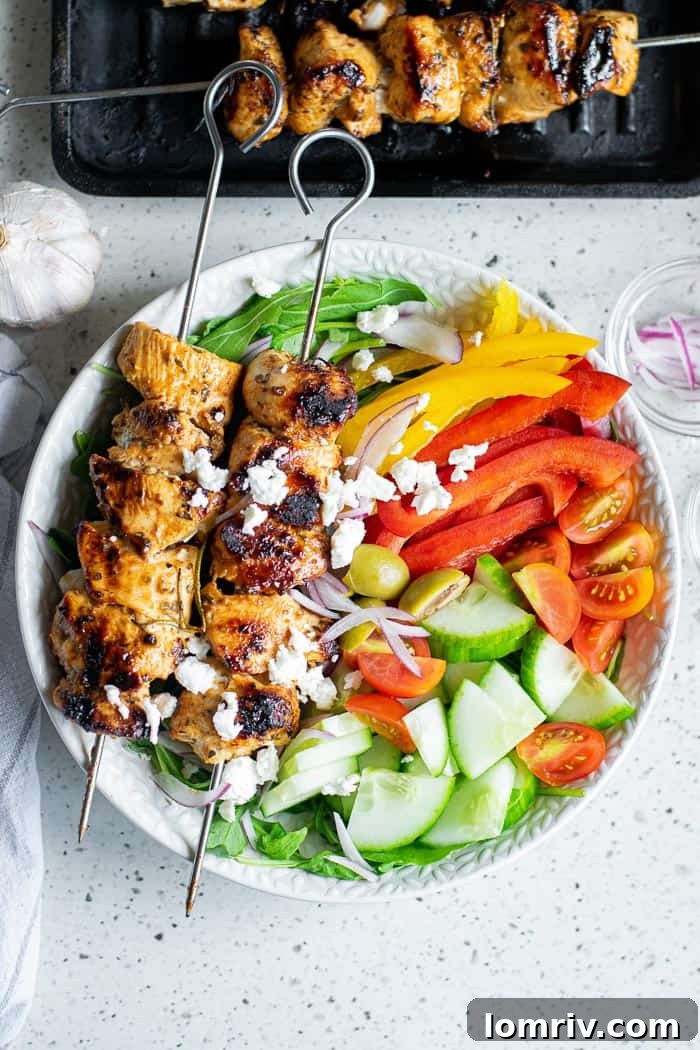
Hello, culinary enthusiasts! Today, I’m thrilled to share a cherished savory recipe that has graced my kitchen countless times: authentic Greek Chicken Souvlaki. Just as I love sharing my passion for baking, I also believe in perfecting the classics that make for incredible everyday meals. This Greek Chicken Souvlaki isn’t just a recipe; it’s a versatile, flavorful, and incredibly easy dish that quickly becomes a family favorite, perfect for busy weeknights, effortless lunch prep, or a vibrant summer barbecue. Its simplicity and robust flavors make it an essential addition to any recipe collection.
I’ve been preparing this Greek Chicken Souvlaki for years, a testament to its deliciousness and adaptability. There are so many wonderful ways to enjoy it! Sometimes, I savor it wrapped in warm pita bread alongside crispy fries and a generous dollop of creamy Tzatziki sauce. However, my absolute favorite presentation, and the one I’m showcasing here, is in a colorful, refreshing salad bowl. Drizzled with a simple, traditional olive oil dressing, it creates a light yet satisfying meal that bursts with Mediterranean goodness.
Of course, you can always serve it in the classic Greek style, perhaps as a mezze alongside a full Greek salad, or simply as a standalone main course. Regardless of how you choose to serve it, you can be sure it will be utterly delicious and universally loved by everyone at your table.

What is Authentic Greek Chicken Souvlaki?
The word “Souvlaki” literally translates to “meat on skewers,” a straightforward description for this iconic Greek dish. It’s a hugely popular street food and a staple in Greek tavernas worldwide, renowned for its simplicity, freshness, and incredible flavor. Authentic Greek Souvlaki is typically made with tender, marinated pieces of chicken, pork, or sometimes beef, threaded onto skewers and then grilled to perfection. The magic truly lies in the marinade, which infuses the meat with aromatic Mediterranean herbs and zesty citrus notes.
The traditional Souvlaki marinade is a harmonious blend of simple yet powerful ingredients: fragrant extra virgin olive oil, fresh lemon juice, minced garlic, dried oregano, and a pinch of salt and black pepper. When you’re selecting oregano for this recipe, aim for Mediterranean or Greek oregano; its robust, earthy flavor is distinct and truly elevates the dish to an authentic level. The grilling process then locks in these flavors, creating juicy, slightly charred, and incredibly satisfying bites of meat.
Souvlaki is most commonly served hot off the grill, nestled in warm pita bread with a medley of fresh vegetables like diced tomatoes, cucumbers, and red onions, and generously topped with a cooling dollop of homemade Tzatziki sauce. Sometimes, a side of golden French fries completes this delightful street food experience.
Gyro vs. Souvlaki: Understanding the Difference
One of the most common questions when discussing Greek meat dishes is, “What’s the difference between a Gyro and Souvlaki?” Both are incredibly popular Greek street foods, often served in a similar fashion with pita bread and toppings, leading to some confusion. However, their preparation and the form of the meat are distinctly different.
A Gyro (pronounced YEE-roh) is traditionally made from large, seasoned cones of meat (often pork, chicken, or a mix of lamb and beef) that are slowly cooked on a vertical rotisserie. As the meat cooks, thin, savory slices are shaved off the rotating spit, then wrapped in pita with various fillings. The key here is the shaved meat from a vertical rotisserie.
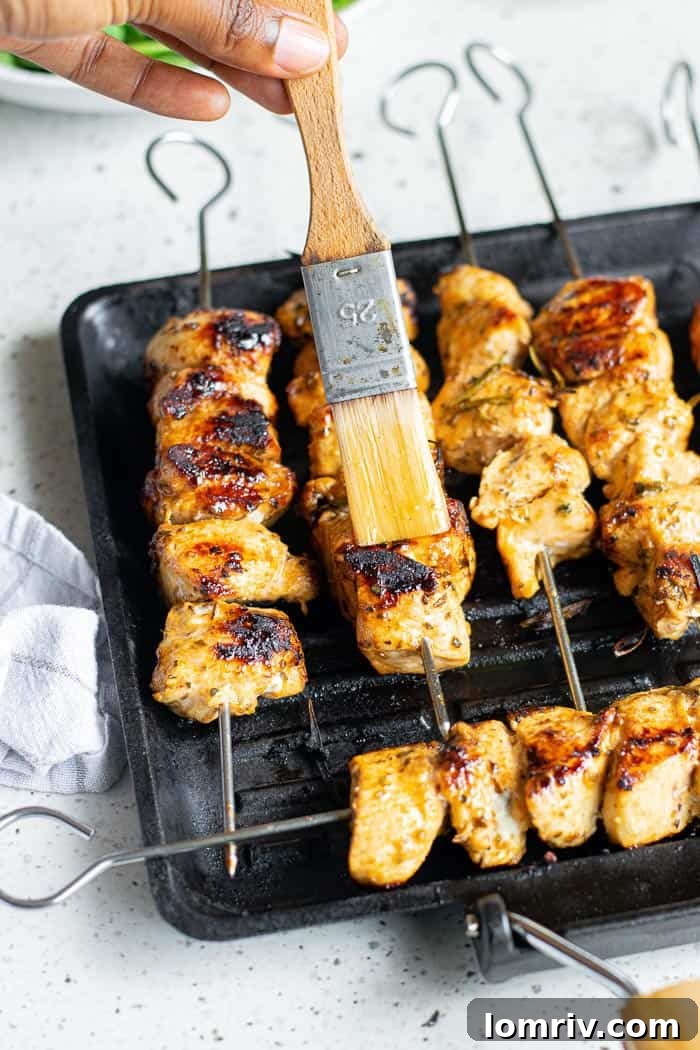
Souvlaki, on the other hand, consists of individual pieces of marinated meat – like the chicken chunks in this recipe – that are skewered and then grilled horizontally, either over charcoal, on a grill pan, or in an oven. So, while both offer a taste of Greece wrapped in warm pita, the fundamental difference lies in how the meat is cooked and presented: shaved slices for Gyro versus grilled chunks on a skewer for Souvlaki. Both are undeniably delicious, but each offers a unique culinary experience.
As you can see from the ingredient list below, the components for this Greek Chicken Souvlaki are incredibly simple, often found in any well-stocked pantry. Yet, these humble ingredients combine to create an explosion of flavor. The resulting grilled chicken is incredibly juicy, tender, and robustly flavored, offering a satisfying and frankly, a much healthier meal option when paired with fresh vegetables.

The Magic of the Marinade: Unlocking Flavor and Tenderness
The secret to truly outstanding Greek Chicken Souvlaki lies almost entirely in its marinade. Each ingredient plays a crucial role, not just in flavoring the chicken, but also in tenderizing it, ensuring every bite is moist and incredibly satisfying.
- Extra Virgin Olive Oil: The base of our marinade, high-quality extra virgin olive oil (preferably a Greek brand for authenticity) not only carries the flavors of the herbs and spices but also helps to keep the chicken moist during grilling. Its healthy fats contribute to a rich mouthfeel.
- Fresh Lemon Juice: This is a cornerstone of Greek cuisine. The acidity of the lemon juice works wonders to tenderize the chicken by breaking down some of the tough protein fibers, while also imparting a bright, zesty tang that cuts through the richness of the oil and garlic.
- Garlic: Whether you use freshly minced cloves or a convenient garlic paste, this aromatic ingredient provides a pungent, savory depth that is indispensable in Mediterranean cooking.
- Dried Oregano: This is arguably the most important herb for Greek Souvlaki. Its earthy, slightly peppery, and incredibly aromatic profile is the defining flavor of the dish. Make sure to use high-quality dried Mediterranean or Greek oregano for the most authentic taste.
- Sweet Paprika: While not always in traditional Souvlaki, a touch of sweet paprika adds a lovely warm color and a subtle sweetness that complements the other flavors beautifully.
- Fresh Rosemary: Though sometimes less common in the most traditional Souvlaki recipes, minced fresh rosemary introduces a wonderful woody, piney aroma that pairs exceptionally well with chicken and lemon.
- Dry White Wine: An optional but highly recommended addition, dry white wine adds another layer of complexity and acidity to the marinade, helping to tenderize the chicken and deepen the overall flavor profile.
Together, these ingredients create a marinade that transforms simple chicken breast into succulent, flavorful Greek Souvlaki that tastes like it came straight from a bustling Athenian street vendor. The longer the chicken marinates, the more profound the flavors and the more tender the meat will become.
As mentioned, Souvlaki is typically served with warm pita bread, refreshing Tzatziki sauce, and a colorful array of fresh vegetables. Here, I’m opting for a healthy summer version that aligns perfectly with my personal taste: serving the succulent chicken skewers in a generous salad bowl. This approach allows the vibrant flavors of the marinated and grilled chicken to truly shine, complemented by the crispness of fresh greens and a light dressing. It’s the perfect way to enjoy delicious, moist, and juicy chicken skewers, packed with flavor, especially during the warmer months.
Can Greek Chicken Souvlaki Be Made Ahead?
Absolutely! Greek Chicken Souvlaki is an excellent candidate for make-ahead meal prep, which can be a huge time-saver. In fact, marinating the chicken in advance is not just convenient, but highly recommended, as it significantly enhances both the flavor and tenderness of the meat. The longer the chicken has to absorb the aromatic marinade, the more delicious and juicy your Souvlaki will be.
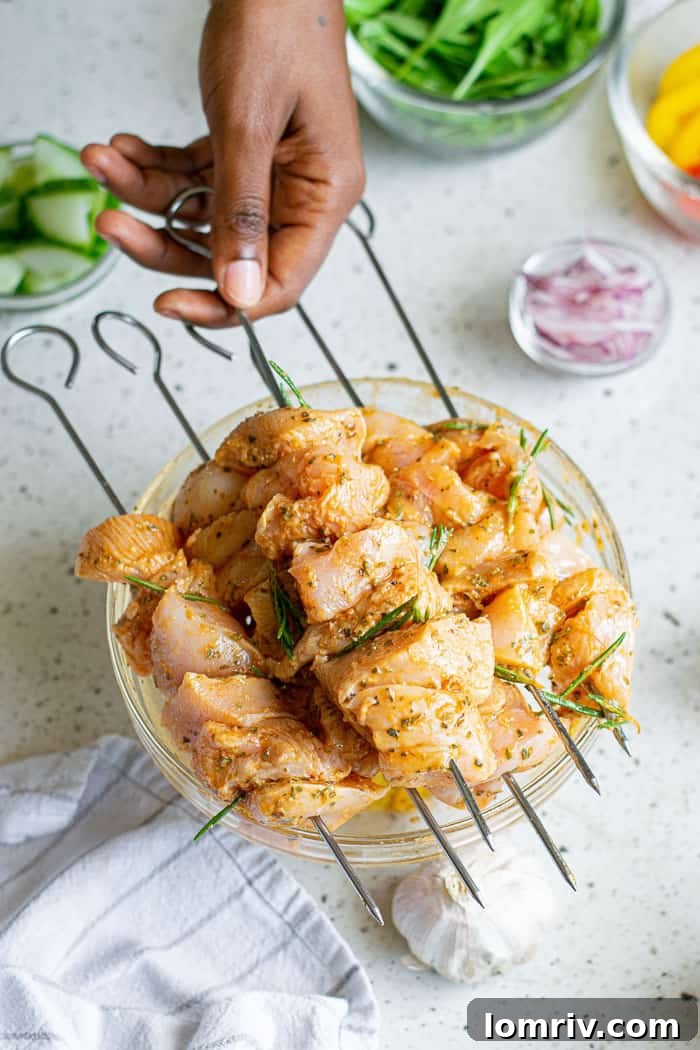
To maximize flavor infusion, make sure to cut your boneless, skinless chicken breast into uniform chunks before adding it to the marinade. This ensures that every piece gets thoroughly coated and can soak up all the wonderful flavors. Toss the chicken well with the marinade to ensure every surface is covered. Ideally, you should marinate the chicken for at least 2 hours, but for the best results, letting it marinate overnight (up to 24 hours) in the refrigerator yields exceptionally tender and flavorful Souvlaki.

Freezer Friendly Tips: This recipe is also fantastic for freezing! Prepare the chicken with its marinade as instructed, but instead of refrigerating, place the marinated chicken (without skewers) into a freezer-safe ziplock bag or airtight container. Label it with the date and freeze for up to 3 months. When you’re ready to cook, simply transfer the bag from the freezer to the refrigerator and allow it to thaw overnight. As the chicken defrosts, it will continue to absorb the marinade, resulting in tender, flavorful meat with minimal effort on cooking day. All that’s left to do is thread it onto skewers and cook!
Grilling Your Perfect Souvlaki: Tips for Success
Achieving perfectly grilled chicken souvlaki is simpler than you might think. Here are a few tips to ensure your skewers are juicy, tender, and beautifully charred:
- Preheat Your Grill: Whether using an outdoor grill or a stovetop grill pan, ensure it’s properly preheated to medium-high heat. A hot grill creates a lovely sear and prevents sticking.
- Don’t Overcrowd: Cook the skewers in batches if necessary, allowing ample space between them. Overcrowding lowers the grill temperature and steams the chicken instead of searing it, preventing that desirable golden-brown crust.
- Brush with Marinade: As the chicken cooks, periodically brush it with any leftover marinade. This adds moisture and boosts flavor. (Note: Discard any remaining marinade that has come into contact with raw chicken once cooking is complete.)
- Flip Regularly: Turn the skewers every few minutes to ensure even cooking and charring on all sides.
- Check for Doneness: Chicken is cooked through when it reaches an internal temperature of 165°F (74°C). The pieces should be firm to the touch and no longer pink in the center. Avoid overcooking, which can lead to dry chicken.
Versatile Serving Suggestions for Greek Chicken Souvlaki
The beauty of Greek Chicken Souvlaki lies not only in its flavor but also in its incredible versatility. While the classic presentation is always a winner, there are many ways to enjoy these delicious skewers:
- Traditional Pita Wraps: Serve the grilled chicken in warm, soft pita bread with fresh Tzatziki, finely diced tomatoes, cucumbers, and red onions. This is the quintessential Greek street food experience.
- Vibrant Salad Bowls: As featured in this recipe, combine your Souvlaki with a bed of crisp mixed greens, cherry tomatoes, Kalamata olives, cucumber, and a light lemon-olive oil dressing. Add crumbled feta cheese for an extra authentic touch.
- Deconstructed Platter: Arrange the chicken skewers on a platter alongside a variety of Greek mezze items such as spanakopita, hummus, baba ghanoush, and warm pita wedges. Perfect for entertaining!
- Hearty Entrée: Pair the Souvlaki with a side of fluffy rice pilaf, roasted lemon potatoes, or a fresh Greek salad for a complete and satisfying meal.
- Low-Carb Option: For those avoiding carbs, serve the chicken skewers wrapped in large lettuce leaves or simply with a generous serving of your favorite steamed or grilled vegetables.
- Kid-Friendly Meal: Offer the chicken pieces off the skewer with a side of pita bread for dipping in Tzatziki, making it an accessible and fun meal for younger palates.
No matter how you choose to present it, Greek Chicken Souvlaki promises a delightful and memorable dining experience.
Health Benefits of this Mediterranean Delight
Beyond its incredible taste, Greek Chicken Souvlaki is a fantastic choice for a healthy and balanced diet. It features lean protein from boneless, skinless chicken breast, which is essential for muscle growth and repair. The use of extra virgin olive oil provides healthy monounsaturated fats, beneficial for heart health. When served with an abundance of fresh vegetables in a salad or as a side, it becomes a meal rich in vitamins, minerals, and fiber. This commitment to fresh, whole ingredients makes Greek Chicken Souvlaki a perfect fit for a Mediterranean lifestyle, promoting overall well-being without compromising on flavor.
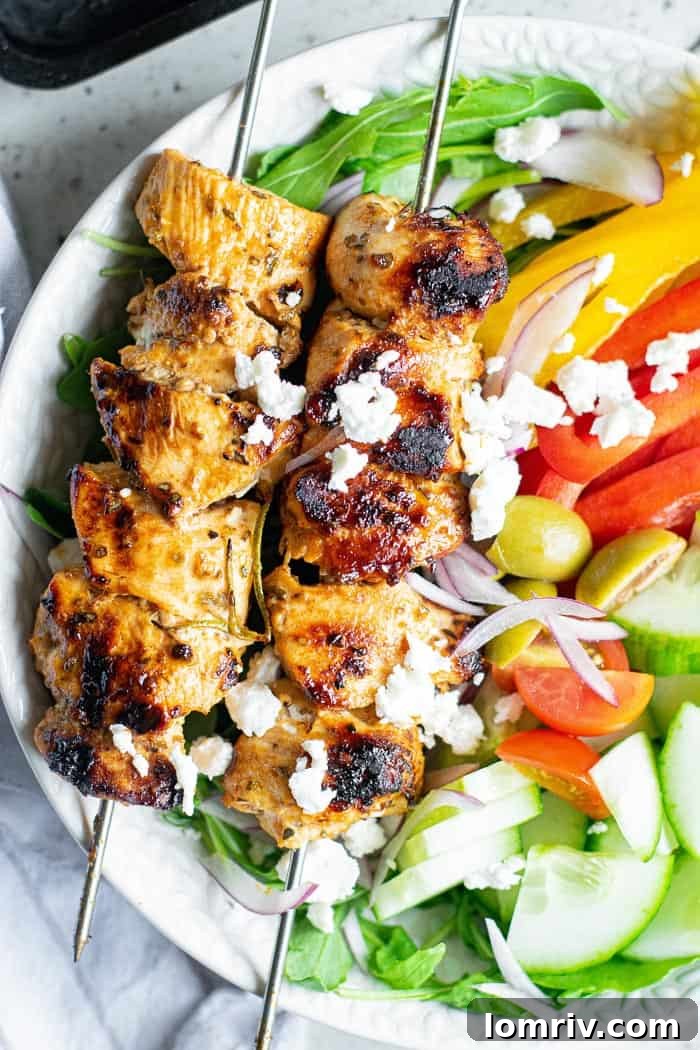

Greek Chicken Souvlaki
Delicious and easy-to-make Greek Chicken Souvlaki, perfect for any meal!
5 minutes
10 minutes
2 hours (for marinating)
2 hours 15 minutes
Ingredients
- 2 chicken breasts, boneless and skinless, cut into 1-inch chunks
- Sea salt and black pepper, to taste
- 1 tablespoon garlic paste or 6 garlic cloves, minced
- 1 teaspoon fresh rosemary, minced
- 1 ½ teaspoons dried Mediterranean oregano
- 1 teaspoon sweet paprika
- Juice of 1 large lemon
- 2 tablespoons dry white wine (optional, but recommended for flavor)
- ¼ cup extra virgin olive oil, preferably a Greek brand
Instructions
- In a large bowl, add the chicken chunks and season generously with sea salt and black pepper.
- Prepare the chicken marinade: In a separate small bowl, combine the minced garlic (or paste), fresh rosemary, dried oregano, sweet paprika, fresh lemon juice, dry white wine (if using), and extra virgin olive oil. Whisk until well combined.
- Pour the prepared marinade over the chicken in the large bowl. Toss thoroughly to ensure all chicken pieces are evenly coated. Cover the bowl with plastic wrap or aluminum foil and refrigerate for at least 2 hours, or ideally overnight (not more than 24 hours) for maximum flavor and tenderness.
- Once the chicken has marinated, thread the chicken pieces onto 6 wooden or metal skewers. If using wooden skewers, soak them in water for at least 30 minutes beforehand to prevent burning.
- Heat a grill pan or outdoor grill to medium-high heat. Once hot, place the skewers on the grill, ensuring not to overcrowd the pan.
- Cook the chicken skewers for about 3-4 minutes per side, or until beautifully browned with some char marks and cooked through to an internal temperature of 165°F (74°C). While cooking, you can brush the chicken with any leftover marinade (ensure to discard unused marinade that has touched raw chicken).
- Transfer the cooked chicken skewers to serving bowls or a platter and serve immediately with your preferred accompaniments.
Making this Recipe?
Share your culinary creations with us! We love to see what you’re making in your kitchen.